Skip to content


 Vertical Blinds
 Roman Blinds
 Roller Blinds
 Venetian Blinds
 Day and Night Blinds
 Skylight Blinds
 Children
 Wooden Blinds
 Curtains
 Blinds Accessories
 White
White Yellow
 Gold
Gold Green
Green Grey
Grey Pink
Pink Orange
 Animal
 Floral
 Geometric
 Striped
 Motorized Day and Night Blinds
 Motorized Roller Blinds
 No Drill Rollers
 Perfect Fit Wooden
 Perfect Fit Metal
 Thermal Blinds
 Better Sleep Blinds
 Cordless Blinds
 No Drill Blinds
 Blackout Blinds
 Waterproof Blinds
 Easy Wipe Blinds
 Taped Blinds
 Conservatory
 Office
 Kitchen
 Bathroom
 Dining Room
 Kids Room
 Living Room
 Bedroom
 Bay Window
 Conservatory Window
 Tild and Turn Window
 Bi Fold Window
 Roof of Skylight
 French Door
 Sliding Door
Thermal Roller Blinds vs. Standard Curtains: Which is More Effective at Reducing Energy Bills?
- by Mariam Labadze

Quick Answer (The Energy Efficiency Verdict)
When it comes to reducing energy bills in 2026, Thermal Roller Blinds are more effective than standard, single-layered curtains.
The primary reason for this superiority is the thermal seal. Thermal blinds are designed to sit flush within the window recess, creating a tight air barrier that prevents "convective heat loss" (warm air cooling against the glass and falling back into the room). Standard curtains, while providing some insulation, typically hang away from the window, allowing air to circulate freely behind them, which significantly reduces their energy-saving potential.
-
Choose Thermal Roller Blinds if: Your main goal is measurable reduction in heating and cooling costs, especially if you have uPVC windows where a "Perfect Fit" is possible.
-
Choose Standard Curtains if: You prioritize aesthetic softness and decorative layering over technical thermal performance.
For the ultimate energy-saving setup, many UK homeowners are now layering Thermal Blinds with decorative curtains to maximize both style and R-value.
[toc]
Detailed Breakdown: The Science of Window Insulation
To understand why one is more effective than the other, we must look at how energy is lost through a window. In the UK, windows account for up to 25-30% of a home's heat loss during winter. Heat escapes through conduction (through the glass), radiation (heat waves passing through), and convection (air movement).
1. The Power of the "Thermal Seal"
The most significant difference between these two window treatments is how they manage air movement (convection).
Thermal Roller Blinds:
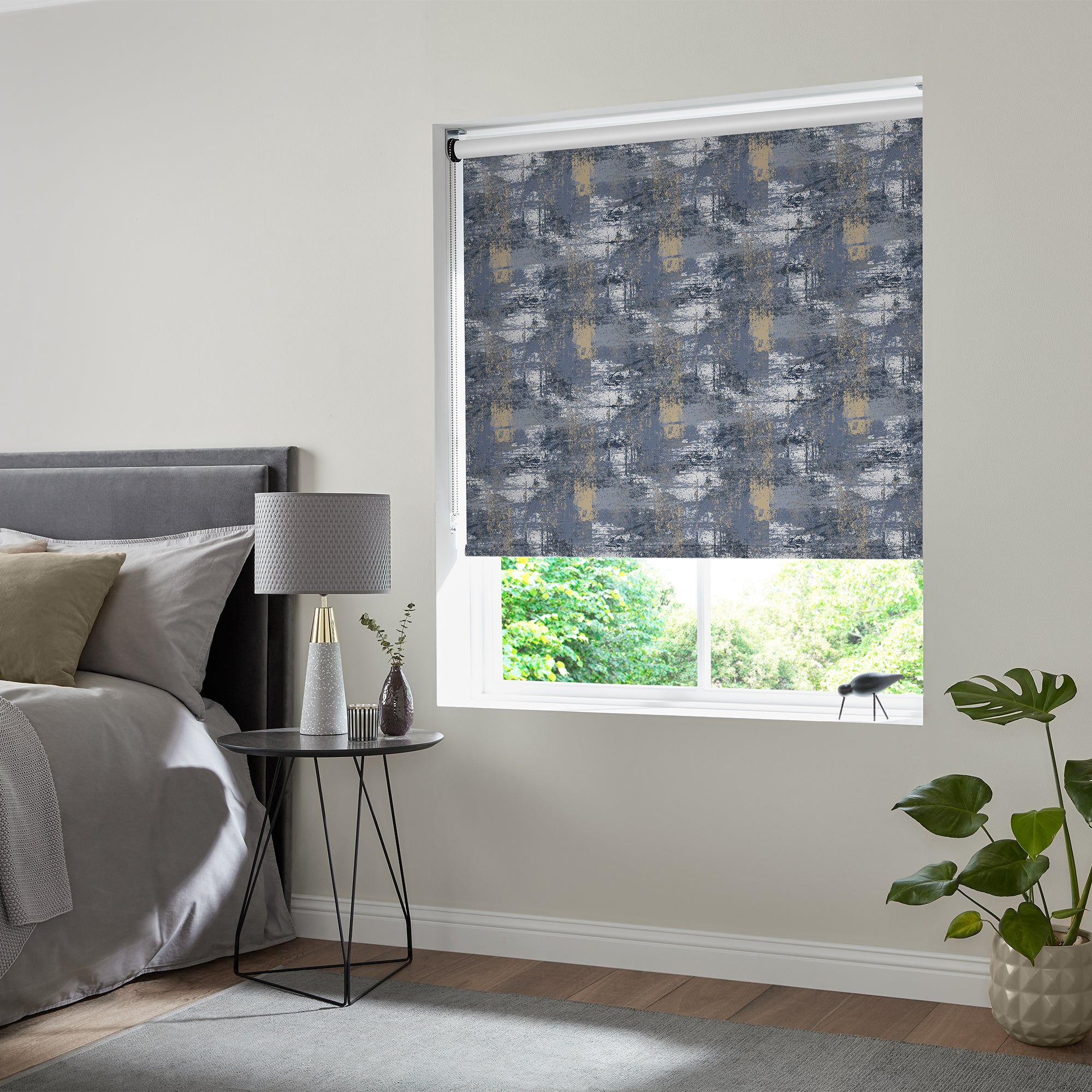
Because Roller Blinds are made-to-measure and usually installed within the window recess, they sit very close to the glass. When lowered, they create a trapped pocket of air between the fabric and the pane. This stationary air acts as a powerful insulator. High-performance models, especially those in our No Drill Blinds range, clip directly into the frame, almost entirely sealing the window and preventing warm air from ever touching the cold glass.
Standard Curtains:
Curtains are generally mounted on a pole or track above the window and hang several inches away from the glass. This gap creates what scientists call a "chimney effect." Warm air from your radiators rises, flows over the top of the curtain, cools down against the glass, and then drops out from the bottom of the curtain as a cold draft. Even the thickest standard curtains suffer from this convective loop unless they are specifically designed as heavy-duty, floor-to-ceiling thermal drapes.
2. Reflective Technology vs. Material Mass
How the material interacts with heat waves (radiation) is the second major factor in energy efficiency.
-
Thermal Blinds Technology: Most thermal roller blinds feature a specialized aluminum or pearlescent reflective backing. This isn't just a thick fabric; it’s a technical barrier. In winter, this backing reflects the radiant heat from your heaters back into the room. In summer, it reflects solar energy back outside, keeping the room cool. This dual-action performance makes them an active part of your home’s climate control.
-
Standard Curtain Mass: Standard curtains rely solely on the thickness of the fabric to slow down heat transfer. While a heavy velvet or wool curtain is a decent insulator, it lacks the reflective properties needed to manage radiant heat effectively. Furthermore, standard linings are often porous, allowing some thermal energy to pass through easily.
3. Summer Performance: Cooling Your Home
Energy bills aren't just about heating; in recent years, the cost of cooling UK homes during summer heatwaves has risen significantly.
The Reflective Advantage:
Thermal roller blinds are exceptionally good at "Solar Rejection." By keeping the blinds closed on south-facing windows during the day, you can reflect up to 70-80% of solar heat before it ever enters the room. This can lower indoor temperatures by several degrees, reducing or even eliminating the need for expensive electric fans or portable air conditioning units.
The Curtain Limitation:
Standard curtains often absorb solar heat. A dark-colored standard curtain will soak up the sun's rays, become hot itself, and then radiate that heat into your living room. Instead of reflecting the energy, it acts like a giant radiator, often making the room feel more stifling.
4. Precision Fit and the "R-Value"
In the world of insulation, "R-value" measures a material's resistance to heat flow. The higher the R-value, the better the insulation.
-
Custom Rollers: Because these are made to the exact millimeter of your window, there is very little "leakage." For those seeking the absolute highest R-value, Non-Drill Honeycomb Blackout Blinds are the champions. Their cellular structure traps even more air than a flat roller, providing insulation that rivals some double-glazing upgrades.
-
General Curtains: Standard curtains are often bought in "ready-made" sizes that may be too wide or too short. Gaps at the sides, top, and bottom significantly degrade their theoretical R-value.
Practical Considerations for UK Homeowners
While thermal blinds are technically more efficient, there are other factors to consider when choosing how to dress your windows for the long term.
Maintenance and Longevity
Roller Blinds:
Thermal rollers are remarkably low-maintenance. They don't collect much dust because they hang vertically and flat. If they are used in a kitchen or bathroom, you can choose a version from our Waterproof Blinds collection, which combines moisture resistance with thermal backing. They are easy to wipe clean and don't require expensive dry cleaning.
Curtains:
Standard curtains are dust magnets. Because of the folds in the fabric, they trap allergens, pet hair, and dust. Over time, this can lead to a "musty" smell and requires regular, often expensive, professional cleaning to maintain their look and hygiene.
Aesthetics and "Cozy" Factor
The Softness of Curtains:
Many people prefer curtains because they provide "visual warmth." They soften the edges of a room, improve acoustics by absorbing echoes, and offer a wide range of decorative patterns. For many, a room without curtains feels "cold," even if the actual temperature is high.
The Sleekness of Rollers:
Thermal blinds provide a minimalist, modern aesthetic. They take up very little space, which can make a small room feel much larger. In 2026, the trend is toward "hidden" technology—blinds that work hard to save energy but disappear into the window frame when not in use.
The Financial Payback: Are They Worth It?
The ultimate question is whether the investment in thermal blinds pays for itself.
-
Lower Initial Cost: Standard curtains can be very expensive once you factor in the fabric, lining, poles, and installation. High-quality thermal roller blinds are often more affordable upfront.
-
Energy ROI: Because thermal blinds demonstrably reduce heat loss by up to 40% at the window, the payback period through lower gas or electricity bills is typically much shorter. In a draughty UK home, a set of thermal blinds can pay for themselves in just 2 to 3 winter seasons.
The Best of Both Worlds: Layering
If you love the look of curtains but want the energy-saving power of thermal technology, the 2026 design trend is layering.
-
The Base Layer: Install a high-performance thermal roller blind inside the window recess. This provides the technical thermal seal and blocks the light.
-
The Aesthetic Layer: Hang standard decorative curtains outside the recess. These provide the soft look, frame the window, and add an extra (albeit secondary) layer of insulation.
This combination is the "gold standard" for energy efficiency in the UK, as it addresses conduction, radiation, and convection simultaneously while looking beautiful.
Summary: Making the Final Decision
Choose Thermal Roller Blinds if:
-
Your primary goal is to lower your energy bills.
-
You have a modern, minimalist interior.
-
You want a low-maintenance window treatment.
-
You are dealing with a cold, draughty room or a room that overheats in summer.
-
You are a renter looking for a No Drill Blinds solution that adds value without damage.
Choose Standard Curtains if:
-
You are primarily focused on the decorative "feel" of the room.
-
You want to dampen echoes and improve room acoustics.
-
You don't have a significant issue with heat loss or gain.
-
You prefer traditional, flowing fabrics over structured window treatments.
In conclusion, while curtains have a place in decorative design, the technological and structural advantages of thermal roller blinds make them the clear winner for anyone looking to fight rising energy costs. By creating a superior thermal seal and utilizing reflective technology, they offer a level of energy control that standard curtains simply cannot match.
Ready to start saving? Explore our range of high-performance Thermal Blinds and find the perfect fit for your home.