Skip to content


 Vertical Blinds
 Roman Blinds
 Roller Blinds
 Venetian Blinds
 Day and Night Blinds
 Skylight Blinds
 Children
 Wooden Blinds
 Curtains
 Blinds Accessories
 White
White Yellow
 Gold
Gold Green
Green Grey
Grey Pink
Pink Orange
 Animal
 Floral
 Geometric
 Striped
 Motorized Day and Night Blinds
 Motorized Roller Blinds
 No Drill Rollers
 Perfect Fit Wooden
 Perfect Fit Metal
 Thermal Blinds
 Better Sleep Blinds
 Cordless Blinds
 No Drill Blinds
 Blackout Blinds
 Waterproof Blinds
 Easy Wipe Blinds
 Taped Blinds
 Conservatory
 Office
 Kitchen
 Bathroom
 Dining Room
 Kids Room
 Living Room
 Bedroom
 Bay Window
 Conservatory Window
 Tild and Turn Window
 Bi Fold Window
 Roof of Skylight
 French Door
 Sliding Door
No Drill Blinds vs Traditional Blinds: Which Should You Buy?
- by Mariam Labadze

The choice between no drill and traditional blinds used to be straightforward. If you owned your home, you drilled. If you rented, you made do with whatever came with the property or resigned yourself to bare windows.
That logic no longer holds. No drill blind technology has advanced to the point where the format is genuinely competitive with drilled alternatives on performance, not just convenience — and in certain situations, particularly with UPVC windows, it's technically the better installation method regardless of whether drilling is an option.
This guide breaks down the honest comparison across every dimension that matters: performance, durability, aesthetics, cost, and the specific situations where each format has a genuine advantage.
[toc]
What We Mean by Each Type
Before the comparison, a definition of terms — because "no drill blind" covers several distinct systems that perform very differently, and lumping them together produces a misleading picture.
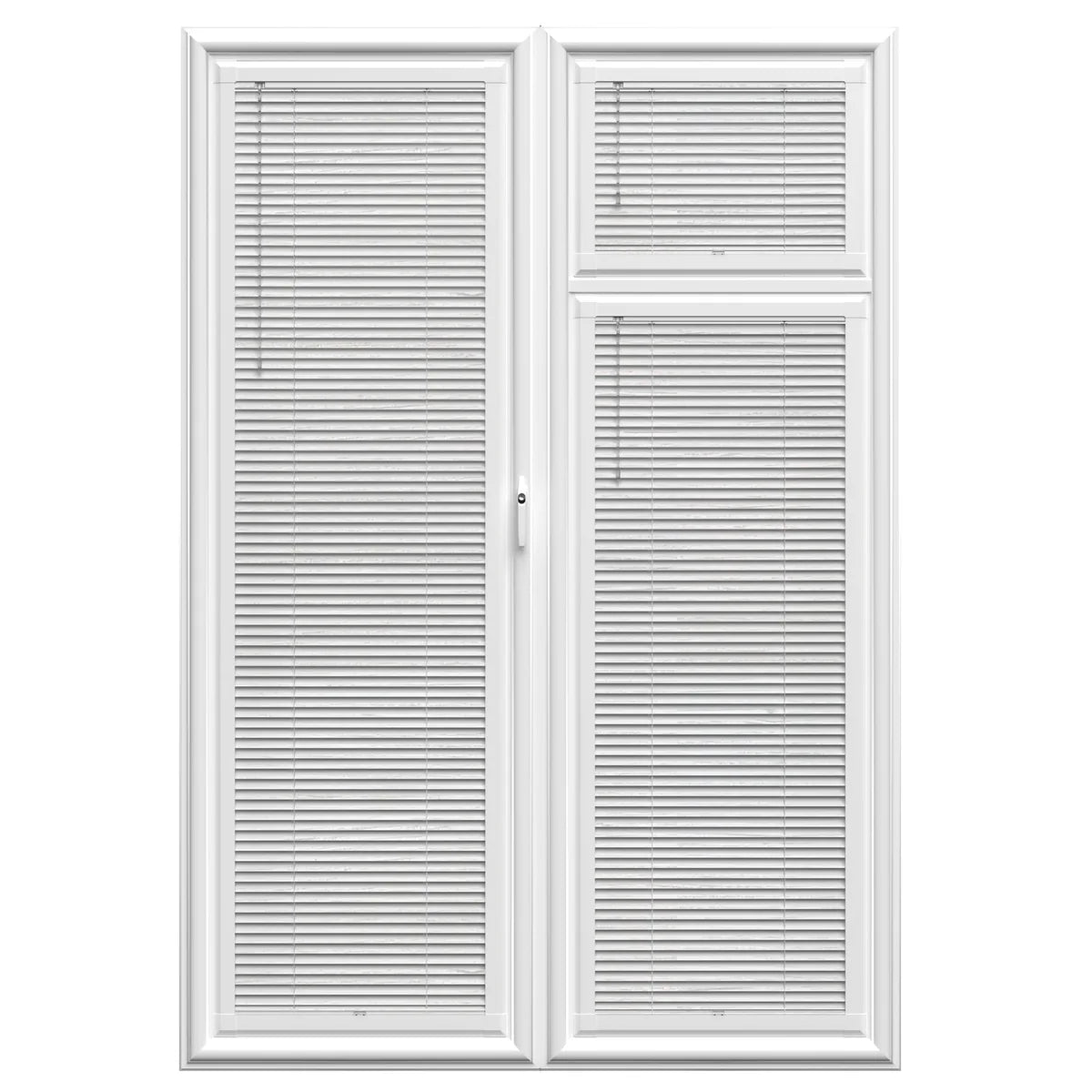
No drill blinds in this comparison refers primarily to frame-clip perfect fit systems — the format where a lightweight outer frame clips into the UPVC glazing bead and the blind mechanism sits within it. This is the most capable no-drill system available and the one that competes directly with drilled alternatives. Tension rod and adhesive clip systems exist and have their uses, but they're not in the same performance category.
Traditional blinds refers to blinds mounted to the wall or window reveal using drilled brackets — the standard installation method for roller, Venetian, Roman, and most other blind types.
Installation: Ease and Reversibility
No Drill Blinds
Frame-clip no drill blinds install in five to fifteen minutes per window with no tools beyond what's needed to open the packaging. The clips press into the glazing bead, the outer frame locks into place, and the blind mechanism clips into the frame. Removal is equally simple and leaves no mark on the frame or surrounding surfaces.
For renters this is the obvious headline benefit — no deposit risk, no permission required, no repair needed on exit. But the advantage extends to homeowners too. A blind that can be removed, cleaned, and refitted without tools is genuinely more practical than one that requires a screwdriver every time it needs attention.
Traditional Blinds
Traditional installation requires marking, drilling, and fixing brackets to the wall or window reveal. Done well, it takes twenty to forty minutes per window and produces a secure, permanent fixing. Done poorly — wrong drill bit for the surface, brackets not level, fixings into plasterboard without wall plugs — it produces a blind that works loose over time and a wall that needs filling and painting.
The permanence is the main disadvantage. Redecorating, changing the blind, or moving house all require the same patching-and-painting process. In rented properties it creates deposit liability. In owned homes it's a minor but real friction every time anything needs to change.
Verdict: No drill wins on ease and reversibility. Traditional wins on permanence if that's a priority.
Light Control and Coverage
This is where the technical difference between the two formats matters most, and where the conventional assumption — that drilled blinds perform better — needs examination.
The Gap Problem With Traditional Blinds
A traditionally drilled blind mounts its brackets to the wall or window reveal, above and outside the window frame. The blind hangs in front of the glass rather than within the frame. This creates an unavoidable gap between the edge of the blind and the wall on each side — typically 10 to 20mm depending on bracket depth and frame profile.
In a living room this gap is a minor aesthetic imperfection. In a bedroom where genuine blackout performance is required, it's a meaningful problem. A 15mm strip of uncovered window at each side at 5am in June admits enough light to prevent sleep — not because the gap is large, but because the contrast between a dark room and even a small amount of dawn light is extreme.
How No Drill Blinds Solve the Gap
Frame-clip perfect fit no drill blinds sit within the window frame rather than in front of it. The outer frame occupies the same space as the glazing bead, and the blind fabric covers the glass edge to edge with no gap at the sides, top, or bottom.
For blackout performance specifically, this is a structural advantage that no amount of fabric quality in a traditionally mounted blind can compensate for. A honeycomb blackout blind in a perfect fit frame genuinely darkens a room in a way that a wall-mounted blackout roller with side gaps doesn't.
For light-filtering and privacy purposes, the edge-to-edge coverage also means that the view from outside is consistently managed — no bright lines at the sides where the blind doesn't reach.
Verdict: No drill frame-clip blinds provide better edge-to-edge coverage than traditionally mounted alternatives. For blackout purposes, this is a significant performance advantage.
Suitability for Window Types
UPVC Windows
The majority of UK homes built after the mid-1980s have UPVC frames, and this is where the comparison tilts most clearly in favour of no drill.
UPVC is not well-suited to drilling. The material can crack under pressure from conventional drill bits, fixings don't bite into it with the same reliability as masonry, and most UPVC window manufacturers state that drilling into the frame voids the weatherproofing warranty. Traditional brackets mounted to the wall or reveal above a UPVC frame sidestep this, but they introduce the gap coverage problem described above.
Frame-clip no drill blinds were engineered specifically for UPVC glazing bead profiles. For these windows, the no drill format is not just acceptable — it is the technically correct installation method.
Tilt-and-Turn Windows
For tilt-and-turn windows, no drill frame-clip blinds have a functional advantage that traditionally mounted blinds cannot match. Because the blind clips to the opening sash rather than to the fixed wall or reveal, it tilts with the window when ventilation mode is engaged. You can have the window open and the blind closed simultaneously — which is the entire point of the tilt-and-turn format.
A traditionally mounted blind above a tilt-and-turn window must be fully raised before the window can be opened in tilt mode, which defeats the purpose of the ventilation function entirely.
Timber and Older Frames
Traditional drilled installation is better suited to timber window frames, where brackets fix into solid timber reliably and the drilling process doesn't compromise the frame's structural integrity. For period properties with original timber sashes or casements, a traditionally mounted blind is generally the more appropriate choice.
Large Spans and Heavy Fabrics
For very wide windows or heavy blind formats — full-width wooden Venetians, large Roman blinds, wide roller blinds in heavy blackout fabric — traditional wall-mounted brackets provide more secure support than clip systems. Frame-clip no drill systems have load limits, and wider or heavier combinations may exceed them.
Verdict: No drill is superior for UPVC and tilt-and-turn windows. Traditional is better for timber frames and heavy blind formats in large spans.
Aesthetics
How They Look From Inside
A traditionally mounted blind installed with care — brackets level, blind fabric hanging straight, headrail parallel to the window head — looks clean and finished. The brackets are typically hidden behind the headrail and the result is visually indistinguishable from a no-drill blind to most observers.
A no-drill frame-clip blind sits within the window frame with no visible fixings at all. The outer frame is thin and sits flush with the glazing bead profile. In many installations, particularly on white UPVC with a white-framed blind, the blind appears simply to float within the window.
The View From Outside
This is a difference that most blind guides don't mention and that matters more than people expect. A traditionally mounted blind, when raised, exposes the window frame fully — which from outside looks like a normal, unobstructed window. When lowered, the blind hangs in front of the frame.
A frame-clip no drill blind sits within the frame at all times. When raised, the rolled or folded fabric is contained within the frame profile. From outside, this creates a very clean appearance — particularly in a row of houses where consistent window presentation matters for the overall streetscape.
Interaction With Curtains
Traditionally mounted blinds work well alongside curtains because they mount to the wall or ceiling and the curtain track or pole can be positioned independently. For rooms where blinds and curtains are used together, traditional mounting gives more flexibility in terms of layering.
No drill blinds within the frame work alongside curtains equally well — the blind handles privacy and light control within the frame, the curtains provide softness and additional coverage at the sides. The combination of a frame-mounted no drill blind with unlined linen curtains on a slim pole is increasingly common in contemporary UK interiors.
Verdict: Broadly comparable aesthetically. No drill has a slight advantage in the clean, frame-flush appearance. Traditional has more flexibility for layering with curtains.
Durability and Longevity
Traditional Blinds
The durability of a traditionally mounted blind depends almost entirely on the quality of the blind itself — the bracket fixing, assuming it was done correctly into appropriate material, is not typically the failure point. Roller blind mechanisms, chain drives, and spring systems are the components that wear. A well-made traditionally mounted blind in a quality fabric, maintained reasonably, should last ten years or more.
No Drill Blinds
The clip system adds one additional component compared to a traditionally mounted blind — the outer frame and its clips — and this is the obvious place to ask questions about longevity. High-quality frame-clip systems use reinforced nylon clips with a positive locking action. These are designed to be engaged and disengaged repeatedly without fatigue, and the better systems are tested to thousands of clip cycles before any degradation in grip force.
The blind mechanism itself — roller, honeycomb, pleated, or Venetian — is identical in quality terms to a traditionally mounted equivalent. The format of mounting doesn't affect the mechanism's longevity.
The practical caveat is that clip quality varies considerably between products. Budget no-drill systems use lighter plastic clips that lose grip over time, particularly in windows that are opened and closed frequently and subject to the associated vibration and movement. The lesson is to treat clip quality as a key purchase criterion — ask about clip material and whether replacements are available separately before ordering.
Verdict: Comparable durability when clip quality is high. Traditional blinds have a slight edge in the long-term because there are fewer components to consider. Budget no-drill systems are less durable than budget traditional alternatives.
Cost Comparison
At equivalent quality levels, no drill blinds cost marginally more than their traditionally mounted equivalents. The additional cost reflects the outer frame and clip system — typically £10 to £25 more per blind depending on size and format.
The cost comparison changes when you factor in installation. Traditional blinds in rented properties create potential deposit liability for any imperfect hole filling or surface damage. Traditional blinds that need to be removed and refitted — at the end of a tenancy, during redecoration, or when changing the room — incur the cost of patching and repainting each time.
For homeowners who plan to stay in a property long-term and never move the blinds, the additional cost of no drill adds up to a modest premium for a benefit they may not heavily use. For renters, or for anyone who values the flexibility to change, the cost comparison reverses.
Verdict: Traditional blinds are marginally cheaper at point of purchase. No drill blinds offer better long-term value for renters and those who value flexibility.
Specific Situations: Which to Choose
Choose no drill if:
You're renting and want to avoid deposit liability. Your windows are UPVC casement or tilt-and-turn. You want genuine blackout performance without light leaking around the edges. You move frequently and want to take the blinds with you. You want to fit the blinds yourself without drilling into uncertain surfaces.
Choose traditional if:
Your windows have timber frames where clip systems aren't compatible. You need very wide spans or heavy fabric formats that exceed clip system load limits. You're certain you won't move the blinds and want permanent, tool-free daily operation. You're layering with curtains on a ceiling-mounted track and need the bracket positions to accommodate that layout.
The middle ground:
In most UPVC-windowed UK homes, the honest answer is that a quality no drill blind in a frame-clip format performs as well as or better than a traditionally mounted equivalent in every metric that matters day to day — light control, appearance, durability, and ease of operation. The choice of traditional drilling in these properties is often habit rather than considered preference.
Final Verdict
The framing of this comparison as "no drill vs traditional" implies that traditional is the established standard and no drill is the convenient compromise. That was accurate ten years ago. It isn't now.
For the dominant window type in UK housing — UPVC casement and tilt-and-turn frames — the frame-clip no drill format is the technically superior installation method. It produces better light coverage, works properly with tilt ventilation, leaves no damage, and performs identically to a drilled blind in daily use.
The cases where traditional drilling is genuinely the better choice are real but specific: timber frames, heavy formats, very large spans, or situations where permanent fixing is a deliberate priority.
For everyone else — and in UK housing stock, that's the majority — the question isn't really whether you can get away with no drill. It's why you'd bother drilling at all.