 Skip to content


 Vertical Blinds
 Roman Blinds
 Roller Blinds
 Venetian Blinds
 Day and Night Blinds
 Skylight Blinds
 Children
 Wooden Blinds
 Curtains
 Blinds Accessories
 White
White Yellow
 Gold
Gold Green
Green Grey
Grey Pink
Pink Orange
 Animal
 Floral
 Geometric
 Striped
 Motorized Day and Night Blinds
 Motorized Roller Blinds
 No Drill Rollers
 Perfect Fit Wooden
 Perfect Fit Metal
 Thermal Blinds
 Better Sleep Blinds
 Cordless Blinds
 No Drill Blinds
 Blackout Blinds
 Waterproof Blinds
 Easy Wipe Blinds
 Taped Blinds
 Conservatory
 Office
 Kitchen
 Bathroom
 Dining Room
 Kids Room
 Living Room
 Bedroom
 Bay Window
 Conservatory Window
 Tild and Turn Window
 Bi Fold Window
 Roof of Skylight
 French Door
 Sliding Door
No Drill Blinds: The Complete UK Buyer's Guide (2026)
- by Mariam Labadze

No drill blinds have moved from a niche solution for renters into one of the most searched window treatment categories in the UK. The reasons are practical: UPVC windows dominate British housing stock, landlords increasingly prohibit wall fixings, and the products themselves have improved to the point where the no-drill format is often the better choice regardless of whether you're allowed to drill or not.
This guide covers everything you need to know — how the different systems work, which type suits which window, what to look for in terms of quality, and how to fit them correctly the first time.
[toc]
What Are No Drill Blinds?
No drill blinds are window coverings that fix to the window frame, glazing bead, or glass itself without requiring any screws, rawlplugs, or wall fixings. The mounting mechanism varies by type — some use tension, some use adhesive clips, some clip directly into the UPVC glazing bead — but the result in every case is a blind that installs without tools and removes without leaving a mark.
The term covers several distinct systems that work differently and suit different situations. Understanding which type you're looking at matters, because the performance difference between a well-chosen system and a poorly-matched one is significant.
Types of No Drill Blinds
Perfect Fit / Frame-Clip Systems
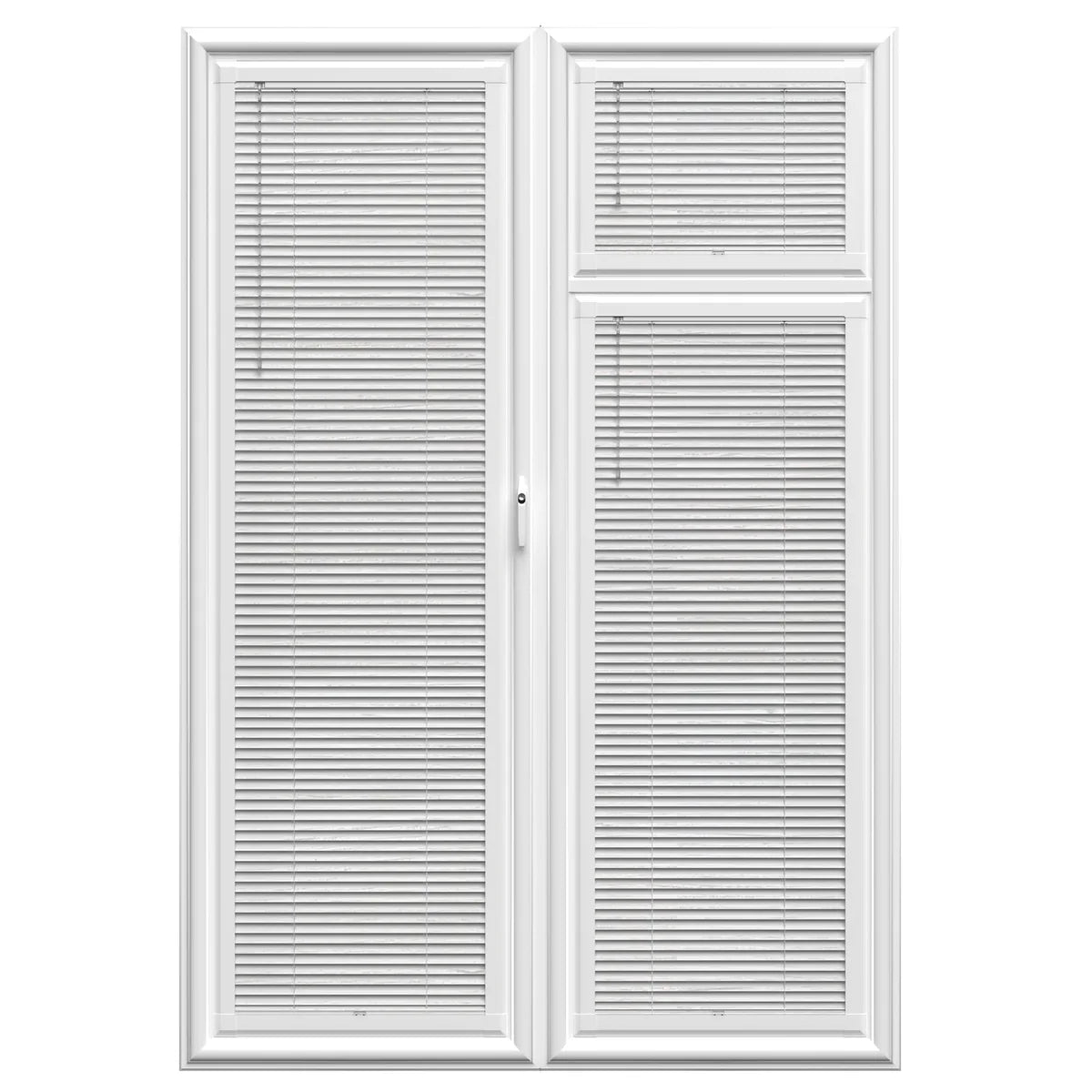
The most robust no-drill format available for UPVC windows. A lightweight frame clips into the glazing bead — the inner edge of the UPVC frame that holds the glass in place — using a series of clips that grip without adhesive or fixings. The blind mechanism sits within this frame and moves with the window when it opens.
This is the system to choose if you have standard UPVC casement, tilt-and-turn, or sash windows with a UPVC surround. The fit is edge-to-edge with no gap, the installation is completely reversible, and the blind operates in precisely the same way as a drilled equivalent. Perfect fit no drill blinds are available in roller, pleated, Venetian, and honeycomb formats.
Tension Rod Systems
A spring-loaded rod that wedges into the window recess under tension, with the blind fabric hanging from it. No clips, no adhesive, no permanent contact with the frame at all.
The advantage is simplicity and compatibility — tension rods work in virtually any window recess regardless of frame material. The limitation is load: a tension rod can only support lighter fabrics, which rules out heavier blackout linings and wider spans. For a small bathroom window with a lightweight voile, a tension rod system is a perfectly adequate solution. For a wide bedroom window requiring genuine blackout performance, it isn't.
Adhesive Clip Systems
Plastic clips with an adhesive backing that fix to the window frame or wall, with the blind's side rails slotting into them. A step up from tension rods in terms of load capacity, but dependent on the adhesive bond — which varies considerably by surface type, temperature, and the quality of the adhesive used.
On smooth, clean UPVC the bond is generally reliable. On painted plaster, rough surfaces, or in rooms with high humidity, failure rates increase. Adhesive systems are genuinely no-drill and genuinely removable, but they require more care in surface preparation than the marketing typically acknowledges.
Magnetic Systems
A newer format designed specifically for metal-framed windows — steel Crittall frames in particular, which are common in 1930s properties and increasingly used in contemporary extensions. The mounting system uses magnets that attach to the metal frame, with no contact required beyond the magnetic surface.
If you have Crittall or similar metal-framed windows, this is worth investigating specifically. The format doesn't apply to UPVC or timber frames.
Which Windows Can No Drill Blinds Fit?
Standard UPVC Casement Windows
The easiest and most common application. Frame-clip perfect fit systems are designed specifically for this window type and give the best possible result — full edge-to-edge coverage, no gap, and a fit that looks indistinguishable from a drilled installation.
Tilt-and-Turn Windows
Frame-clip systems work particularly well here because the blind is attached to the frame and tilts with it. When you open the window in tilt position for ventilation, the blind tilts with the window and continues to provide privacy. This is something that conventionally drilled blinds mounted to the wall cannot do.
Sash Windows
Tension rod and adhesive systems can work in the recess of a sash window, but the recess is often shallow and the sash movement complicates anything attached to the moving frame. Frame-clip perfect fit systems require a UPVC surround — original timber sash windows don't have the glazing bead profile required. For timber sash windows, a tension rod or recess-mounted system is generally the most viable no-drill approach.
Bay Windows
Each section of a bay window is treated as an individual window and fitted separately. Frame-clip systems work well in UPVC bay windows. The wider centre section of a three-part bay may require a wider blind than standard stock sizes, so measure each section carefully before ordering.
Velux and Roof Windows
Velux and equivalent roof window brands manufacture their own no-drill blind systems that are designed specifically for their window profiles. These are worth buying from the window manufacturer's own range rather than trying to adapt a standard no-drill blind to a roof window — the angle, the mechanism, and the operating requirements are specific enough that proprietary systems are significantly more reliable.
Bi-fold and Patio Doors
Standard no-drill blind systems aren't designed for bi-fold or sliding patio doors, which require a traverse system. Vertical slat blinds with a track system are the more appropriate solution for these openings, and some are available with no-drill mounting options.
Blind Styles Available in No-Drill Formats
Roller Blinds
The most widely available no-drill format. Clean, minimal, and practical — the fabric rolls onto a tube at the top of the window and is raised and lowered by a chain or spring mechanism. Available in a very wide range of fabrics from sheer voile through to full blackout. The simplest and lowest-cost no-drill option for most windows.
Honeycomb / Cellular Blinds
The premium functional choice in the no-drill category. The fabric is constructed in a cellular structure — a honeycomb cross-section — that traps a layer of insulating air between the glass and the room. This reduces heat loss through the window in winter and limits solar heat gain in summer, with meaningful impact on energy use in rooms where the windows are a significant part of the thermal envelope.
Honeycomb blackout blinds are the strongest performing option for bedrooms, nurseries, and rooms where both darkness and temperature control are priorities. The no-drill frame-clip format is available in single and double cell construction — double cell provides better insulation but at a higher cost.
Pleated Blinds
A concertina fabric that folds flat against the top of the window when raised. Lighter and more compact than honeycomb construction, with a wide range of fabric options including semi-sheer, patterned, and blackout finishes. A good middle ground between the simplicity of a roller blind and the insulating performance of a cellular blind.
Venetian Blinds
Horizontal slats — in aluminium, wood, or faux wood — that tilt to control light and raise to clear the window entirely. The no-drill frame-clip format is available for standard UPVC Venetians, though the weight of wider wooden venetians can exceed what some clip systems are designed to support. Aluminium Venetians in no-drill formats are widely available and well-suited to kitchens, bathrooms, and offices where the wipe-clean surface is an advantage.
Day/Night Zebra Blinds
Alternating bands of sheer and opaque fabric that align or offset to create different levels of privacy and light diffusion. Available in no-drill formats and increasingly popular in living rooms where the roller blind format is too binary — fully up or fully down — and curtains are impractical.
What to Look for When Buying
Fabric Opacity Rating
Blind fabrics are rated from sheer (essentially transparent) through light-filtering and dim-out to full blackout. These ratings are not standardised across manufacturers — a "blackout" blind from one brand may admit more light than a "dim-out" from another. The most reliable indicator is the fabric's openness factor, which is a measurable percentage. For genuine blackout performance, look for fabrics rated at 0% openness and confirm that the mounting system provides edge-to-edge coverage.
Clip System Quality
The clips that hold a frame-clip blind to the UPVC glazing bead are the critical point in the system. Cheaper clips use lighter plastic that can fatigue and lose grip over time, particularly in windows that are opened and closed frequently. Higher quality clips use reinforced nylon or polycarbonate with a positive locking action — you feel them engage when fitted correctly. Ask specifically about clip material and whether replacement clips are available separately.
Mechanism Durability
The chain or spring mechanism that operates the blind will be used multiple times daily for years. On roller blinds, the spring rewind mechanism is the most common failure point in lower-cost products — it loses tension gradually and eventually stops retracting the blind fully. Chain-operated rollers are generally more durable because there are fewer moving parts to fatigue. On honeycomb and pleated blinds, the operating cord and its routing through the fabric is the primary wear point.
Headrail and Bottom Rail Construction
A solid aluminium headrail maintains its profile over time and doesn't flex under the weight of the fabric. Cheaper plastic headrails can bow in wider blinds, causing uneven rolling and eventually preventing the blind from operating smoothly. The bottom rail weight matters too — a well-weighted bottom rail keeps the fabric taut and prevents billowing in rooms with ventilation.
Width and Drop Accuracy
No-drill blinds are only as effective as their coverage. Measure the internal width of the window frame — the dimension between the inner edges of the frame where the glass sits — and confirm that the blind you're ordering matches it within a few millimetres. Measure the drop from the top of the frame to the sill. For frame-clip systems, some manufacturers provide sizing guides that account for the clip frame's own dimensions.
How to Fit No Drill Blinds: Frame-Clip System
Frame-clip no-drill blinds come with a set of plastic clips and a lightweight outer frame that holds the blind mechanism. The process is as follows:
Start by cleaning the glazing bead thoroughly — any dust, grease, or old adhesive residue will reduce the grip of the clips. The clips are designed to engage with the inner edge of the UPVC bead, the same channel that holds the glass sealed unit in place.
Attach the clips to the outer frame first, at the positions specified in the instructions — typically four to six clips for a standard window, more for wider formats. Slide the frame, with the clips attached, into the window recess and press each clip firmly into the glazing bead until you feel it lock. Work around the frame systematically — top, then sides, then bottom — rather than trying to fit all clips simultaneously.
Once the frame is in place, the blind mechanism clips or slides into it. On roller formats this is a simple insertion at each end. On honeycomb and pleated formats the headrail slides into a channel in the top of the frame.
The whole process for a standard casement window takes five to ten minutes. No tools required.
Removing and Reusing
One of the genuine advantages of frame-clip no-drill systems over adhesive alternatives is complete reusability. To remove the blind, press the clip release tabs — most systems have a flat-head slot that you press with a fingernail or coin — and the clips disengage from the glazing bead cleanly.
The clips themselves show no wear after normal removal and can be refitted to the same window or a different window of the same profile. If you're moving between properties, the blind and its frame will fit any UPVC window with the same internal dimensions — measure the new window before assuming compatibility.
Common Problems and How to Avoid Them
The blind won't stay up / falls down
In tension rod systems, this is almost always insufficient tension — the rod needs to be extended further before insertion so it exerts more force against the recess walls. In adhesive systems, it indicates bond failure, usually because the surface wasn't cleaned before application or the adhesive wasn't allowed to cure fully before the blind was loaded. In frame-clip systems, one or more clips haven't fully engaged — remove the frame and refit, pressing each clip firmly until you feel the locking action.
Light leaks around the edges
This is the most common performance complaint with no-drill blinds and in almost every case it means the blind isn't filling the frame. With frame-clip systems, confirm that the clip frame is the correct size for the window — a frame that's slightly too narrow will leave a gap at the sides regardless of the fabric's opacity.
The fabric doesn't roll evenly
On roller blinds, uneven rolling usually indicates the headrail isn't perfectly level. Re-check the fit of the clip frame and adjust until the headrail sits horizontal before loading the blind. On pleated and honeycomb blinds, uneven folding is usually a cord tension issue — check that all cords are seated correctly in their guides at both the headrail and bottom rail.
The blind won't tilt with a tilt-and-turn window
This indicates the blind hasn't been fitted in frame-clip format — a blind mounted to the wall or window reveal will not move with the tilting sash. For tilt-and-turn windows, the frame-clip system where the blind is attached entirely to the opening sash is the correct format.
No Drill Blinds for Renters: What You Need to Know
The key practical point is that frame-clip no-drill systems leave absolutely no mark on the window frame. The glazing bead, which the clips engage with, is a functional component of the window that the clips grip rather than penetrate. When the clips are removed, the bead returns to its original state.
This means there is nothing to fill, paint, or repair before leaving a property. From a deposit protection standpoint, correctly installed and removed no-drill blinds create no liability — there is no damage because there has been no penetration of any surface.
It's worth confirming this with your landlord before installation not because the legal position is unclear, but because some landlords have concerns based on unfamiliarity with the system. A brief explanation of how the clip mechanism works — or simply showing them this guide — tends to resolve most objections.
For renters planning to move with their blinds, measure the new property's windows before removing them from the current one. UPVC glazing beads are fairly standardised across manufacturers but not universally identical, and it's worth confirming compatibility before assuming the blind will transfer directly.
Price Guide
No-drill blinds span a wide price range depending on the system type, blind style, and dimensions. As a general guide for the UK market in 2026:
Tension rod rollers for small windows start from around £15 to £30. Adhesive clip systems in standard sizes typically range from £25 to £60. Frame-clip perfect fit systems in roller and pleated formats start from around £40 to £80 for standard casement window sizes. Honeycomb and cellular formats in perfect fit carry a premium — £60 to £130 is a reasonable range for standard sizes — reflecting the more complex fabric construction and the thermal performance benefit.
Made-to-measure options in all formats are available from specialist blind retailers and are worth considering for non-standard window sizes where stock dimensions don't fit cleanly.
Summary: Which System Should You Choose?
For UPVC casement windows — which covers the majority of UK homes built after 1985 — a frame-clip perfect fit system is the correct choice in almost every situation. It provides better coverage, better performance, and better durability than adhesive or tension alternatives, and it's the only no-drill system that works properly with tilt-and-turn windows.
For timber or older metal-framed windows where the glazing bead profile isn't compatible with frame-clip systems, a tension rod or carefully prepared adhesive system is the practical alternative.
For fabric choice: roller blinds for simplicity and cost, honeycomb for maximum thermal and blackout performance, pleated as a balance between the two, Venetian where you want slat-based light control and a wipeable surface.
No drill blinds are no longer a compromise. For the right window type — and in UK housing stock, that's most windows — they are straightforwardly the better solution.





)