Skip to content


 Vertical Blinds
 Roman Blinds
 Roller Blinds
 Venetian Blinds
 Day and Night Blinds
 Skylight Blinds
 Children
 Wooden Blinds
 Curtains
 Blinds Accessories
 White
 Yellow
 Gold
 Green
 Grey
 Pink
 Orange
 Animal
 Floral
 Geometric
 Striped
 Motorized Day and Night Blinds
 Motorized Roller Blinds
 No Drill Rollers
 Perfect Fit Wooden
 Perfect Fit Metal
 Thermal Blinds
 Better Sleep Blinds
 Cordless Blinds
 No Drill Blinds
 Blackout Blinds
 Waterproof Blinds
 Easy Wipe Blinds
 Taped Blinds
 Conservatory
 Office
 Kitchen
 Bathroom
 Dining Room
 Kids Room
 Living Room
 Bedroom
 Bay Window
 Conservatory Window
 Tild and Turn Window
 Bi Fold Window
 Roof of Skylight
 French Door
 Sliding Door
Wooden Perfect Fit Blinds: Real Wood in a Clip-In Frame, and When It Is Too Heavy
- by Mariam Labadze
Wooden perfect fit blinds work beautifully on a normal casement and badly on a wide one, because the frame is held by tension in the glazing bead and real wood slats load that tension harder than anything else in the category. Nobody mentions weight on a product page. It is the thing that decides whether the blind stays put for ten years or starts easing away from the bead in month three.
That is not an argument against the product. It is an argument for choosing the material by the window rather than by the photograph.
Key Takeaways
-
Tension holds it, not screws. The frame grips the glazing bead under spring pressure, so every gram is working against that grip.
-
Width is the real variable. Weight climbs with width, and wooden perfect fit blinds on a wide picture window ask the most of a bead.
-
Faux wood is the engineering answer. On a big window faux wood or aluminium stays flatter and loads the frame less, even though real wood looks better.
-
The bead has to be deep enough. A shallow or heavily chamfered bead will not hold a frame at all, whatever the blind is made of.
-
Check the guide, not a rule of thumb. Maximum sizes vary by product, so read the measuring guide on the item you are buying.
How a Perfect Fit Frame Actually Holds
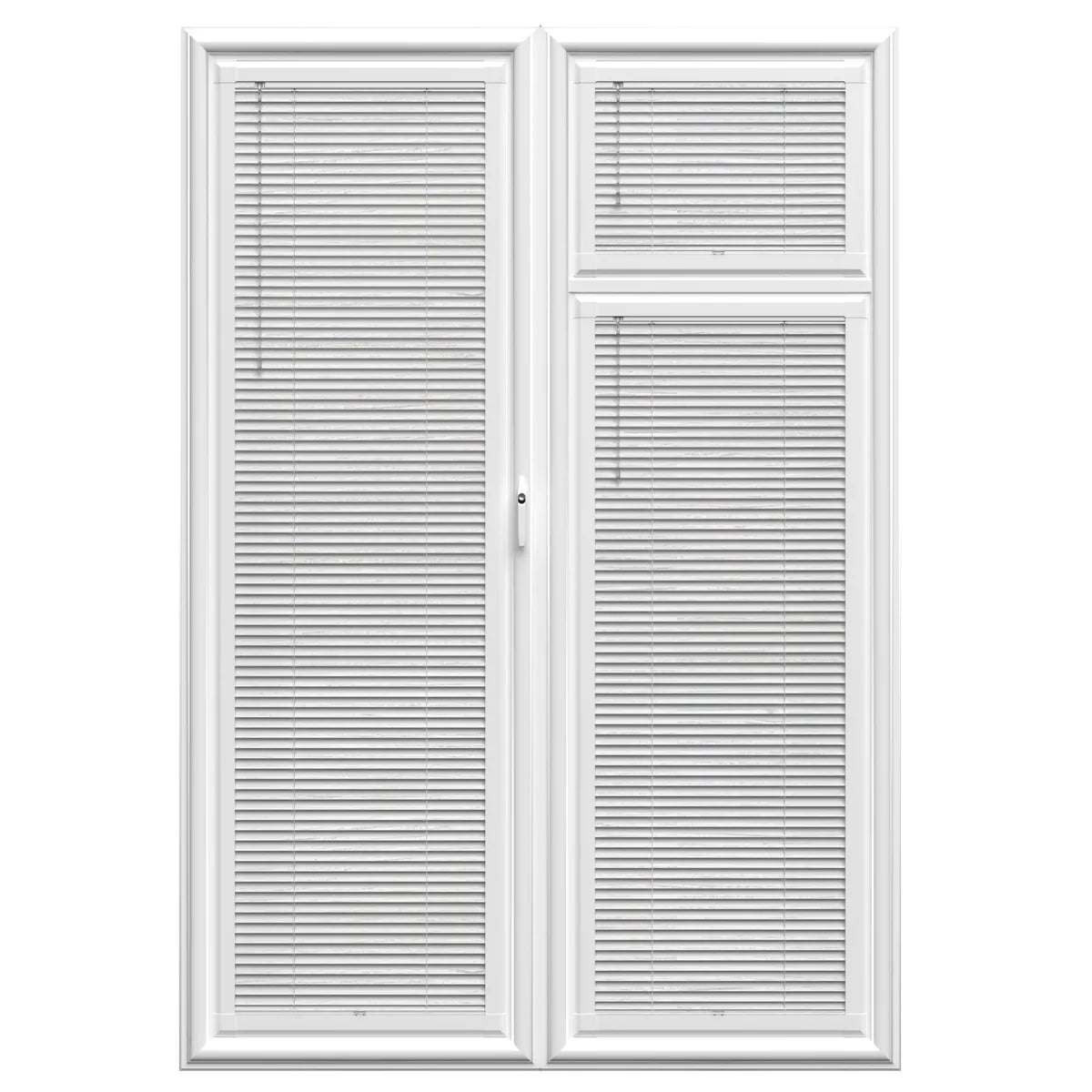
A perfect fit blind is a complete blind built inside a slim plastic frame. The frame carries small brackets that push into the gap between the glazing bead and the rubber gasket around the glass, and spring pressure does the rest. No screws, no drilling, nothing touching the brickwork. Across the wooden perfect fit blinds range the frame principle is identical whatever slat sits inside it.
That is why these suit uPVC. The blind sits tight to the glass, travels with the sash and leaves the sill clear, which conventional fittings never manage. Perfect fit blinds for upvc windows exist because uPVC sashes have that bead gap by default.
The catch is the word tension. A screwed bracket holds whatever you hang on it until the plug fails. A sprung bracket holds only while the force pushing in beats the force pulling out, a much finer margin, and with wooden perfect fit blinds the pulling is being done by timber.
Why Weight Is the Real Limit
Take two blinds the same width. One is a pleated fabric cell weighing almost nothing. The other is a stack of timber slats on a headrail with a weighted bottom rail. Same frame, same bead, completely different load.
Weight in a venetian scales with width twice over. A wider blind has longer slats, and longer slats have to be thicker to stay flat, so total mass climbs faster than the width does. This is why wooden perfect fit blinds feel reassuringly solid on a kitchen window and start to feel like a liability on a wide patio pane.
What goes wrong is slow and unglamorous. The frame does not fall off, it creeps. One corner eases out by a hair, the frame sits proud, the sash catches it on closing, and from there it is downhill. On a bead that was already shallow, that can happen inside a season.
So the honest guidance is a width point rather than a yes or no. Up to a typical casement or a standard door pane, wooden perfect fit blinds are fine and lovely. Past that, on wide fixed lights and patio doors, the material has to change even though the look does not improve. Each product lists its own maximum, and those figures belong in the measuring guide, not in an article.
Real Wood Against Faux Wood in the Same Frame
Set the three slat materials side by side and the trade is clear.
-
Real wood. Warmest colour and genuine grain, the one that reads as furniture rather than hardware. Heaviest slat for slat, and it moves with humidity.
-
Faux wood. PVC or composite moulded with a timber grain. Lighter than timber as a finished blind in most widths, and completely stable in damp air.
-
Aluminium. Lighter again and much thinner. The right answer where weight is the binding constraint and appearance is not.
Real wood wins on looks and loses on physics, and anyone who says otherwise is selling. On a narrow window, take the wood. The wooden blinds finishes are why people choose wooden perfect fit blinds in the first place, and on a normal casement there is no engineering reason to talk you out of it.
Damp rooms flip the decision regardless of width. Timber over a bath or a kitchen sink takes on moisture, and slats that absorb moisture bow. A bowed slat in a perfect fit frame is worse than a bowed slat in a conventional blind, because the frame is narrow and the slat fouls it. Faux wood perfect fit blinds were designed for exactly this, and they are the only sensible choice in a shower room.
Where weight is the problem rather than humidity, look at the conventional route before compromising on material. A drilled blind from the venetian blinds range carries its load on brackets fixed to the frame or the wall, which takes the bead out of the equation. You lose the clip-in neatness. You gain a fitting that does not care what the blind weighs.
Which Windows Have a Deep Enough Bead
Not all of them, and this is the check to do before choosing a material at all.
Look at the edge of the glass. There should be a plastic strip, the glazing bead, running round the pane and standing slightly proud of the sash. The bracket tucks into the step between that bead and the rubber seal. If the bead is flush, heavily chamfered so there is no shoulder, or absent altogether as on many timber and aluminium frames, wooden perfect fit blinds have nothing to hold.
Older uPVC complicates it further. Beads go brittle with age and UV, and a brittle bead can split when a bracket is pushed into it. If the white has gone yellow, test one bracket gently before committing to a whole house.
Renters have a second question, and it is permission rather than physics. Nothing is drilled and the frame is reversible, which is why it sits with the rest of the no drill blinds options for tenancies. No drill wooden blinds in this format do come off cleanly, but ask the landlord rather than assuming, because the state of the bead afterwards is what a deposit argument would turn on.
Where Wooden Perfect Fit Blinds Are the Wrong Choice
Four situations, none of them about taste. Wide fixed panes and patio doors, where the weight is beyond what spring tension should hold for years. Bathrooms and kitchens with real steam, where timber moves. Brittle old beads, where the grip is uncertain before any load is added. And tilt and turn sashes, where a frame that clears one movement fouls the other.
On a wide window that still needs the clip-in format, go lighter inside the same frame. A fabric cell in perfect fit pleated blinds weighs a fraction of what wooden perfect fit blinds weigh and solves the load problem without touching the window, which is why pleated versions dominate on big door panels.
If you want the timber look and the window will not take the weight, do not force it. Drilled wooden venetian blinds on brackets above the reveal give the same slats and the same finish with none of the tension question, at the cost of a sill that is no longer clear. Wood perfect fit blinds are the better looking answer on windows that can carry them and the wrong answer on the ones that cannot. Measure first, then choose the slat.
Frequently asked questions
How do perfect fit blinds work?
The whole blind is built inside a slim frame that clips into the gap between the glazing bead and the rubber seal around the pane. Spring pressure in the brackets holds it, so nothing is drilled and nothing touches the wall. The blind sits flat against the glass and moves with the sash, so the window still opens normally and the sill stays clear. Removal is a matter of easing the frame back out.
Do perfect fit blinds fit all windows?
No. The window needs a glazing bead with a definable step for the brackets to grip, which most uPVC has and many timber and aluminium frames do not. Flush or heavily chamfered beads give nothing to hold. Tilt and turn sashes and older brittle-beaded units are poor candidates too. Check the bead before ordering, and use the measuring guide on the product page for the sizes that blind covers.
How do you clean perfect fit blinds?
Dust timber slats closed, one side then the other, with a dry microfibre cloth or a soft brush attachment. Real wood should never be soaked, so use a barely damp cloth on marks and nothing more. Faux wood tolerates a mild detergent solution and a proper wipe. If the frame has to come out to clean the glass behind it, ease it from the corners rather than levering against the middle of a bead.