Skip to content

 Vertical Blinds
 Roman Blinds
 Roller Blinds
 Venetian Blinds
 Day and Night Blinds
 Skylight Blinds
 Children
 Wooden Blinds
 Curtains
 Blinds Accessories
 White
 Yellow
 Gold
 Green
 Grey
 Pink
 Orange
 Animal
 Floral
 Geometric
 Striped
 Motorized Day and Night Blinds
 Motorized Roller Blinds
 No Drill Rollers
 Perfect Fit Wooden
 Perfect Fit Metal
 Easy Stick Honeycomb
 Easy Stick Wooden
 Easy Stick Metal
 Thermal Blinds
 Better Sleep Blinds
 Cordless Blinds
 No Drill Blinds
 Blackout Blinds
 Waterproof Blinds
 Easy Wipe Blinds
 Taped Blinds
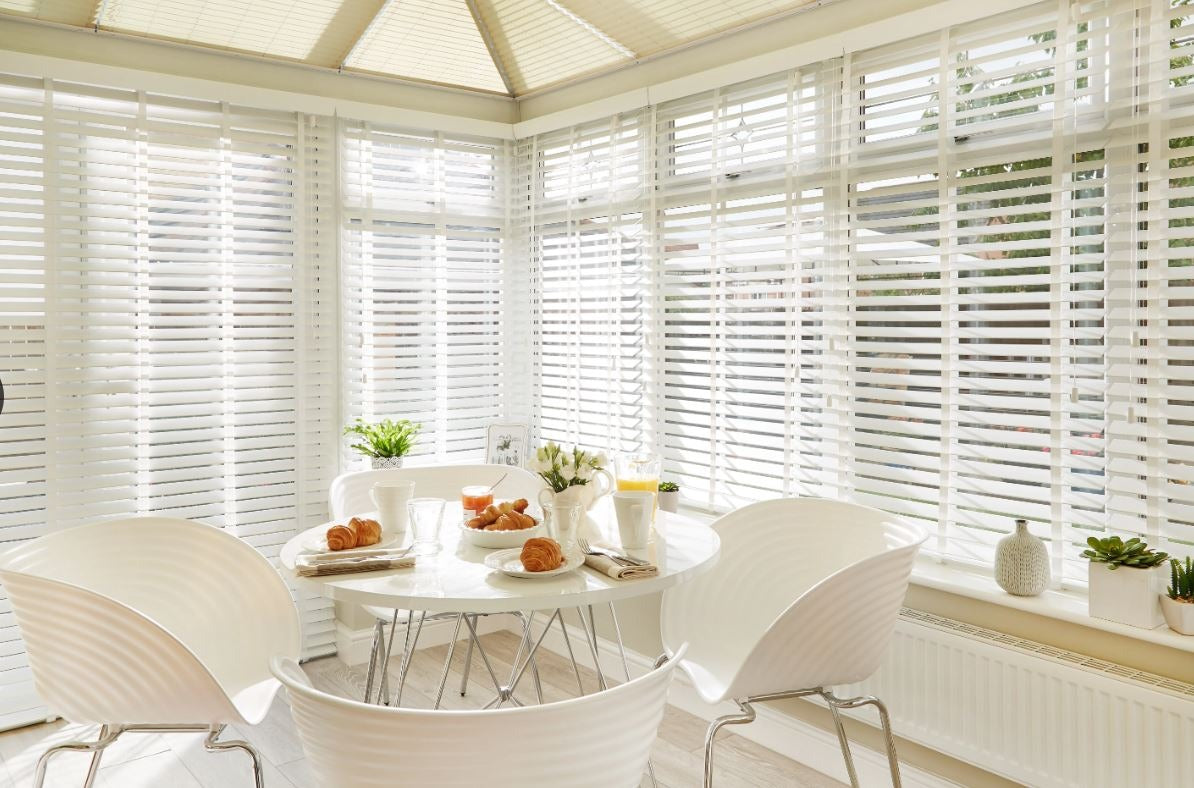 Conservatory
 Office
 Kitchen
 Bathroom
 Dining Room
 Kids Room
 Living Room
 Bedroom
 Bay Window
 Conservatory Window
 Tild and Turn Window
 Bi Fold Window
 Roof of Skylight
 French Door
 Sliding Door
Cafe Shutter Blinds: Covering the Bottom Half and Leaving the Light
- by Mariam Labadze
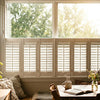
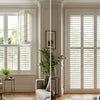
Cafe shutter blinds cover the lower portion of a window and leave the upper portion permanently open. That is the whole product, and it answers exactly one problem well: the person walking past your front room at eye level.
Sold honestly, that is a strong offer. Sold as a complete window treatment it is not, and people discover the difference in January when the low sun arrives.
Key Takeaways
-
Half the window, all the light. Cafe shutter blinds hide the bottom and leave the top of the glass clear.
-
One problem, solved properly. Eye level privacy from the pavement is what this layout exists for.
-
Low sun goes straight over. An open top half does nothing about winter glare or a summer sunrise.
-
Overlooked from above. A neighbour's upstairs window sees everything the open top half shows.
-
The fixing line is the risk. A half height frame hangs from nothing, so it has to be set dead level.
What Cafe Shutter Blinds Cover and What They Leave
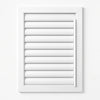
A half height shutter is a short frame holding hinged panels, fixed across the lower part of the opening. Above it there is nothing. No rail, no upper panel, no fabric, just glass.
That is the difference from a tiered shutter, which fills the whole opening in two independently hinged halves. A tiered panel can be shut top and bottom, and cafe shutter blinds cannot, because the top of the window was never covered.
The appeal is architectural as much as practical. The look belongs to shopfronts and townhouse kitchens, and it leaves the head of the glass dropping light deep into the room. Across the shutter blinds uk market this is what people choose when they like shutters but do not want the window to vanish behind them.
What you are left with is a permanent compromise: half the window a louvred panel you can tilt, the other half clear glass, all year.
The Window Types That Suit a Half Shutter
Tall windows are the natural home. A sash with a generous head leaves plenty of glass above the panel, so the room keeps its daylight.
Street facing ground floors are the second condition. If the glass starts near waist height and the pavement runs close by, cafe shutter blinds cover the exact band that matters and nothing you did not need covered.
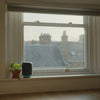
Short windows are the obvious mismatch. A half height panel across a squat opening hides most of the glass and still leaves a gap at the top, which is the drawback of both options at once and a job a plain roller blinds fitting does better.
Bays suit the style for the same reason terraces do. Much of the demand for shutter blinds for bay windows lands here, and every return needs its own panel with the top edge aligned across the bay, or the eye catches the step instantly. That alignment is what the fitting charge on most bay window blinds is really buying.
Privacy Without Losing the Room's Light
The privacy cafe shutter blinds give you is specific. They block the sightline of someone standing on the pavement and looking horizontally into the window, which is the one that bothers most people in a terrace, and they handle it completely.
They do not block anyone looking down. A first floor flat opposite, a neighbour at an upstairs window, the top deck of a passing bus: all of them see over the panel. Height beats a half shutter every time.
They also do nothing after dark. Once the lamps are on and the street is black, the open upper half is the most visible part of the house.
Light is where the layout earns its reputation. Tilt the louvres on the lower panel and the bottom of the room softens while the top keeps pouring daylight in. On a north facing front room that is the real argument for cafe shutter blinds over anything covering the whole opening.
Where the Top Half Still Needs Something
Low winter sun arrives at precisely the height a half shutter does not cover. From late autumn it comes in flat, straight over the panel and into the eyeline of anyone sitting down, and the louvres cannot do a thing about it.
The usual answer is a second covering at the head of the window, pulled down over the open half when the glare is bad and left rolled away the rest of the time. Cafe shutter blinds plus a plain blind above is not an elegant pairing, and it works.
Evenings need the same thought. A room used at night wants something that can close the top, or it accepts being lit up to the street. Decide before you order.
Where the whole window genuinely needs covering and budget is the constraint, wooden blinds across the full opening give you a tiltable louvre on both halves for less than a half shutter plus a second product. Different look, job more completely done.
Fitting a Half Height Panel Straight
A full height frame is braced on all four sides inside the reveal, so the opening keeps it honest. A half height frame is not, and that is where these installations go wrong.
The top edge has nothing above it to reference, so any error in level reads as a slope across the room. Set the frame against a long spirit level rather than measuring down from the head of the window, which is rarely straight in an older house.
Choose the height before anything else. The panel should finish above the eyeline of someone outside and below the point where it starts stealing your own view. Holding a sheet of card at that height for a minute tells you more than any measurement.
The sill is the last detail. Panels finishing flush on a deep sill look deliberate, panels hovering short of it look unfinished, and on wooden shutter blinds a sill out of level shows at the bottom edge of the frame. White shutter blinds are less forgiving again, because the shadow under the bottom rail takes the eye straight to the gap. Cafe shutter blinds are a small amount of joinery in a very visible place.
Frequently asked questions
What are the benefits of shutter blinds?
Durability first. There is no fabric to fade, fray or hold smells, and a well fitted panel outlasts several changes of decor. They give fine control over light, because tilting a louvre is a different choice from opening the whole covering. They suit period glazing, and being a fixture rather than a furnishing, they usually stay with the house when you sell.
How do you clean shutter blinds?
Dust along the louvres with a dry microfibre cloth, working along the blade rather than across it, and tilt the panel halfway so you can reach both faces. For marks, a barely damp cloth is enough on most finishes. Keep water off the hinges and tilt pins, dry anything you have wetted, and never take a scouring pad to a painted blade.
Are shutter blinds suitable for kitchens?
They work, with conditions. Every louvre is a flat ledge that collects airborne grease, so a kitchen panel wants wiping down far more often than one in a living room. Keep timber away from the splash zone around a sink and pick a wipeable finish instead. On a half height panel the exposure is lower, simply because the shutter sits further from the hob.