Skip to content

 Vertical Blinds
 Roman Blinds
 Roller Blinds
 Venetian Blinds
 Day and Night Blinds
 Skylight Blinds
 Children
 Wooden Blinds
 Curtains
 Blinds Accessories
 White
White Yellow
 Gold
Gold Green
Green Grey
Grey Pink
Pink Orange
 Animal
 Floral
 Geometric
 Striped
 Motorized Day and Night Blinds
 Motorized Roller Blinds
 No Drill Rollers
 Perfect Fit Wooden
 Perfect Fit Metal
 Thermal Blinds
 Better Sleep Blinds
 Cordless Blinds
 No Drill Blinds
 Blackout Blinds
 Waterproof Blinds
 Easy Wipe Blinds
 Taped Blinds
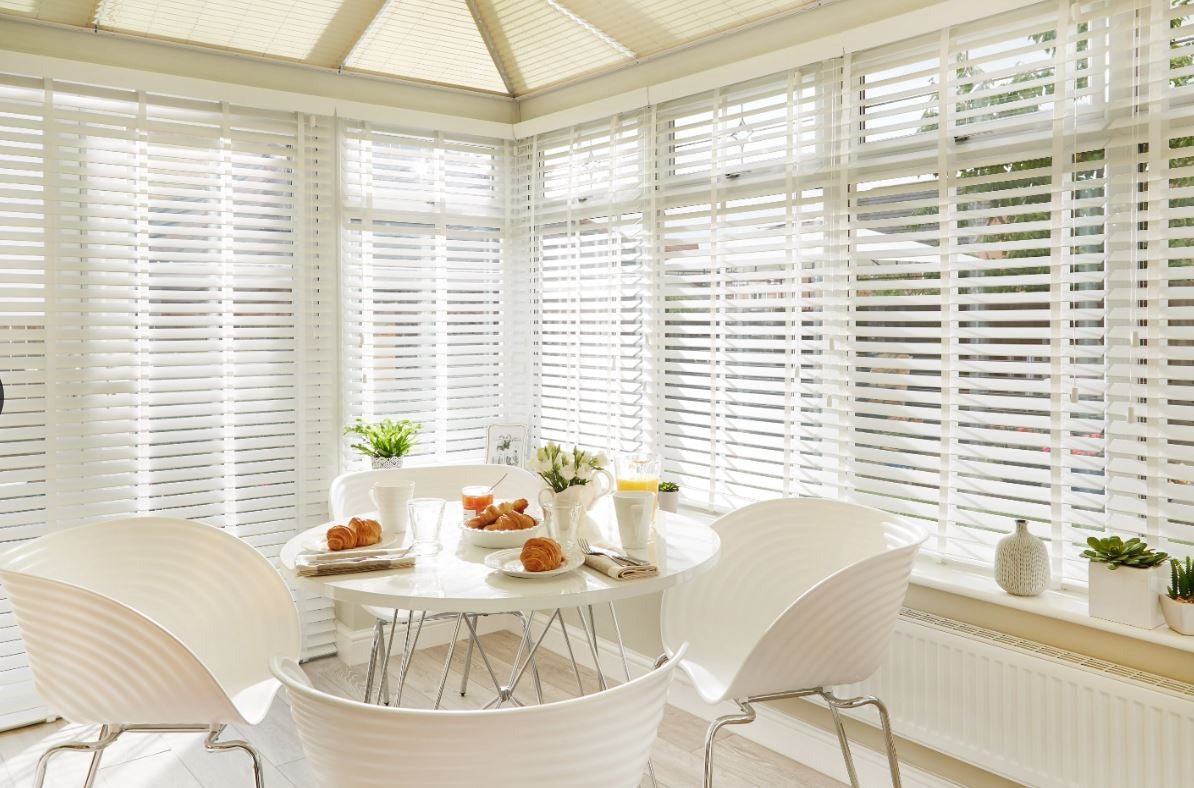 Conservatory
 Office
 Kitchen
 Bathroom
 Dining Room
 Kids Room
 Living Room
 Bedroom
 Bay Window
 Conservatory Window
 Tild and Turn Window
 Bi Fold Window
 Roof of Skylight
 French Door
 Sliding Door
Conservatory Roof Blinds: How to Tame Heat and Glare Overhead
- by Mariam Labadze
 Conservatory roof blinds are worth it if your conservatory overheats in summer, feels cold in winter or suffers harsh overhead glare. Fitted to the glazing bars above your head, they block direct sun before it enters, cut glare on screens and add a layer of insulation, making the room usable across far more of the year. Several types exist to suit different roof shapes and budgets.
The roof is the real problem in most conservatories. Sun pours in from above for far longer in the day than it does through the side windows, which is why a room can feel like a greenhouse by mid-afternoon in July and stubbornly chilly on a January evening. Blinds on the vertical windows do little to fix this. To control the temperature and the glare, you need to treat the glass over your head, and that is exactly what conservatory roof blinds are designed to do.
Why the roof needs its own solution
Glass roofs and polycarbonate roofs both let heat flood in during summer and let warmth escape at night in winter. Because the sun tracks high across the sky for much of the day, the roof takes the brunt of it. Overhead glare is the other daily nuisance: it washes out the television, bounces off laptop screens and makes the room uncomfortable to sit in even when the temperature is bearable.
Roof blinds tackle all three issues at once. They shade the direct sun so the room heats up more slowly, they diffuse or block glare so you can actually use the space, and the better fabrics add a layer of insulation that helps hold warmth in the colder months. If your conservatory is currently a room you avoid at the height of summer, this is the change that brings it back into daily use.
Types of conservatory roof blinds
There is no single "best" style. The right choice depends on your roof shape, your budget and how much of the work you want to do yourself.
Pleated conservatory roof blinds
Pleated blinds are the most common choice for roofs. They fold up compactly into a slim stack, follow the line of each roof pane, and come in fabrics designed to reflect heat and reduce glare. Many use a reflective or metallised backing that bounces solar energy away in summer while helping retain warmth in winter. For roofs made up of standard-sized panels, perfect fit pleated blinds are a popular, tidy option because they clip into the frame without loose cords hanging overhead.
Clip-in roof blinds
Clip-in systems are designed for straightforward DIY fitting. The blind clips into brackets on the glazing bars, so there is minimal drilling and the whole panel can often be removed for cleaning. These suit homeowners who want to avoid the cost of a full installation and whose roof panels are a regular, repeated size.
Thermal roof blinds
If your main complaint is temperature rather than glare, prioritise the fabric. Thermal fabrics with a reflective coating do the heavy lifting on both summer heat and winter warmth. It is worth looking at the wider thermal blinds range to understand the difference a proper insulating fabric makes compared with a plain shading one.
Skylight-style blinds
Some conservatory roofs, particularly modern lantern or flat-roof designs with roof windows, are better served by fitted skylight blinds made for that exact frame. If your roof includes roof windows or lantern glazing, browse the skylight blinds options to find a fit made for that shape rather than trying to adapt a standard roof blind.
Choosing the best blinds for your conservatory roof
Start with your biggest frustration. If the room is unbearable in summer, lead with a heat-reflective fabric. If glare on screens is the daily annoyance, a diffusing fabric that softens the light without plunging the room into gloom may suit you better. If winter cold is the issue, thermal performance comes first.
Then consider the roof itself. Symmetrical roofs with equal-sized panels are the easiest and cheapest to blind, because the panels can share a repeated blind size. Roofs with lots of odd-shaped panes, curved sections or a lantern take more planning and usually cost more. Colour matters too: lighter fabrics reflect more heat, while richer tones can look striking but may absorb more warmth.
For the vertical glass as well as the roof, coordinating everything through one conservatory blinds collection keeps the look consistent and the measuring simpler, since you can plan the whole room at once.
A few conservatory blinds ideas worth borrowing
Pairing heat-reflective roof blinds with lighter side blinds keeps the room bright but comfortable, rather than dark and cave-like. In a dining conservatory, a softly diffusing roof fabric gives a gentle, even light for daytime meals. In a conservatory used as a home office, prioritise glare control over the desk area first, then worry about the rest. And if you use the room year-round, thermal fabric on the roof is the single change that most extends the seasons you can enjoy it.
How roof blinds are fitted
Fitting depends on the system. Clip-in and perfect fit designs attach to brackets on the glazing bars with little or no drilling, which is why many homeowners fit these themselves. More complex roofs, lanterns and bespoke shapes are usually measured and installed professionally, because getting each panel sized correctly on an angled or curved roof is fiddly and mistakes are expensive. Whichever route you take, accurate measuring of every panel is the step that decides whether the finished job looks neat or gappy.
Are they worth it?
For a conservatory that is currently too hot, too cold or too bright to enjoy, yes. Roof blinds are the difference between a room used for a few pleasant weeks a year and one you can sit in comfortably across the seasons. They are an investment, particularly on complex roofs, but they address the exact cause of the discomfort rather than just softening the symptoms.
Frequently asked questions
Are conservatory roof blinds worth it?
If your conservatory overheats in summer, loses warmth in winter or suffers from overhead glare, they are well worth it. Roof blinds treat the glass that causes most of the problem, extending how much of the year the room is genuinely comfortable. For a rarely used conservatory, they often turn wasted space back into a room you want to spend time in.
How do you fit blinds to a conservatory roof?
Simpler systems such as clip-in and perfect fit blinds attach to brackets on the glazing bars with minimal or no drilling, and many people fit these themselves. Complex roofs, lanterns and curved or odd-shaped panels are usually measured and installed professionally. In every case, measuring each panel accurately is the most important step for a neat finish.
What is the best type of conservatory roof blind?
Pleated blinds are the most popular all-rounder because they fold away neatly and come in heat-reflective and thermal fabrics. The best choice for you depends on your priority: reflective thermal fabric for temperature, a diffusing fabric for glare, and skylight-specific blinds for lantern or roof-window designs. Match the blind to your roof shape and your biggest frustration.