Skip to content


 Vertical Blinds
 Roman Blinds
 Roller Blinds
 Venetian Blinds
 Day and Night Blinds
 Skylight Blinds
 Children
 Wooden Blinds
 Curtains
 Blinds Accessories
 White
White Yellow
 Gold
Gold Green
Green Grey
Grey Pink
Pink Orange
 Animal
 Floral
 Geometric
 Striped
 Motorized Day and Night Blinds
 Motorized Roller Blinds
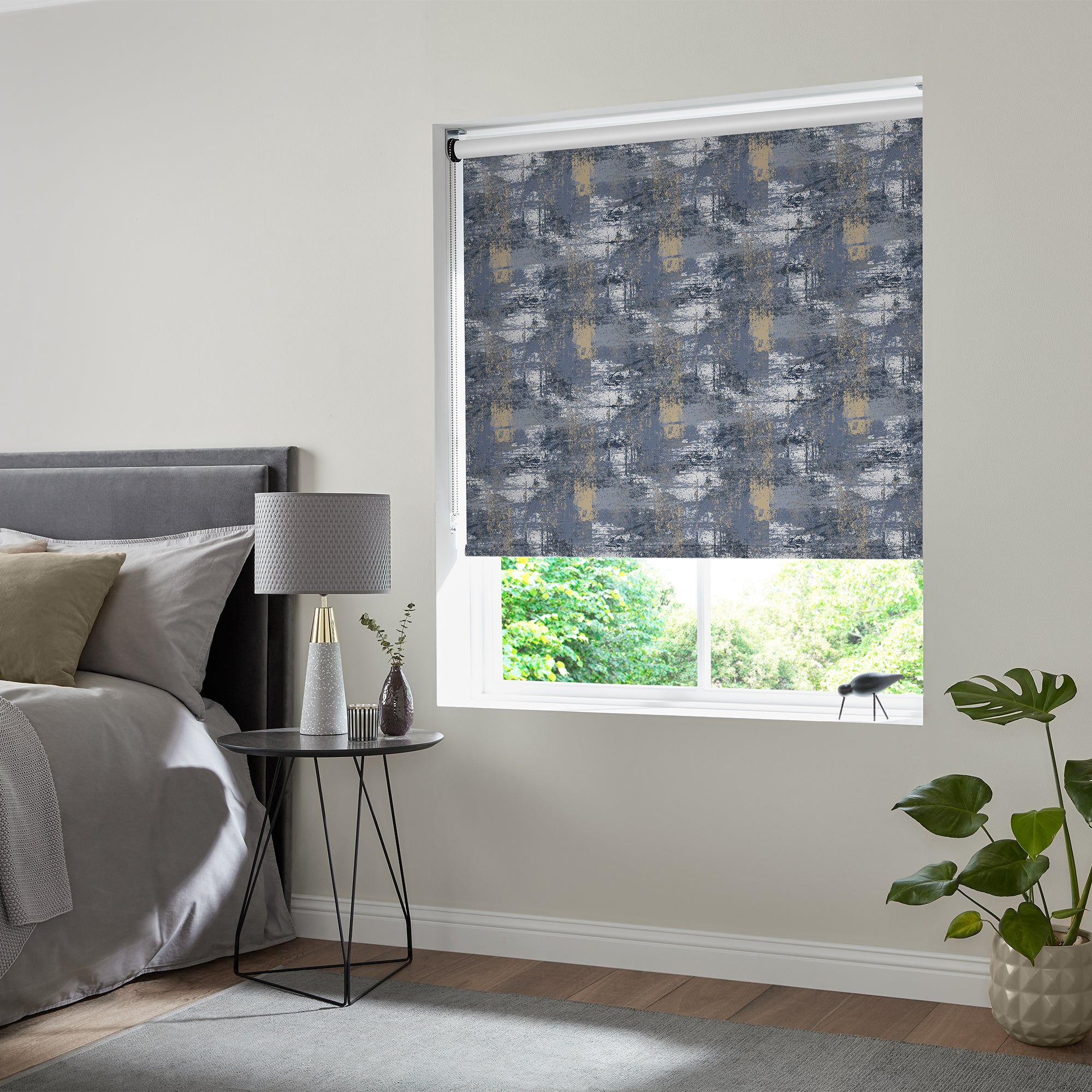 No Drill Rollers
 Perfect Fit Wooden
 Perfect Fit Metal
 Thermal Blinds
 Better Sleep Blinds
 Cordless Blinds
 No Drill Blinds
 Blackout Blinds
 Waterproof Blinds
 Easy Wipe Blinds
 Taped Blinds
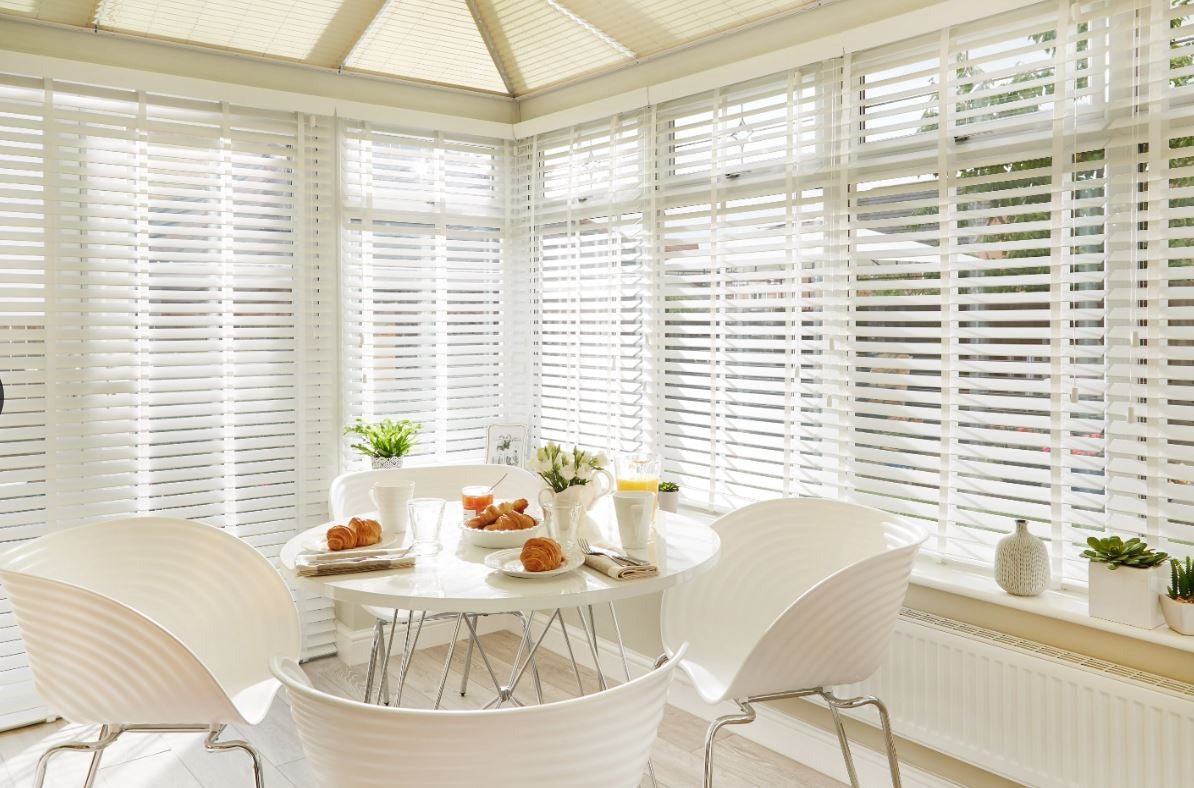 Conservatory
 Office
 Kitchen
 Bathroom
 Dining Room
 Kids Room
 Living Room
 Bedroom
 Bay Window
 Conservatory Window
 Tild and Turn Window
 Bi Fold Window
 Roof of Skylight
 French Door
 Sliding Door
Double Roller Blinds: One Blind, Two Fabrics, Day and Night Control
- by Mariam Labadze
 Double roller blinds are two separate blinds mounted on a single bracket, usually one sheer or dimout paired with one blackout, giving you independent day and night control at the same window. They are not the same as a zebra blind, which is a single fabric with alternating sheer and solid bands. That distinction is the whole point of this guide.
[toc]
Searchers confuse the two constantly, and the confusion costs money when you order the wrong thing. Once you can tell a double roller from a zebra, everything else about choosing one falls into place. So we will start there and build out.
Key Takeaways
-
Two blinds, one bracket. A double roller stacks two independent rollers on a single fixing, so each can be raised and lowered on its own.
-
Zebra is one fabric. A zebra, often sold as a day and night blind, uses a single looped fabric with alternating solid and sheer stripes.
-
Pairing is the point. The usual combination is a sheer or dimout for daytime softness and a blackout for night, covering the full day at one window.
-
Control is genuinely independent. You can run the sheer alone, the blackout alone, or both, which a zebra's single fabric cannot match.
-
Format follows the room. Bedrooms lean on the blackout layer, living rooms on the sheer, and made to measure sizing keeps both fabrics square to the glass.
Double Roller Versus Zebra: The Distinction That Matters
The confusion is understandable, because both promise day and night control and do it in completely different ways. Double roller blinds are literally two roller blinds sharing one set of brackets, each with its own tube, its own fabric and its own chain or motor. You operate them separately. A zebra blind is a single blind whose fabric is woven in alternating solid and sheer bands that slide over each other.
That difference decides what each can do. With a double roller you choose exactly which layer is down and by how much, so you can have the sheer covering the glass while the blackout sits fully rolled away. A zebra only offers the positions its band alignment allows, which is a narrower range. If independent control of two distinct fabrics is what you are after, double roller blinds are the format that delivers it, and no amount of clever banding on a single fabric will match it.
How a Double Roller Bracket Works
The bracket is what makes the format possible. A double roller uses a deeper bracket that holds two tubes, one behind the other, with the front blind sitting closer to the room and the rear blind nearer the glass. Each tube runs on its own mechanism, so the front and back blinds never interfere with one another as they roll.
Because the front blind sits proud of the window, a double roller projects a little further into the room than a single roller. That is worth knowing if the window is behind a deep sill or a radiator, since you want the fabric to clear both. In most rooms the extra projection is small and goes unnoticed once the blind is dressed, but it is the one physical trade off of putting two blinds where one usually goes, so measure the depth before you order.
The Two Fabrics: Pairing Sheer, Dimout and Blackout
The pairing is where you make the blind your own. The most popular combination puts a sheer or a dimout at the front and a blackout roller blind at the back. During the day you lower the sheer for softened light and privacy without losing the view, and at night you draw the blackout for darkness and full screening.
You are not limited to that mix. A dimout paired with a blackout suits a bedroom that wants two levels of darkening, while a sheer paired with a standard dimout suits a living room that rarely needs full black. White roller blinds are a common choice for the front sheer, because pale fabric diffuses daylight softly and keeps the window feeling bright. Ordering both layers as made to measure roller blinds means each fabric sits square to the glass with even gaps down the sides, which matters more with two blinds than with one, since any error is doubled.
Day and Night Control in Practice
Think about a single window through a whole day. Morning sun is softened by the front sheer while you still see out. At midday you might raise both for the clear view. Late afternoon glare on a screen is cut by dropping the dimout, and at night the blackout comes down for sleep or privacy. That sequence is the promise of day and night roller blinds, and a double roller delivers it with two fabrics you control independently.
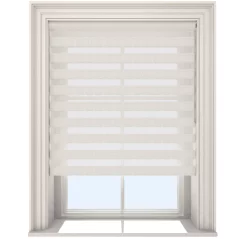
A zebra achieves a lighter version of the same idea with one fabric, sliding the bands between aligned and offset. You can see that style across our day and night blind range. It is neat and slim and sits close to the glass, but it cannot give you a true sheer and a true blackout at the same window. For anyone who wants both ends of that range properly, the double roller is the honest answer.
Where Double Rollers Earn Their Place
Bedrooms are the obvious home for a double roller, because the blackout layer handles sleep while the sheer softens the morning without you having to open up fully. Nurseries benefit for the same reason, with the added flexibility of dimming for naps and blacking out for night. If darkness is the priority, look at the fabrics in our range of blinds for full darkness for the rear layer.
Living rooms and kitchens use the format differently, leaning on the front sheer for glare control and daytime privacy and only occasionally calling on the second layer. Home offices are another strong fit, where you want to kill screen glare in the day and darken the room for evening calls. In each case the value is the same, one window and two independent fabrics giving you the full range of light in between.
Fitting, Brackets and No Drill Options
Fitting a double roller is much like fitting a single one, with the deeper bracket the only real difference. It can go inside the recess or on the face of the wall above the window, and it works with a chain on each blind or with motorised tubes for a cord free finish. Measure carefully, because two fabrics magnify any error in squareness and you will see it in uneven gaps.
If you rent, or would rather not drill, the format still works. No drill blinds clamp to the window frame and can carry a double roller on many uPVC windows, so you get two layer control without fixings in the wall. For a full comparison of the two day and night approaches, our guide on how day and night blinds compare with rollers sets the choice out clearly and saves us rehearsing the whole argument here.
Frequently Asked Questions
What are blackout roller blinds?
Blackout roller blinds use a tightly woven, coated fabric that stops light passing through the panel, so a room darkens close to full black when the blind is down and fitted snugly. On a double roller they usually sit as the rear layer, paired with a sheer at the front. Fitted inside a recess, a little light still escapes at the edges, which is why the fabric quality and a close fit both matter for the darkest result.
How do you measure for roller blinds?
Decide first whether the blind sits inside the recess or on the face of the wall. For a recess fit, measure the width in three places and take the smallest, then measure the drop from top to sill. For a face fit, add overlap on each side and below for better light control. For made to measure roller blinds, follow the retailer's deduction guidance so the fabric clears the brackets.
Are roller blinds good for insulation?
Roller blinds add a modest layer of insulation by trapping a pocket of still air between the fabric and the glass, which slows heat loss in winter and glare in summer. A blackout or thermal backed fabric improves the effect, and a close fit inside the recess helps most. They will not match secondary glazing, but as an easy, affordable upgrade roller blinds make a noticeable difference on a cold window.