Skip to content


 Vertical Blinds
 Roman Blinds
 Roller Blinds
 Venetian Blinds
 Day and Night Blinds
 Skylight Blinds
 Children
 Wooden Blinds
 Curtains
 Blinds Accessories
 White
White Yellow
 Gold
Gold Green
Green Grey
Grey Pink
Pink Orange
 Animal
 Floral
 Geometric
 Striped
 Motorized Day and Night Blinds
 Motorized Roller Blinds
 No Drill Rollers
 Perfect Fit Wooden
 Perfect Fit Metal
 Thermal Blinds
 Better Sleep Blinds
 Cordless Blinds
 No Drill Blinds
 Blackout Blinds
 Waterproof Blinds
 Easy Wipe Blinds
 Taped Blinds
 Conservatory
 Office
 Kitchen
 Bathroom
 Dining Room
 Kids Room
 Living Room
 Bedroom
 Bay Window
 Conservatory Window
 Tild and Turn Window
 Bi Fold Window
 Roof of Skylight
 French Door
 Sliding Door
No Drill Venetian Blinds: How the Clip-In Fitting Actually Works
- by Mariam Labadze
 No drill venetian blinds hold in place without screws by gripping the glazing bead, the raised plastic lip that frames the glass in a UPVC window. A perfect fit frame is a slim four-sided surround that clips over that bead and carries the blind against the glass. A clip-on bracket is different: it hooks two small brackets onto the top bead only. Both avoid drilling, but the frame is the sturdier route.
[toc]
Key Takeaways
-
The bead does the work. No drill venetian blinds grip the glazing bead, so the whole method depends on your window having a raised bead deep enough to hold a clip.
-
Frame and bracket are not the same. A perfect fit frame surrounds the glass on four sides; a clip-on bracket grips the top bead only and is lighter duty.
-
One measurement decides it. The bead depth, from the glass to the top of the bead, is the number that tells you whether a clip will hold.
-
Some profiles will not take a clip. Flush or bevelled beads, aluminium frames and timber windows without a raised bead usually rule out a clip-in fit.
-
It is genuinely damage-free. No holes means no repairs if you move or change the blind, which is why renters and leaseholders reach for it.
Start with the bead, not the bracket
Most articles tell you no drill venetian blinds "just clip into the frame" and stop there. That skips the part that decides whether the blind will hold at all. The clip does not grip the whole window. It grips one specific feature: the glazing bead.
On a standard UPVC window the glass is held in by a bead, a strip of plastic that runs around the inside of the sash and stands slightly proud of the glass. A perfect fit frame has small gaskets, soft plastic tabs, that push into the gap between the bead and the frame. The frame then sits under tension against the glass, held by the spring of those gaskets over the bead. Nothing is screwed. The geometry of the bead is what stops the frame falling forward.
That is why the bead matters more than the blind. If the bead is too shallow, too rounded or flush with the frame, the gasket has nothing to bite and the fit fails. Before anything else, look at your window and find the bead. If you want a broader view of what fits this way, the no drill blinds collection is built around exactly this bead-and-gasket idea.
Perfect fit frame versus clip-on bracket
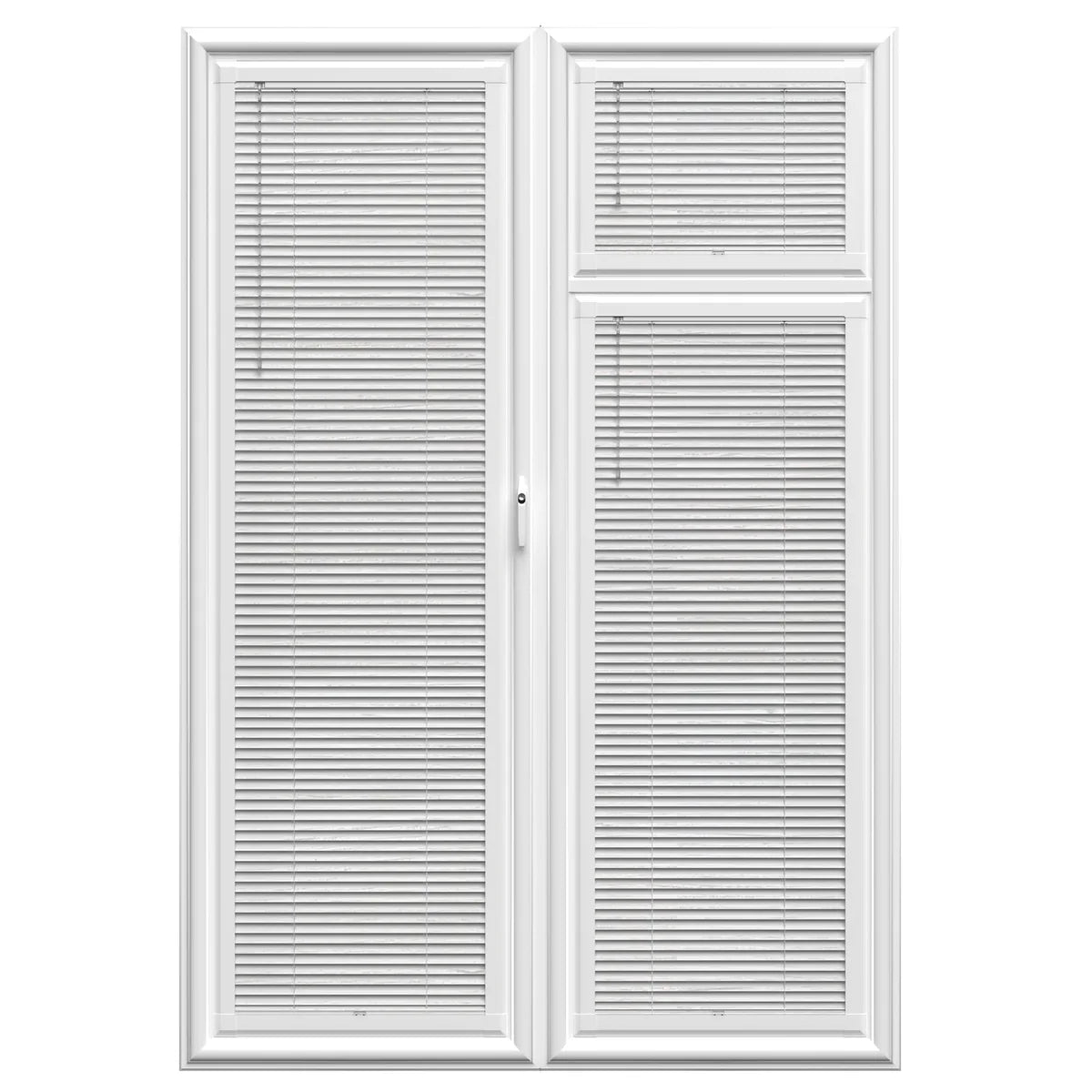
These two get lumped together and they should not be. A perfect fit frame is a full surround, four slim sides that clip over the bead all the way round and hold the slats inside a rigid rectangle. Because it is supported on every side, the blind moves with the window, sits flat against the glass and does not swing when you open the sash.
A clip-on bracket is a lighter idea. Two brackets hook over the top bead and the headrail drops onto them, so the blind hangs from the top edge only. It is quicker and cheaper, but it carries less weight, it can lean forward on a deep sill, and it does not sit as tight to the glass. For a slim aluminium venetian it can be fine. For a heavier wooden slat it is asking a lot.
The choice between them is really about weight and window type. If you are fitting into UPVC and want the blind flush and stable, the frame is the answer, and the clip-in blinds for UPVC route is designed around that four-sided grip rather than a top hook.
The measurement that decides it
Here is the number that settles whether no drill venetian blinds will work on your window: bead depth. Measure from the face of the glass to the top edge of the glazing bead. That depth is what the gasket sits against, and it needs enough of a lip for the clip to hold under tension.
If the bead is generous and square, you are in good shape. If it is shallow, rounded off, or sits almost flush with the frame, the gasket has too little to grip and the frame will work loose over time. Also check the flat width of the bead face, because the gasket needs somewhere to seat, not just a depth to hook behind.
Take the measurement at more than one point around the window, since beads are not always uniform. The general principle of choosing a damage-free method by window type is covered in our guide to fitting blinds without drilling, which is worth reading alongside this if you have a mix of window styles in the house.
Frame profiles that will not take a clip
Not every window suits a clip-in fit, and it is better to know before you order. Aluminium windows often have a slim, bevelled bead or a flush glazing detail with no raised lip, so there is nothing for the gasket to hold. Timber windows frequently have the glass puttied or beaded flush, again leaving no clip point.
Bevelled or "sculptured" UPVC beads, the rounded decorative kind, are the common trap. They look like they have depth, but the sloping face gives the gasket a poor seat and the frame can creep loose. Very shallow beads on older or budget UPVC are the other one to watch. In all of these cases you are usually better with a face-fixed or top-fixed method, or a clamp-style bracket, rather than forcing a clip.
If the clip route is out, that does not mean drilling is your only option; the wider venetian blind range includes standard fittings that suit windows a clip cannot grip, from aluminium slats to deeper wooden ones.
Which slats suit a no-drill fit
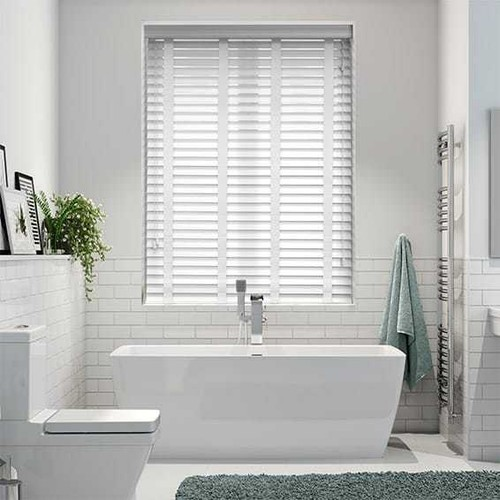
Weight is the quiet factor. Aluminium venetian blinds are light, so they suit a clip-in fit on almost any suitable bead and sit tight to the glass without straining the gaskets. That makes aluminium venetian blinds a natural match for kitchens and bathrooms where you also want no fixings in tiled reveals.
Wooden and faux wood slats are heavier, and while a full perfect fit frame will carry them, a bare clip-on bracket may not hold them level over time. If you want the shutter look with a clip-in fit, a product like this perfect fit shutter blind is built around the frame from the start, so the weight is supported on all four sides rather than hung from the top.
For made to measure venetian blinds ordered to a clip-in frame, give the glass size accurately, because the frame is built to sit inside the bead, not across the plaster reveal. A frame cut to the wrong reference will either foul the bead or leave a gap.
Fitting and living with them
The appeal of no drill venetian blinds is that fitting is quick and reversible. You clip the frame gaskets into the bead gaps, work round all four sides, and press home until the frame sits tight against the glass. There are no wall plugs, no dust and no repairs to make if you take it down later, which is the whole point for renters and leaseholders.
Living with them is straightforward too, with one habit worth keeping. Because the frame holds under tension, give it a check every few months and press any lifted corner back home, especially on a window you open often. Blackout venetian blinds fitted this way still behave like any venetian at the edges, so if you need full darkness treat the clip-in blind as light control and add a separate blackout layer behind it.
No drill venetian blinds solve a specific problem cleanly: coverage without a single hole in a UPVC frame. If your beads are square and deep enough, browse the full range of no drill blinds with the bead depth already measured, and you will know at a glance which frames your windows can actually hold.
Frequently asked questions
How do you fit no drill venetian blinds?
Find the glazing bead on your UPVC window and check it stands proud of the glass. Push the frame's gaskets into the gap between the bead and the frame, working around all four sides in turn, then press the frame firmly until it sits tight against the glass. The blind clips into the frame. No screws, plugs or drilling are needed, and the whole job takes minutes once the frame is measured to the glass size.
Do perfect fit blinds fit all windows?
No. Perfect fit frames rely on a raised glazing bead to grip, so they suit most standard UPVC windows but not all. Aluminium windows, timber windows with flush beading and profiles with shallow or bevelled beads often give the gaskets nothing to hold, and the frame will work loose. Measure your bead depth and check the bead is square before ordering. Where a clip cannot grip, a face-fixed or clamp-style fitting is the reliable route instead.
How do you remove venetian blinds?
For a clip-in frame, pull the frame gently away from the glass at one corner to release the gaskets from the bead, then work round until it lifts free, leaving no marks. For a bracket-fitted blind, tilt the slats open, release the headrail from its brackets, usually by lifting or unclipping the front lip, and lower it out. Standard screw-fixed brackets stay on the wall unless you unscrew them. Support the weight of the blind as it comes away.