Skip to content


 Vertical Blinds
 Roman Blinds
 Roller Blinds
 Venetian Blinds
 Day and Night Blinds
 Skylight Blinds
 Children
 Wooden Blinds
 Curtains
 Blinds Accessories
 White
White Yellow
 Gold
Gold Green
Green Grey
Grey Pink
Pink Orange
 Animal
 Floral
 Geometric
 Striped
 Motorized Day and Night Blinds
 Motorized Roller Blinds
 No Drill Rollers
 Perfect Fit Wooden
 Perfect Fit Metal
 Thermal Blinds
 Better Sleep Blinds
 Cordless Blinds
 No Drill Blinds
 Blackout Blinds
 Waterproof Blinds
 Easy Wipe Blinds
 Taped Blinds
 Conservatory
 Office
 Kitchen
 Bathroom
 Dining Room
 Kids Room
 Living Room
 Bedroom
 Bay Window
 Conservatory Window
 Tild and Turn Window
 Bi Fold Window
 Roof of Skylight
 French Door
 Sliding Door
Perfect Fit Venetian Blinds: Why They Suit UPVC Windows Best
- by Mariam Labadze
 Perfect fit venetian blinds are slatted blinds held in a slim clip-in frame that sits directly against the glass of a UPVC window or door, with no drilling required. Because the frame grips the rubber seal around the window bead, the blind fits flush, leaves no gaps down the sides and moves with the door, which is exactly why they suit UPVC so well.
The result is a tidy, built-in finish that a hanging blind cannot match. The slats tilt for light and privacy just like a standard venetian, but the surrounding frame keeps everything neat and stops the blind swinging on doors. For anyone with UPVC windows and doors who wants a clean, gap-free look without tools, perfect fit venetian blinds are close to ideal. Here is how they work and why the pairing with UPVC is so good.
[toc]
What are perfect fit venetian blinds?
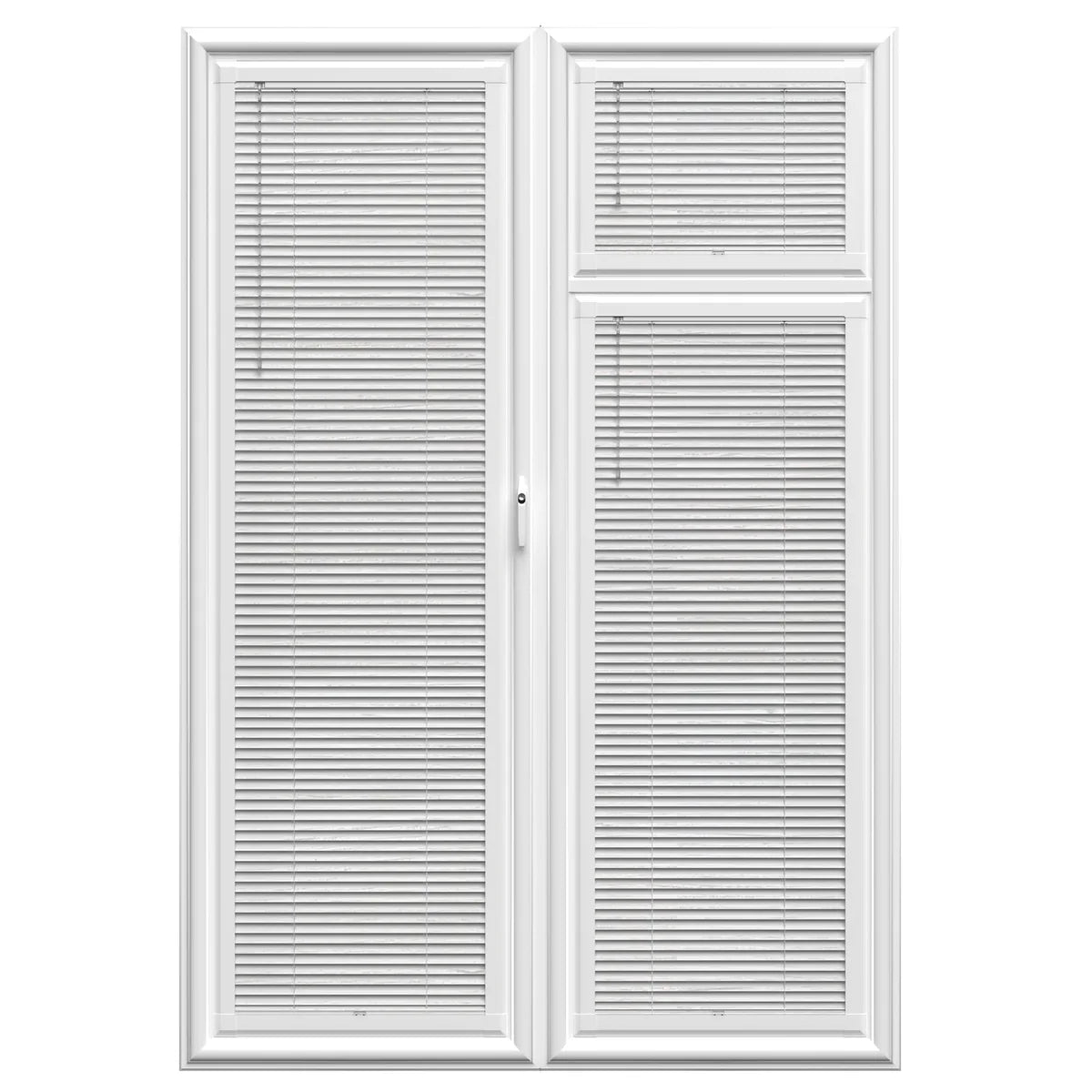
At heart they are ordinary venetian blinds, horizontal slats you raise, lower and tilt, set inside a rigid frame roughly the size of the glass pane. The frame is what makes them "perfect fit". Rather than screwing to the wall or reveal, it clips into place using the window's own construction, so the blind and its frame become a single tidy unit sitting against the glass.
You still get all the venetian benefits: precise light control by tilting the slats, easy raising to clear the view, and a slim profile. What you gain on top is the frame, which holds the blind flat and steady, closes the gaps at the edges, and gives a smart, integrated appearance. Browse the wider venetian blinds range and you will see the same slats offered as standard hanging blinds; the perfect fit version simply adds the clip-in frame.
Slat materials
Two materials dominate. Aluminium slats are slim, light and crisp, and they suit kitchens and bathrooms because they wipe clean and cope with moisture. Faux wood venetian blinds give the warm, painted-timber look many homeowners prefer in living rooms and bedrooms, with the practical advantage that they resist damp far better than real wood, so they will not warp near a kitchen sink or a steamy window. For a perfect fit frame, faux wood is a popular pick because it looks substantial yet stays light enough for the clip-in system.
How the clip-in frame works
The frame relies on a feature every UPVC window shares. Around the glass sits a rubber gasket, the seal between the pane and the plastic bead that holds it. Perfect fit brackets are designed to push into that gasket.
You clip a set of small brackets into the seal around the bead, then the frame snaps onto the brackets so it sits flush against the glass. The whole assembly is held by tension and the grip of the brackets, with no screws, no adhesive and no holes. To take it down, you unclip the frame and pull the brackets out, and the window is left exactly as before.
Because this needs no drilling, perfect fit sits within the broader family of no drill blinds, and the two terms are often used side by side. If you want to understand how perfect fit compares with other tool-free methods such as tension systems and adhesive brackets, our guide to no drill blinds versus perfect fit sets out the differences clearly. The same clip-in principle applies right across the perfect fit blinds range, whether the blind holds venetian slats, pleated fabric or shutter louvres like the Sierra perfect fit shutter blind.
Why they suit UPVC windows best
Perfect fit was, in effect, designed around UPVC. Almost every UPVC window and door is built the same way: a glass pane held by a plastic bead, sealed with a rubber gasket. That consistent construction gives the frame a reliable place to sit and the brackets a firm seal to grip, which is why the system works so dependably on UPVC and less predictably on timber or aluminium frames with different profiles.
No gaps, no swinging
A hanging blind mounted inside a UPVC reveal often leaves gaps down the sides, and on a door it swings and rattles every time you open it. The perfect fit frame cures both. Sitting flush against the glass, it closes the side gaps for better privacy and a cleaner line. Fixed to the door glass, it moves as one with the door, so there is no swing and no clatter.
That door behaviour is the reason perfect fit is such a favourite for glazed doors. Perfect fit blinds for French doors keep the venetian slats flat against each door leaf, clearing the handle and staying put as the doors open and close. The same logic applies to back doors and patio doors with a fixed glazed panel.
Bay windows and awkward runs
Bays are another strong use. Because each window in a bay takes its own individual frame, perfect fit blinds for a bay window handle the angles cleanly, with a separate tidy unit in each pane rather than one large blind fighting the corners. Every blind tilts and lifts independently, which is genuinely useful across a bay that catches sun at different times of day.
What to keep in mind
A few honest points help you choose well. Perfect fit venetian blinds cover the glass within the bead, so the decorative frame and reveal stay visible around them; this is part of the neat, framed look rather than a fault. They are not a blackout solution, since light passes between and around the slats. And they work best within a sensible size range, so very large or unusually shaped panes may be better served by a different format.
Perfect fit blinds in the UK have become popular precisely because they solve real UPVC problems without any of the mess of drilling. No drill venetian blinds give renters a reversible option and give owners a clean, contemporary finish, all fitted by hand in minutes.
Measuring and fitting
Measurement centres on the glass pane and the bead depth rather than the whole window opening, so the frame sits correctly within the bead. Most retailers supply a clear measuring guide and sometimes a template. Fitting is a one-person job: push the brackets into the gasket, clip on the frame, check it sits square, and adjust the slats. No tools, no drilling, no fuss.
Everyday care
Keeping them smart is simple. Dust the slats regularly with a soft cloth or a vacuum brush, and wipe faux wood or aluminium slats with a barely damp cloth when they need it. Since the frame unclips, you can lift the whole unit out to clean the glass behind, then clip it straight back. Operate the tilt and lift gently and the slats will keep their even line for years.
For UPVC windows and doors, perfect fit venetian blinds bring together the timeless look of slatted blinds and a fitting method that is clean, reversible and genuinely gap-free. That combination is why so many UK homeowners settle on them.
Frequently asked questions
What are perfect fit venetian blinds?
They are venetian blinds, horizontal tilting slats, held in a slim rigid frame that clips into the rubber seal around a UPVC window bead. The frame sits flush against the glass with no drilling, giving a tidy, gap-free finish and letting the blind move with a door. You control light by tilting the slats exactly as you would with any venetian.
Do perfect fit blinds damage windows?
No. The frame clips into the existing rubber gasket around the bead using small brackets, held by tension rather than screws or adhesive. There are no holes and no permanent alteration, so the blinds can be removed cleanly and the window left exactly as it was, which is why they suit renters as well as owners.
Do perfect fit blinds fit all UPVC windows?
They fit the large majority of standard UPVC windows and doors, because almost all share the same beaded, gasketed construction the frame relies on. Very large panes, unusual shapes or windows with an unusually shallow bead may not be suitable, so it is worth checking the bead depth and measuring carefully before ordering.