Skip to content

 Vertical Blinds
 Roman Blinds
 Roller Blinds
 Venetian Blinds
 Day and Night Blinds
 Skylight Blinds
 Children
 Wooden Blinds
 Curtains
 Blinds Accessories
 White
 Yellow
 Gold
 Green
 Grey
 Pink
 Orange
 Animal
 Floral
 Geometric
 Striped
 Motorized Day and Night Blinds
 Motorized Roller Blinds
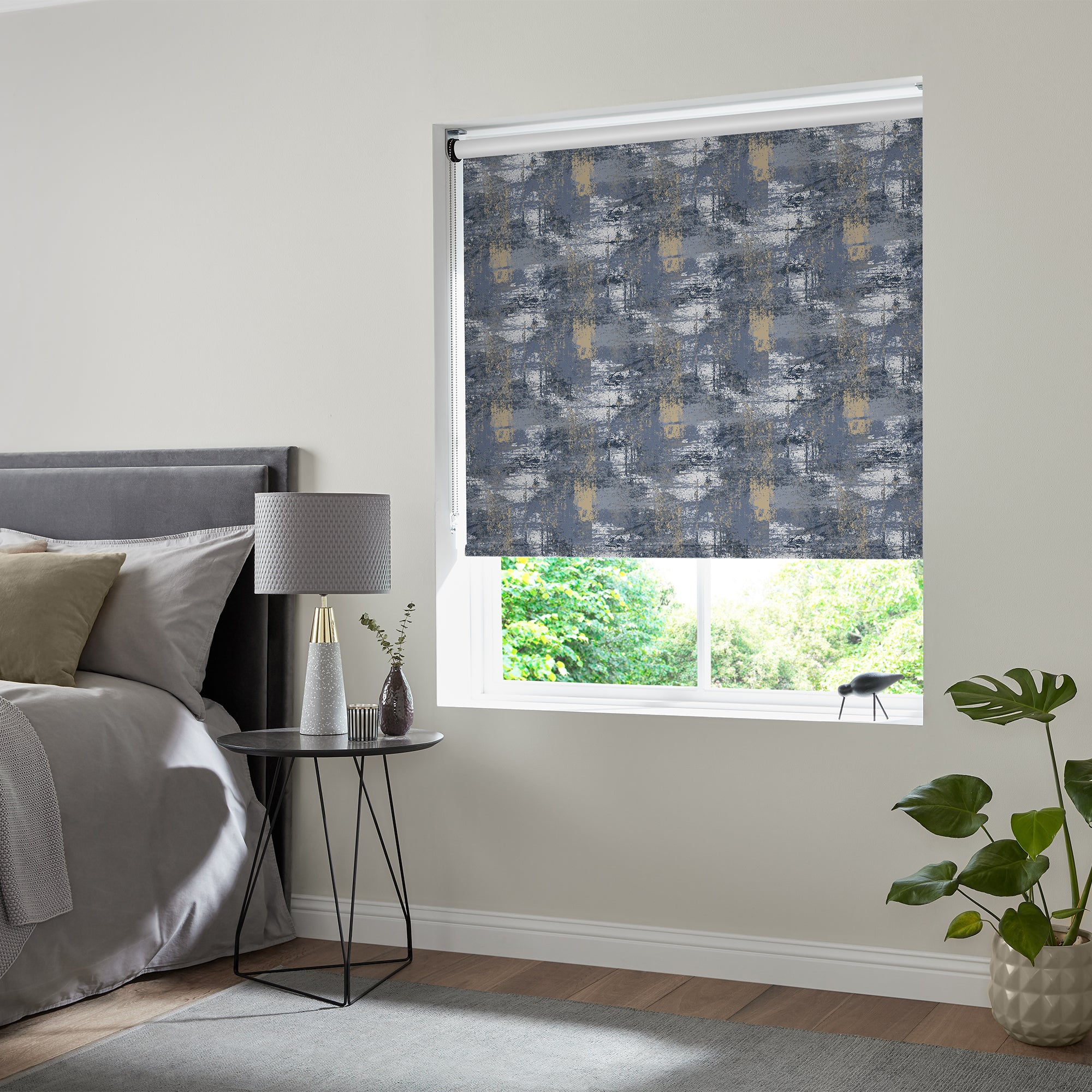 No Drill Rollers
 Perfect Fit Wooden
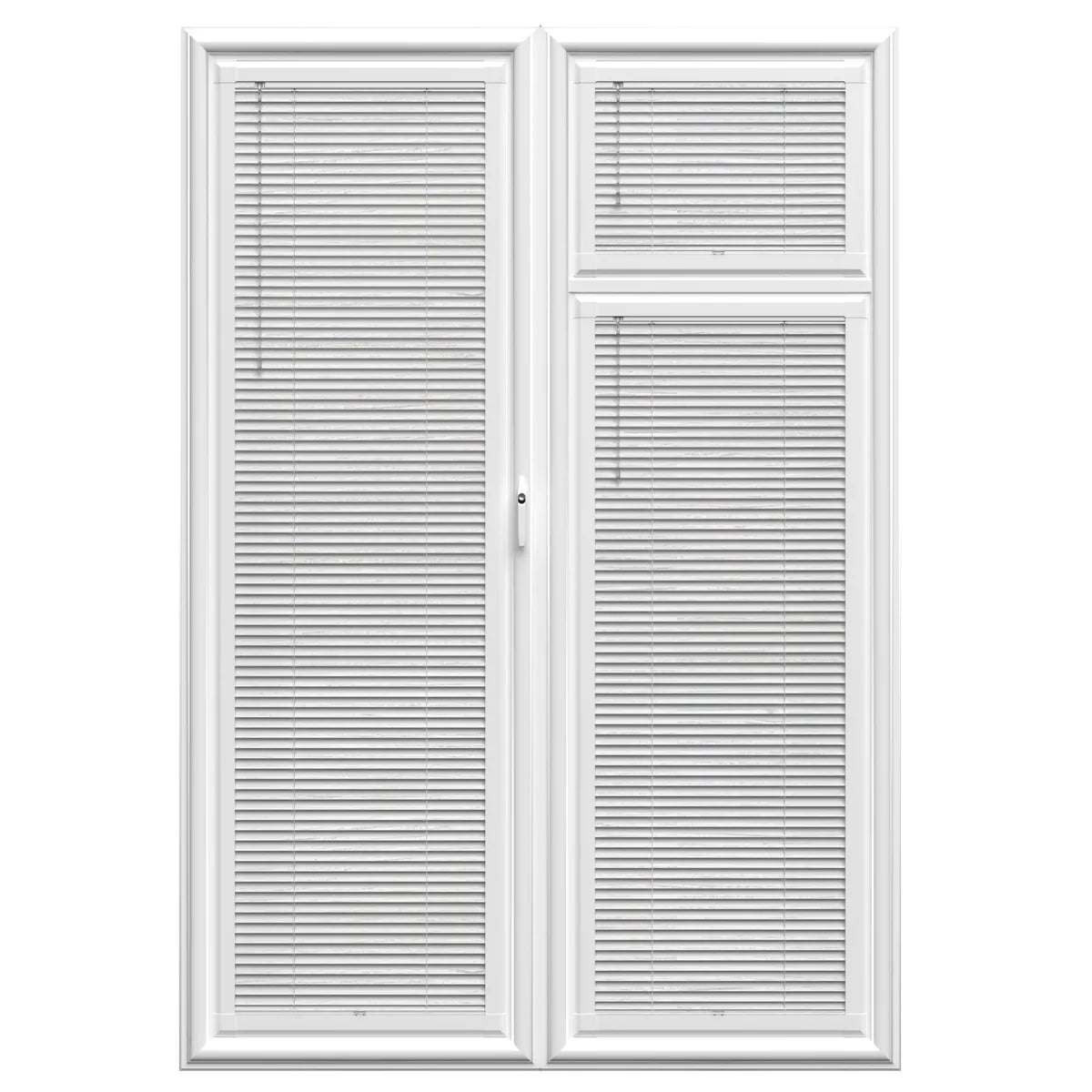 Perfect Fit Metal
 Easy Stick Honeycomb
 Easy Stick Wooden
 Easy Stick Metal
 Thermal Blinds
 Better Sleep Blinds
 Cordless Blinds
 No Drill Blinds
 Blackout Blinds
 Waterproof Blinds
 Easy Wipe Blinds
 Taped Blinds
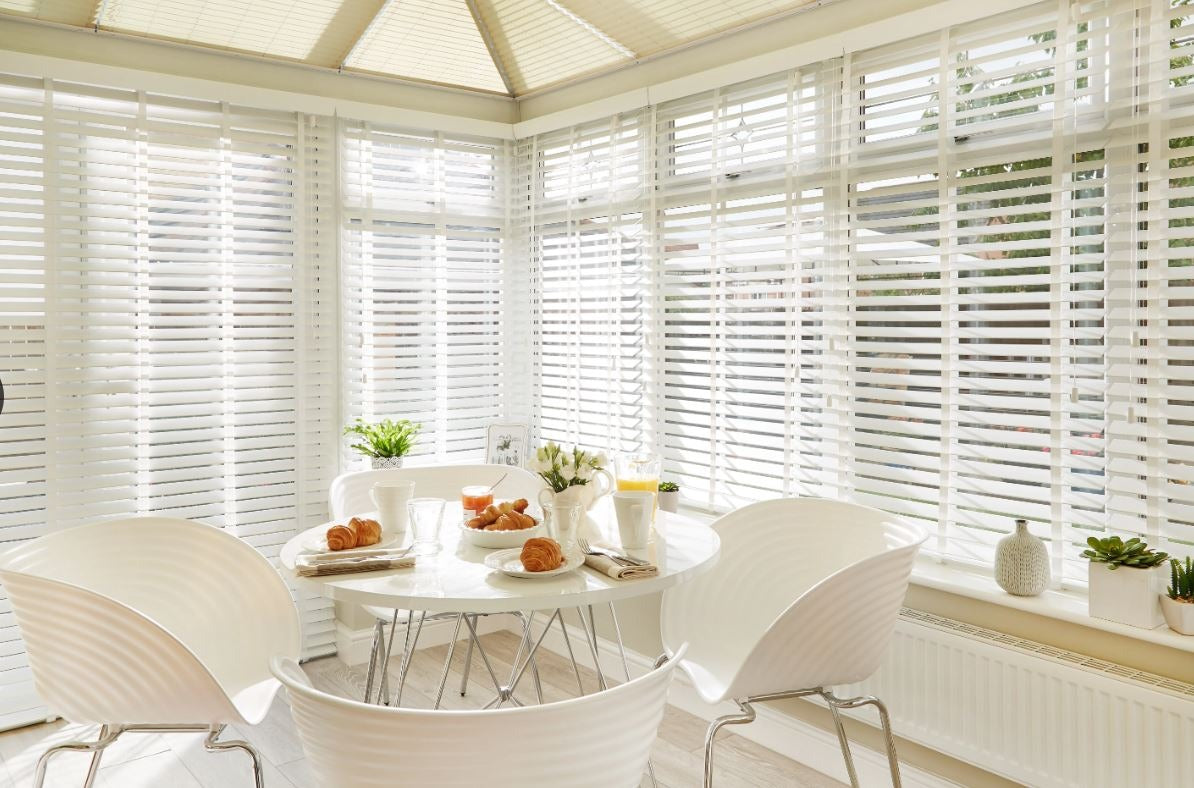 Conservatory
 Office
 Kitchen
 Bathroom
 Dining Room
 Kids Room
 Living Room
 Bedroom
 Bay Window
 Conservatory Window
 Tild and Turn Window
 Bi Fold Window
 Roof of Skylight
 French Door
 Sliding Door
Plantation Shutter Blinds: What the Louvre Width Decides
- by Mariam Labadze
Plantation shutter blinds are defined by one measurement, the width of the louvre, and almost every other choice follows from it: panel count, how much glass you see when the blades are open, how dark the room goes when they are shut. Pick the width first and most of the order form answers itself.
Nobody sells them that way. The conversation opens with colour and closes with cost, and the decision you can never undo gets a sentence somewhere in the middle.
Key Takeaways
-
Width sets the view. A wider blade means fewer of them, so more glass stays visible when the panels are open.
-
Narrow louvres close tighter. More overlaps catch more light, at the cost of a busier looking window.
-
Weight follows width. Big blades build heavy panels, and heavy panels need more hinges and narrower sections.
-
One frame, three layouts. Full height, cafe style and tier on tier all hang from the same basic carcass.
-
No shutter goes properly dark. Plantation shutter blinds leak at every blade joint, and that is the trade for the view.
What Makes Plantation Shutter Blinds Different
A blind hangs in front of a window. A shutter is built into it. That difference explains the cost, the fitting time and what you leave behind when you move.
Each panel is a rigid frame with louvres pinned inside it, hinged to a surround fixed in the reveal or to the face of the wall. Nothing rolls and nothing stacks. To clear the glass you fold the panels back, so the wall beside the window needs somewhere to put them. Plantation shutter blinds take up room when open, and that room has to exist before you order.
The naming is a mess worth untangling. Shutters are not blinds in any technical sense, but shutter blinds is what people type into a search box and the trade has adopted it. The same panels appear as plantation blinds, interior shutters or louvre shutters depending on the site. Across the shutter blinds uk market, plantation means the wide blade style, as opposed to the narrow Victorian blades on old sash windows.
If you are weighing plantation shutter blinds against something slatted, be honest about which problem you are solving. A shutter changes the architecture of a window permanently. A blind is a covering you can swap out on a wet Sunday afternoon.
Louvre Width Changes View, Light and Price
Look through a panel of narrow blades and you are looking at the garden through a ladder. Open a wide one and the obstruction largely disappears. Fewer blades across the same drop means less timber in your eyeline and a window that still reads as a window.
Closed, the arithmetic reverses. Every blade overlaps its neighbour, and every overlap is a seam where daylight gets through. Narrow louvres give you more seams but each one is tighter, so a narrow stack generally shuts a shade darker than a wide one. The difference is small and it is real, and in a bedroom it is exactly where people end up disappointed.
The cost of plantation shutter blinds tracks blade count rather than blade size, which catches buyers out. A narrower louvre means more blades, more tilt pins and more labour per panel, so the slimmest option is rarely the cheapest one on the page. If budget is doing the deciding, a set of wooden blinds gives you the same horizontal line and the same tilt for far less commitment, and the room will not suffer.
Width is also what separates a shutter from venetian blinds, which tilt on a much narrower slat and stack at the head when you raise them. A shutter leaves its blades where they are and folds the whole panel away instead. If you like the louvred look but need the glass genuinely clear sometimes, that matters more than the finish.
There is a ceiling on width, too. A long blade across a generous panel will sag and rattle in a draught, so makers cap panel width as the louvre grows. On a wide opening this is why plantation shutter blinds turn up as a run of narrow panels rather than a pair of broad ones.
Full Height, Cafe Style and Tier on Tier
Plantation shutter blinds come in three layouts, sharing the same frame, hinges and louvre options.
Full height is one panel running sill to head, tilted as a single unit. Simplest to build, cheapest per window, and the default unless the room argues otherwise.
Cafe style covers the lower portion only and leaves the top of the window permanently open. It answers one problem, the passer by at eye level, and nothing else.
Tier on tier splits the opening into two independently hinged sets, so the upper half can swing open while the lower half stays shut. It costs more, it puts a horizontal rail across the glass, and upstairs it often buys you very little.
Which layout you end up with is less a matter of taste than a showroom will admit. The window decides, and so does whatever stands outside it. Plantation shutter blinds are a fixed installation, so a layout that irritates you in February is still there in June.
Materials and the Rooms That Punish Them
Plantation shutter blinds are built from timber, from engineered board with a sprayed finish, and from moulded polymer. Ranges differ, so check what a supplier stocks, but each material behaves consistently enough to plan around.
Solid timber takes paint and stain beautifully and is the lightest material for its strength, which matters once a panel gets tall. It also moves. Put it where the air swings between damp and dry and the blades stick, the stiles bow and the frame pulls out of square.
Engineered board sits in the middle. Heavier than timber, steadier than timber, and usually what people mean when they ask for white shutter blinds, because a sprayed finish stays even across a wide panel.
Wooden shutter blinds in a bedroom or a living room will outlast several rounds of redecorating. In a badly ventilated shower room they are the wrong purchase and a polymer panel is the right one.
Rooms punish shutters two ways: moisture and airborne residue. A kitchen does both, because every louvre is a horizontal ledge waiting for grease to settle. Plantation shutter blinds on a south facing window have a quieter problem again, which is that strong sun fades a painted blade unevenly, and the face turned to the glass goes first.
Measuring a Shutter Is Not Measuring a Blind
A blind forgives a few stray millimetres. Plantation shutter blinds do not, because the frame has to sit square inside an opening that is almost certainly not square.
Measure width and height at the top, the middle and the bottom, and work from the smallest figure. Houses settle, plaster bows and sills slope, and a reveal that looks true to the eye rarely is. The frame gets built to the tightest reading and the gap behind the surround packed out, which is why a deeper frame is sometimes a mercy rather than an upsell.
Depth is the measurement everyone forgets, and plantation shutter blinds need more of it than a blind does. The louvres need clearance to rotate without catching the glass or a handle, and a shallow reveal pushes the frame forward onto the face of the wall. That is not a failure, just a different look, and better known before the order than after.
Bays and corners want a survey rather than a tape measure. The angle between two panes is seldom the angle you assume, and a frame mitred wrongly cannot be fixed on site. Paying someone to measure beats measuring badly here, which holds for most bay window blinds whatever they are made from.
Get the louvre width right and the opening measured properly, and plantation shutter blinds will sit there looking deliberate long after the paint colour has changed. Get either one wrong and you own a fixture that cannot be quietly swapped.
Frequently asked questions
What are shutter blinds?
Shutter blinds are hinged panels of tiltable louvres fitted into or around the window opening, rather than fabric hung above it. The blades rotate together to control light, and the panels themselves fold back when you want the glass clear. The trade uses the word blind loosely here, because structurally these are closer to interior joinery than to anything that runs on a roller.
How do shutter blinds work?
Every louvre is pinned at both ends so it can rotate, and all the blades in one panel are linked so they move together. You tilt them with a rod on the front face, or by nudging a single blade where the linkage is hidden at the rear. For full daylight you unlatch the panel and swing it back against the wall on its hinges.
Do shutter blinds block out light?
Not completely, and anyone who tells you otherwise is selling. A closed panel stops most of the daylight, but each blade overlaps its neighbour and every one of those joints passes a thin line through, with more escaping around the frame. The result is a dim room, not a dark one. For a bedroom that needs real darkness, run a blackout blind behind the panels.