Skip to content


 Vertical Blinds
 Roman Blinds
 Roller Blinds
 Venetian Blinds
 Day and Night Blinds
 Skylight Blinds
 Children
 Wooden Blinds
 Curtains
 Blinds Accessories
 White
White Yellow
 Gold
Gold Green
Green Grey
Grey Pink
Pink Orange
 Animal
 Floral
 Geometric
 Striped
 Motorized Day and Night Blinds
 Motorized Roller Blinds
 No Drill Rollers
 Perfect Fit Wooden
 Perfect Fit Metal
 Thermal Blinds
 Better Sleep Blinds
 Cordless Blinds
 No Drill Blinds
 Blackout Blinds
 Waterproof Blinds
 Easy Wipe Blinds
 Taped Blinds
 Conservatory
 Office
 Kitchen
 Bathroom
 Dining Room
 Kids Room
 Living Room
 Bedroom
 Bay Window
 Conservatory Window
 Tild and Turn Window
 Bi Fold Window
 Roof of Skylight
 French Door
 Sliding Door
Stick On Blackout Blinds: What Adhesive Fittings Can and Cannot Hold
- by Mariam Labadze
 Stick on blackout blinds hold reliably only on clean, smooth, room-temperature uPVC. On textured render, freshly painted timber or cold single glazing the tape lets go within days. For anything heavier than a light pleated panel, a clip or tension fitting will outlast adhesive every time.
[toc]
That is the honest answer, and it saves you the frustration of watching a blind peel off the frame at 6am. Adhesive fittings have a real place, but the place is narrow. This guide sets out exactly where stick on blackout blinds work, where they do not, and the three no-drill fittings that hold far more weight when tape is the wrong call.
Worth saying up front: if your window sits in a timber or metal frame, our framed no-drill approach in the no-drill blinds range is the article and product set you want instead. This piece is strictly about adhesive.
Key Takeaways
-
Surface decides everything: adhesive bonds to clean, smooth, dry uPVC and almost nothing else, so the frame material matters more than the blind.
-
Weight is the limit: stick on blackout blinds suit light voiles and slim pleated panels, not heavy roller tubes or lined fabrics.
-
Three fittings beat tape: tension rods, perfect fit clip-in frames and no-drill bracket systems each carry more load, ranked lowest to highest.
-
Prep is not optional: grease, dust or cold glass will halve the bond, so degrease and warm the surface before you press.
-
Damage-free is realistic: the right no drill blinds come off cleanly at the end of a tenancy without touching the paint or the seal.
Why stick on blackout blinds fail on most surfaces
Adhesive works by making full contact with a flat, non-porous surface. The moment that surface is textured, porous or cold, the contact area drops and the bond weakens. Woodchip wallpaper, sandy render, matt emulsion and rough plaster all give the tape too little to grip.
Temperature is the quiet killer. A window frame that sits at 6 degrees on a January morning will not let the adhesive flow into the microscopic texture it needs, so the pad only ever bonds at the surface. You get a blind that feels secure for a fortnight, then drops the first warm afternoon when the glue softens and shears.
Fresh paint is the other trap. Emulsion and gloss can take weeks to fully cure, and any tape stuck to a paint layer will simply lift the paint when it eventually pulls away. If you have redecorated in the last month, adhesive is not your friend, and honestly neither is any fixing that relies on that surface.
The one surface where stick on blackout blinds actually hold
Clean, smooth uPVC at room temperature is where adhesive earns its keep. The plastic is non-porous, flat and stable, so a quality bonding pad can spread across it and cure into a genuine hold. This is why most stick on blackout blinds are sold for uPVC casement and tilt windows in the first place.
Even then, weight caps the result. A slim blackout pleated panel or a lightweight voile is well within range. A wide roller with a metal tube and a lined blackout fabric is not, because the load pulls down and out on the pad rather than flat against it. If your chosen blind from the wider blackout blind range weighs more than a kilo or two, treat adhesive as a starting point to rule out rather than a plan.
Prep still decides the outcome. Wipe the frame with isopropyl alcohol, not household spray, because polish and detergent leave a film that the tape cannot bond through. Let it dry, then press firmly for a full thirty seconds so the adhesive keys into the plastic.
Three no drill fittings that hold more than tape
When the surface or the weight rules out adhesive, three no drill blinds fittings carry the load instead. Ranked from lowest to highest weight capacity, they are tension rods, perfect fit clip-in frames, and no-drill bracket systems. Each avoids screws and each protects the frame, so a good place to compare the first two is our guide to perfect fit vs tension rod fitting.
Tension rods: lightest loads
A tension rod wedges inside the recess and holds a light blind by friction alone. It is the closest thing to adhesive in spirit, quick to fit and fully reversible, and it suits voiles and thin pleated panels. Push it past a lined blackout roller and the rod will bow or slip, so keep the fabric light.
The trade-off is that a tension rod needs a genuine recess with two solid opposing surfaces. On a flush window with no reveal there is nothing to push against, and you are back to either adhesive or a framed fitting.
Perfect fit clip-in frames: medium loads
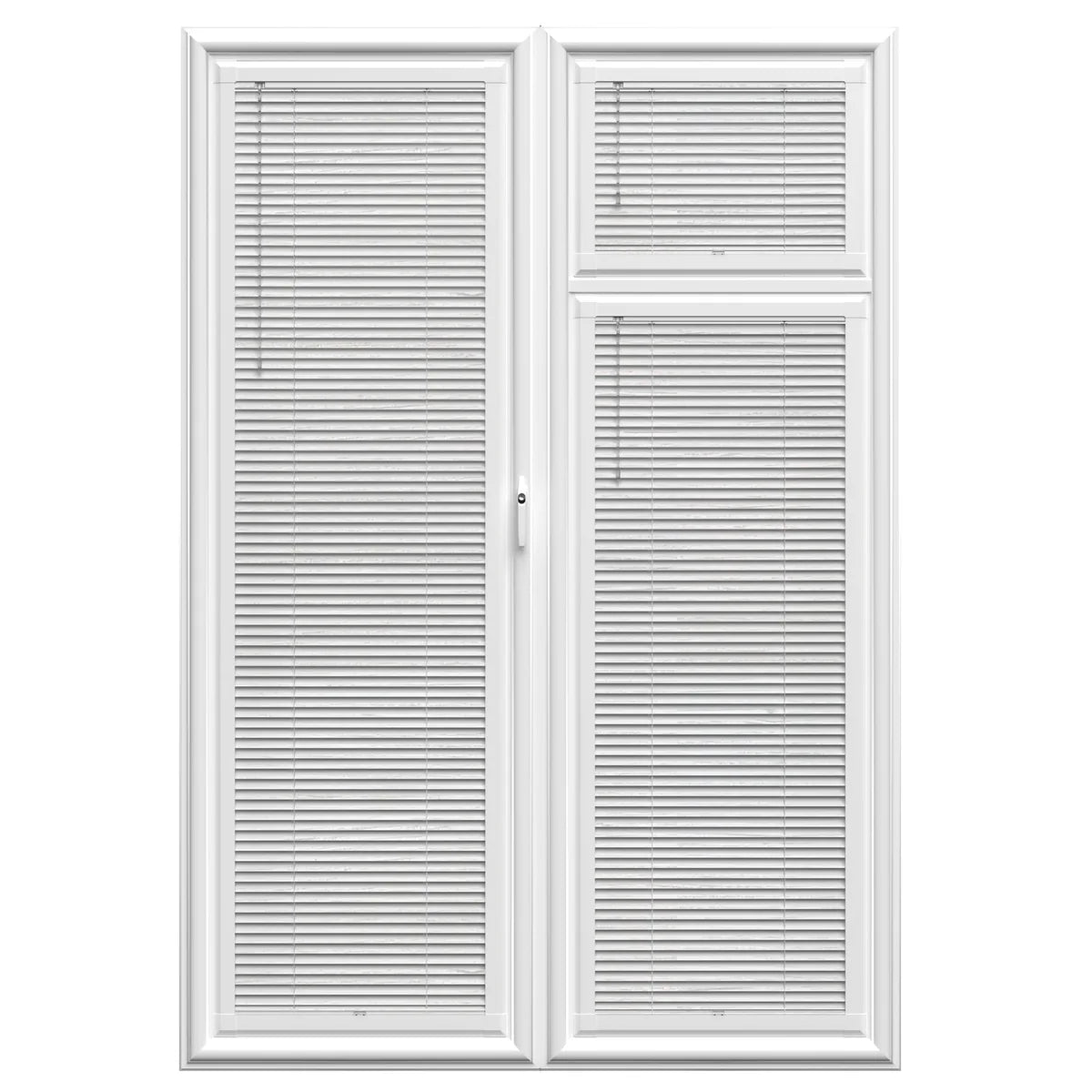
Perfect fit frames clip into the rubber gasket around a uPVC glazed unit and hold the whole blind in a slim frame of their own. They carry more than a tension rod because the load spreads across four clips rather than two contact points, which makes them a strong middle option for pleated and cellular blackout fabrics.
Because they grip the beading rather than the plaster, these clip-in blinds move with the sash and leave no marks. They are the natural step up when a stick on blind cannot take the weight but you still refuse to drill.
No-drill bracket systems: heaviest loads
At the top of the range sit no-drill bracket systems that clamp to the frame with adjustable arms. These hold full blackout rollers and lined fabrics that would tear tape straight off the wall. They are the most secure no drill window blinds on offer and the right answer for a heavy blackout roller in a child's room.
You give up a little speed at fitting for a lot of holding power. For most people that is a fair swap, especially where the blind needs to block light night after night.
Matching the fitting to the blackout fabric
Fabric weight and fitting have to agree, or the neatest install still sags. A cellular blackout fabric is a good example, because it is light for its coverage and traps air in its cells, so it pairs well with clip-in frames. Our honeycomb blackout blind is built for exactly this kind of no-drill fitting and gives you proper darkness without the mass of a lined roller.
Heavier lined blackout rollers change the maths. They block light superbly, but the weight sends you straight to a bracket system rather than tape or a rod. If you are set on a roller and set on no screws, plan for the bracket from the start.
Temporary blackout blinds are the exception where light really is the whole point. A guest room or a rental that needs darkness for a season can run a light pleated panel on adhesive, accept its limits, and peel it off with no trace when the season ends.
Getting operation right, not just the fitting
Fitting holds the blind up, but daily use is where a room with children needs care. A no-drill blind on a busy window still needs a safe way to raise and lower it, which is why cordless operation matters as much as the bond behind it. A push-up cordless blackout panel removes the looped cord entirely.
This also protects your fitting. Every time someone yanks a cord, the load spikes on whatever holds the blind, and on adhesive that spike is exactly what breaks the bond. Cordless use keeps the pull gentle and even, which is kinder to tape, rods and clips alike.
How to prep a surface so adhesive lasts
If you are committed to stick on blackout blinds, prep is the difference between a term and a day. Start by identifying the surface honestly: only smooth, sound uPVC or glass is a candidate, and anything painted, textured or flaking is not.
Degrease with isopropyl alcohol and a lint-free cloth, then let it flash off completely. Warm the frame to room temperature first, because a cold surface will never let the adhesive cure, and press each pad hard for a full thirty seconds. Leave the blind unloaded for the first hour if the instructions allow, so the bond can set before it takes weight.
When to skip adhesive entirely
Skip adhesive when the frame is painted, textured, cold or newly decorated, and skip it for any lined or metal-tubed roller. In those cases a tension rod, a perfect fit frame or a bracket system is not a compromise, it is simply the correct fitting for the load.
Skip it too if the darkness has to be dependable every single night, as in a nursery or a shift worker's bedroom. Made to measure blackout blinds on a proper no-drill frame give you a seal to the recess that a peel-and-stick panel rarely matches, and they stay put through years of daily use.
If you have read this far and realised your window is not the clean uPVC that adhesive needs, that is a useful result, not a setback. Browse the full blackout blind range to see which fitting matches your frame, and you will end up with darkness that holds rather than a blind that lands on the sill by the weekend.
Frequently asked questions
Where can you order stick-on blackout blinds?
You can order them from a specialist no-drill supplier that lets you choose the fitting alongside the fabric, which matters because the fitting decides whether adhesive is even suitable for your frame. Look for made to measure blackout blinds sold with clear surface guidance rather than a one-size roll of tape. That way you get a blind sized to your recess and a fitting matched to your uPVC, timber or glazed surface instead of guessing.
How do you install roller blinds without drilling?
Use a no-drill bracket system that clamps to the window frame, or clip the blind into a perfect fit frame that grips the glazing beading. Both hold a roller without a single screw and both come off cleanly later. Prep is simple: measure the recess, position the brackets level, and tighten the arms against the frame. Adhesive alone rarely holds a roller, so a mechanical no-drill fitting is the reliable route for that heavier blind type.
Do perfect fit blinds damage window seals?
No, when fitted correctly they clip into the rubber gasket around the glazed unit rather than piercing the seal, so they leave no holes and no lasting marks. The clips spread their grip and lift out cleanly at the end of a tenancy. The one caution is fitting them square and not forcing a frame that is slightly oversized, because a strained clip can distort the beading. Measured properly, they are one of the most seal-friendly no-drill options available.