Skip to content


 Vertical Blinds
 Roman Blinds
 Roller Blinds
 Venetian Blinds
 Day and Night Blinds
 Skylight Blinds
 Children
 Wooden Blinds
 Curtains
 Blinds Accessories
 White
White Yellow
 Gold
Gold Green
Green Grey
Grey Pink
Pink Orange
 Animal
 Floral
 Geometric
 Striped
 Motorized Day and Night Blinds
 Motorized Roller Blinds
 No Drill Rollers
 Perfect Fit Wooden
 Perfect Fit Metal
 Thermal Blinds
 Better Sleep Blinds
 Cordless Blinds
 No Drill Blinds
 Blackout Blinds
 Waterproof Blinds
 Easy Wipe Blinds
 Taped Blinds
 Conservatory
 Office
 Kitchen
 Bathroom
 Dining Room
 Kids Room
 Living Room
 Bedroom
 Bay Window
 Conservatory Window
 Tild and Turn Window
 Bi Fold Window
 Roof of Skylight
 French Door
 Sliding Door
Waterproof Blinds: The Best Choice for Steamy, Splash-Prone Rooms
- by Mariam Labadze
 Waterproof blinds are made from materials that shrug off moisture, steam and splashes without warping, staining or growing mould. The most reliable choices are PVC or moisture-treated polyester roller blinds and faux wood Venetian blinds, all of which wipe clean and hold up in bathrooms, kitchens and utility rooms. For any damp room, they are the sensible pick over fabric or real wood.
Getting the right blind for a wet room saves you replacing it in a year, so it pays to understand what actually makes a blind waterproof and which styles cope best. I specify window treatments for damp rooms regularly, and the failures I see almost always come down to the wrong material or trapped moisture with nowhere to go. Here is how to avoid both.
[toc]
What makes a blind waterproof
No blind is waterproof in the sense of surviving a jet wash, so it helps to be precise about what the term means for windows. A waterproof blind resists water rather than absorbing it. Moisture beads on the surface or evaporates off it instead of soaking in, and the material does not swell, rot or discolour when the air is humid day after day.
Material is everything here. PVC and vinyl are naturally water-repellent, which is why they perform so well in the wettest rooms. Moisture-resistant polyester fabrics, often with a coating, let condensation run off rather than wick into the weave. Faux wood, which is a PVC composite made to look like timber, gives you the classic slatted look without the swelling and warping that real wood suffers over a hot bath.
The materials to avoid in a genuinely wet spot are just as important. Natural woven fabrics, cotton, linen and real wood all absorb moisture. In a steamy bathroom they can sag, stain, split or develop mould along the edges. They may look lovely, but they are the wrong tool for the job by the shower.
Cleaning is the everyday test of a waterproof blind. A good one is wipeable, meaning you can run a damp cloth over it to clear splashes, toothpaste, cooking grease or limescale spots and it comes up clean. That wipe-clean quality is what keeps a bathroom or kitchen blind looking fresh for years rather than months.
Which blind types suit damp rooms
Waterproof roller blinds
Roller blinds are the workhorse of the wet room. A single flat panel of PVC or moisture-resistant fabric wraps around a tube, so there are no folds or fabric layers to trap damp and few places for mould to take hold. They give a clean, modern finish, they suit small windows well, and a quick wipe keeps them tidy. For most bathrooms and kitchens I start here, and the waterproof blinds range is built around exactly these materials. If you like the format but want to compare fabrics and colours across the wider roller blinds selection, the waterproof versions carry the same neat, flat look.
Faux wood Venetian blinds
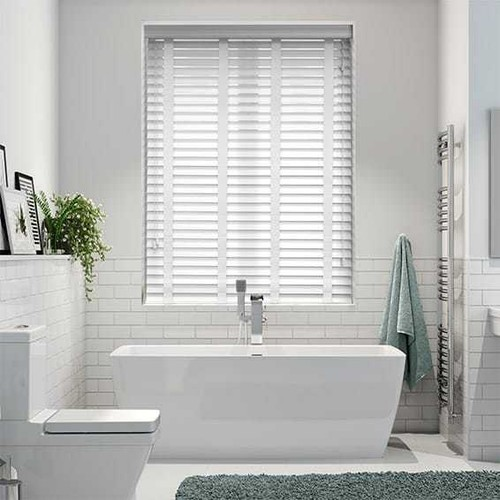
When you want the warmth of timber in a bathroom, faux wood Venetian blinds are the answer. The slats are a PVC composite that resists water, so they do not warp, crack or discolour the way real wood does above a bath. You get the adjustable slat control that lets you tilt for privacy while keeping daylight, and the slats wipe clean in seconds. Our Venetian blinds in faux wood are a favourite for period bathrooms where a roller would look too plain. Steer clear of real wood, and while aluminium slats can suit a very industrial kitchen, faux wood is the safe all-rounder for damp.
No drill options for tiled walls
Bathrooms and kitchens are full of tiles, and nobody wants to drill through a ceramic tile if they can help it. No drill blinds clamp onto the window frame or fix with strong adhesive brackets, so you skip the masonry drill and the risk of cracking a tile. They are ideal for uPVC windows, for renters who cannot make permanent holes, and for anyone who wants a clean install without dust. If you are fitting a bathroom yourself, the no drill blinds range keeps the job to minutes and leaves your tiles intact.
Room by room
A bathroom is the toughest environment a blind faces. Steam from a shower, splashes from the bath and constant humidity all attack the material. Here I would fit a waterproof roller in PVC or a faux wood Venetian, and I would lean towards an outside-recess fit or a no drill bracket to avoid tiles. Privacy usually matters most at the window nearest the shower, so a fabric that offers daytime privacy while letting light through is worth choosing.
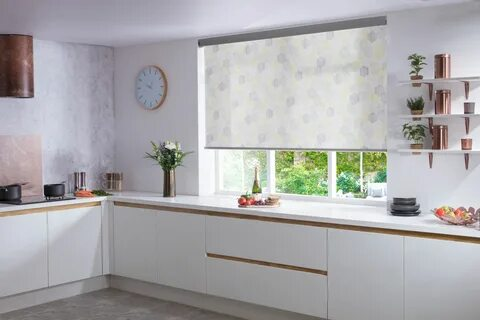
Kitchens deal with a different kind of damp. Steam from the hob and kettle mixes with airborne grease, so the wipe-clean quality of a waterproof blind matters even more. A PVC roller near the sink clears splashes and cooking residue with one pass of a cloth. Keep any blind a sensible distance from an open flame or a hot hob, and a flat roller sits tidier than a slatted blind where space above the worktop is tight.
Utility rooms, cloakrooms and en-suites often get overlooked, but a tumble dryer, a sink and poor ventilation combine into a surprisingly humid space. The same rules apply: a moisture-resistant material and good airflow. Because these rooms are usually small, a compact roller blind or a no drill fitting on a narrow window works well.
Keeping waterproof blinds mould free
Choosing the right material is half the battle. The other half is managing the moisture in the room, because mould grows on dirt and damp surfaces, not on the vinyl itself.
Ventilation is your best defence. Run the extractor fan during and after a shower, open a window when you can, and let the air clear rather than sealing the steam in. A well-ventilated bathroom keeps humidity down, and lower humidity means far less chance of mould settling anywhere, blind included.
Regular wiping does the rest. Because waterproof blinds are wipeable, a quick pass with a damp cloth every week or two clears the film of soap, grease and limescale that mould would otherwise feed on. For a deeper clean, a mild soapy solution and a soft cloth is enough; avoid harsh abrasives that could scratch a PVC surface. A blind that is kept clean and allowed to dry between uses will resist mould for years.
If mould does appear, it is almost always on the surface grime rather than the material, so it wipes away with a gentle cleaner. On a natural fabric or real wood blind that same mould can root into the material and become permanent, which is the clearest argument for choosing waterproof from the start.
Measuring and fitting for a wet room
Measure as you would any blind, checking width and height in three places because bathroom windows are often out of square. Decide between a recess fit, which looks neat and contained, and an outside fit, which covers more of the glass and the surrounding wall. In a bathroom I often prefer the outside fit or a frame-mounted no drill bracket, because it keeps fixings away from tiles and lets the blind sit clear of a sill that collects water.
Think about privacy and light together. A translucent waterproof fabric gives daytime privacy while keeping the room bright, which suits most bathrooms. If the window overlooks a neighbour or faces a bedroom en-suite, a more opaque fabric or a Venetian you can tilt closed gives you control. Whatever you choose, make sure the material is rated for moisture, not just the style you like the look of.
The short version
For steamy, splash-prone rooms, waterproof blinds in PVC, moisture-resistant polyester or faux wood are the choice that lasts. Roller blinds cover most bathrooms and kitchens, faux wood Venetians add warmth where a roller feels plain, and no drill fittings keep your tiles safe. Pair the right material with good ventilation and an occasional wipe, and the blind will stay clean, flat and mould free for years.
Frequently asked questions
What blinds are waterproof?
The most waterproof blinds are made from PVC or vinyl, moisture-resistant coated polyester, and faux wood, which is a PVC composite. These materials repel water rather than absorbing it, so they do not warp, stain or rot in humid rooms. Natural fabrics, cotton, linen and real wood are not suitable for genuinely wet spaces.
What blinds are best for a bathroom?
Waterproof roller blinds in PVC or moisture-resistant fabric are the best all-round choice for a bathroom because they wipe clean and have no folds to trap damp. Faux wood Venetian blinds are a strong alternative when you want a timber look with adjustable slats. No drill fittings suit tiled bathrooms because they avoid drilling into tiles.
Do waterproof blinds get mouldy?
Waterproof materials like PVC and faux wood resist mould far better than fabric or wood because they do not absorb moisture. Mould usually grows on surface grime rather than the material itself, so regular wiping and good ventilation keep it away. Run the extractor fan and let the blind dry between uses to stay mould free.