 Skip to content


 Vertical Blinds
 Roman Blinds
 Roller Blinds
 Venetian Blinds
 Day and Night Blinds
 Skylight Blinds
 Children
 Wooden Blinds
 Curtains
 Blinds Accessories
 White
White Yellow
 Gold
Gold Green
Green Grey
Grey Pink
Pink Orange
 Animal
 Floral
 Geometric
 Striped
 Motorized Day and Night Blinds
 Motorized Roller Blinds
 No Drill Rollers
 Perfect Fit Wooden
 Perfect Fit Metal
 Thermal Blinds
 Better Sleep Blinds
 Cordless Blinds
 No Drill Blinds
 Blackout Blinds
 Waterproof Blinds
 Easy Wipe Blinds
 Taped Blinds
 Conservatory
 Office
 Kitchen
 Bathroom
 Dining Room
 Kids Room
 Living Room
 Bedroom
 Bay Window
 Conservatory Window
 Tild and Turn Window
 Bi Fold Window
 Roof of Skylight
 French Door
 Sliding Door
Conservatory Blinds: Best Options for UK Homes (2026)
- by Mariam Labadze
 A conservatory is one of the most challenging spaces in a UK home to make comfortable throughout the year. In summer, south-facing glass can turn the space into a greenhouse — too hot to use comfortably. In winter, the large glass area makes it one of the coldest rooms in the house. Choosing the right blinds for a conservatory addresses both of these problems, transforming it from a seasonal room into a genuinely usable space year-round.
The Conservatory Challenge
Unlike a standard room with one or two windows, a conservatory often has glass on three or more sides, a glass or polycarbonate roof, and sometimes glass doors as well. This means that the total glazed area can be very large, and that heat gain and loss through the glass is a major factor in the room's usability. Standard window blinds from a bedroom or living room are unlikely to perform adequately in this environment.
The ideal conservatory blind needs to handle direct overhead sun (if there is a glass roof), side sun from multiple directions, and the insulating challenge of winter cold. No single blind type excels at all of these simultaneously, which is why many conservatory owners choose a combination of different blind types for different parts of the glazing.
Roof Blinds for Conservatories
The roof is where most of the heat gain in a conservatory originates. A glass or polycarbonate roof exposed to direct summer sun can raise the internal temperature of a conservatory by 10 to 15 degrees Celsius, making it effectively unusable in the afternoon. Roof blinds are therefore the single most impactful investment you can make for conservatory comfort.
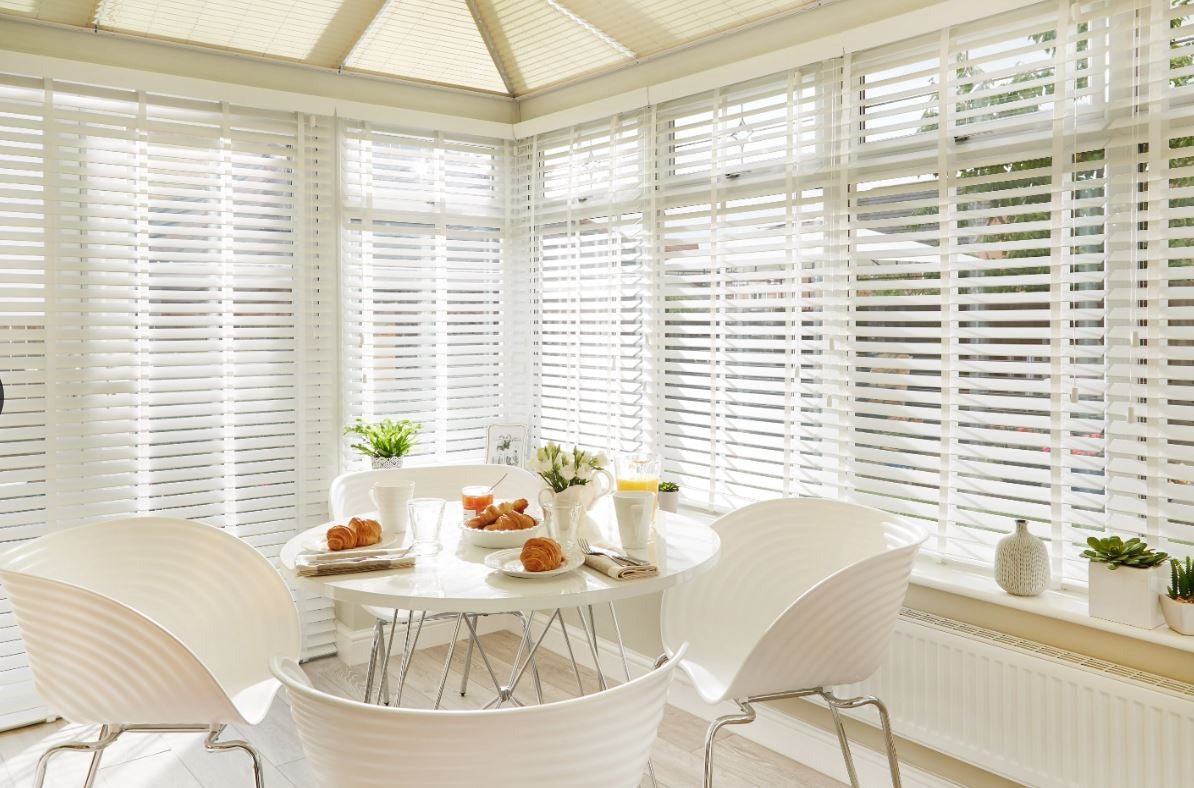
Pleated blinds are the most popular type for conservatory roofs, as their lightweight construction and even tension across the width of the fabric make them suitable for angled and horizontal surfaces. They are available in heat-reflective fabrics that deflect a significant proportion of solar energy before it enters the room.
For polycarbonate roofs, tension-wire pleated roof blind systems are the standard solution. These use stainless steel wires running parallel to the roof glazing bars to support the blind fabric, allowing it to operate smoothly across the roof section even at unusual angles.
Note: Roof blinds should be professionally measured for complex roof shapes. For simple lean-to or pitched roofs with standard glazing bars, made-to-measure pleated roof blinds are available from specialist suppliers with straightforward fitting instructions.
Side Window Blinds for Conservatories
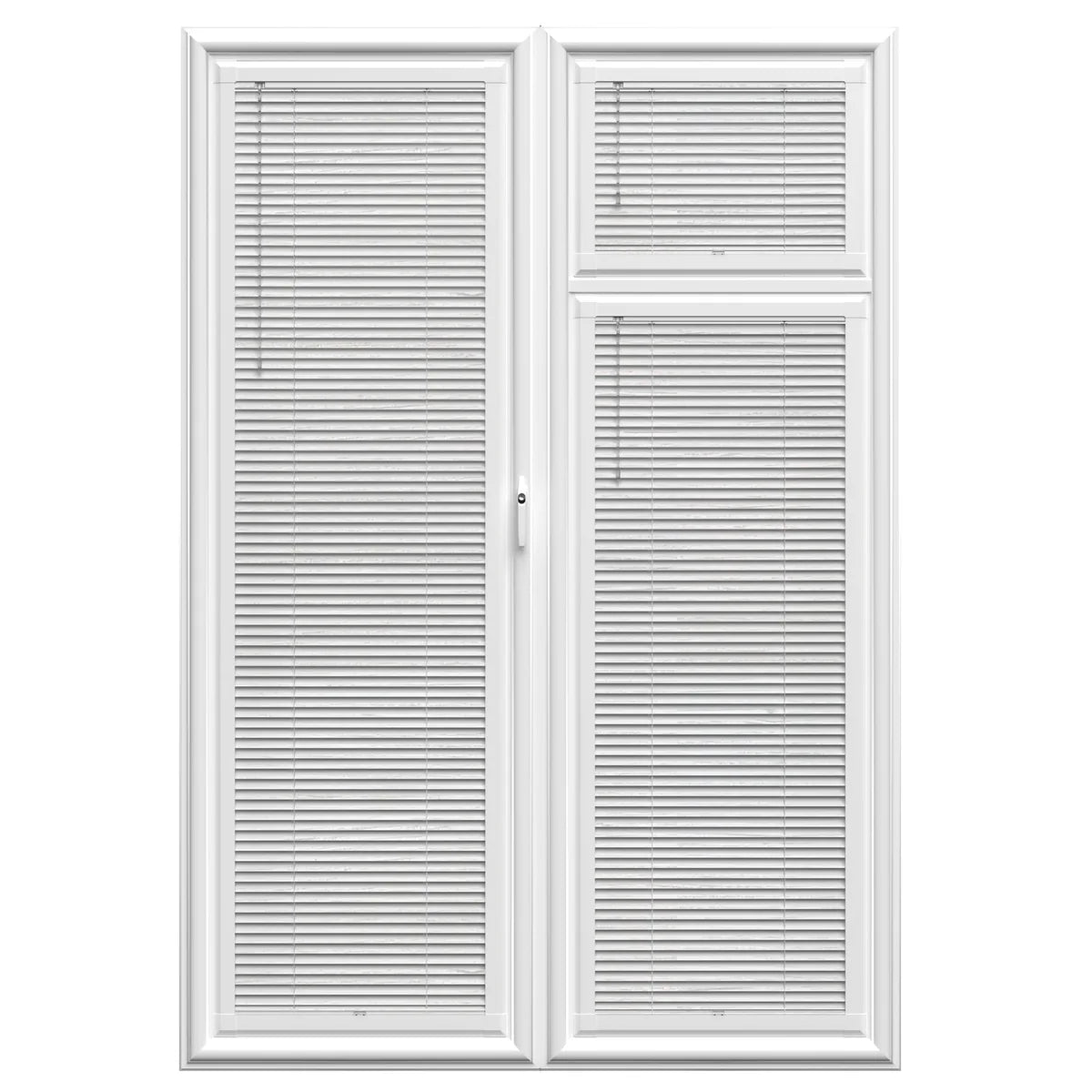
The side windows of a conservatory present a different set of requirements from the roof. Privacy from neighbouring properties or passers-by is often a priority, as is controlling afternoon sun on east- and west-facing sides. For conservatory side windows, several blind types work well. Perfect fit blinds — which clip directly into the window frame without drilling — are particularly popular because they do not interfere with opening windows or door handles. The no-drill blinds range at 1ClickBlinds includes perfect fit options suitable for double-glazed conservatory side windows.
Venetian Blinds for Side Windows
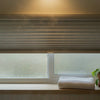
Venetian blinds offer precise light control on conservatory side windows, allowing you to direct light upward toward the ceiling — which maximises brightness without glare — while blocking the direct line of sight from outside. Aluminium venetians are particularly practical in a conservatory environment because they are fully moisture-resistant. Browse the venetian blinds range for suitable options.
Roller Blinds for Side Windows
Roller blinds in a solar or screen fabric are a clean, low-profile option for conservatory side windows. Solar fabrics — sometimes called screen fabrics — are woven with a small, regular pattern of holes that block most direct sunlight while maintaining a partial view through the blind and allowing a degree of airflow. They are particularly popular in conservatories used as summer dining rooms or garden rooms where the view of the garden is important. See the roller blinds collection for solar fabric options.
Choosing Heat-Reflective Fabrics
In a conservatory, the type of fabric matters as much as the type of blind. Standard blackout or light-filtering fabrics reduce light but are not particularly effective at blocking heat — they absorb solar radiation and then re-radiate it into the room as heat. Heat-reflective fabrics, by contrast, incorporate a metallic or reflective layer that bounces solar energy back through the glass before it can warm the room.
When shopping for conservatory blinds, look explicitly for solar control or heat-reflective fabric specifications. Products described as blocking a percentage of solar energy (often expressed as a solar factor or shading coefficient) give you a quantitative basis for comparison.
Privacy and Year-Round Usability
In addition to solar control, privacy is a key consideration for conservatories — particularly those overlooked by neighbouring properties or positioned close to a pavement. Solid-fabric roller or Roman blinds provide the most complete privacy solution, while venetian blinds allow you to adjust privacy and light control simultaneously.
For year-round usability, consider insulating blinds on the side windows in addition to roof blinds. Honeycomb cellular blinds fitted to side windows reduce heat loss significantly in winter, complementing the solar control function of the roof blind. A conservatory fitted with both roof blinds and insulating side window blinds can extend its usable season from three or four months to ten or more.
Practical Considerations for Conservatory Blinds
Fitting blinds in a conservatory is more complex than fitting them in a standard room, particularly for roof glazing. Before ordering, confirm the type and profile of your glazing bars, the angle of the roof, and the dimensions of each glazed section. Many conservatory blind suppliers offer an in-home measuring service as a standard part of the process.
For side windows, perfect fit blinds that clip into the window frame are the easiest to install and the most practical in daily use — they move with the window when you open it, stay dust-free within the frame, and do not require any wall drilling. The no-drill blinds range at 1ClickBlinds includes suitable options for standard double-glazed conservatory windows.


)