Skip to content


 Vertical Blinds
 Roman Blinds
 Roller Blinds
 Venetian Blinds
 Day and Night Blinds
 Skylight Blinds
 Children
 Wooden Blinds
 Curtains
 Blinds Accessories
 White
White Yellow
 Gold
Gold Green
Green Grey
Grey Pink
Pink Orange
 Animal
 Floral
 Geometric
 Striped
 Motorized Day and Night Blinds
 Motorized Roller Blinds
 No Drill Rollers
 Perfect Fit Wooden
 Perfect Fit Metal
 Thermal Blinds
 Better Sleep Blinds
 Cordless Blinds
 No Drill Blinds
 Blackout Blinds
 Waterproof Blinds
 Easy Wipe Blinds
 Taped Blinds
 Conservatory
 Office
 Kitchen
 Bathroom
 Dining Room
 Kids Room
 Living Room
 Bedroom
 Bay Window
 Conservatory Window
 Tild and Turn Window
 Bi Fold Window
 Roof of Skylight
 French Door
 Sliding Door
Best Blinds for Kitchen Windows: Style, Moisture and Light Guide
- by Mariam Labadze
 The kitchen window is one of the most challenging windows in the house to dress well. It needs to be near enough to a sink or worktop to be practical, which means it is exposed to cooking steam, grease splashes, and condensation on a daily basis. At the same time, it is usually the main source of natural light for a working area where good visibility is essential. Choosing the right blind for a kitchen window requires balancing practicality, hygiene, light control, and aesthetics — this guide takes you through every consideration.
Why Kitchen Blinds Are Different
Kitchen blinds are subjected to more daily wear than blinds in almost any other room. Steam from boiling water rises and settles on the blind fabric. Cooking grease becomes airborne and deposits itself on nearby surfaces. Condensation from cold windows in winter creates a damp environment against the glass. Standard fabric blinds in this environment will absorb all of these deposits, becoming progressively discoloured, stained, and eventually malodorous.
The ideal kitchen blind is therefore one that is easy to clean — ideally wipeable with a damp cloth — rather than one that requires removal and machine washing. It should also be moisture-resistant rather than simply moisture-tolerant, and its operating mechanism should be robust enough to handle daily operation with potentially wet or greasy hands.
Roller Blinds: The Most Popular Kitchen Choice
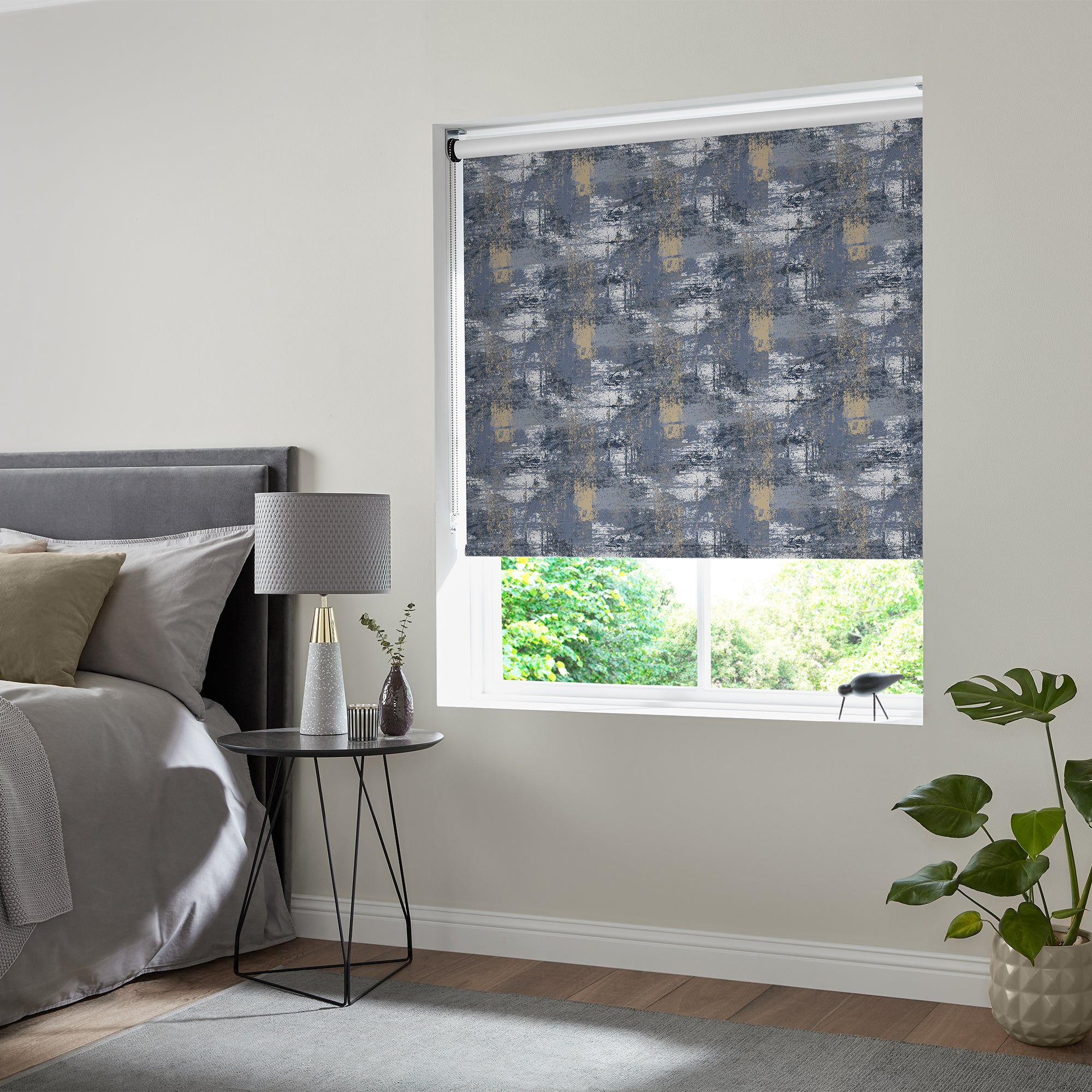
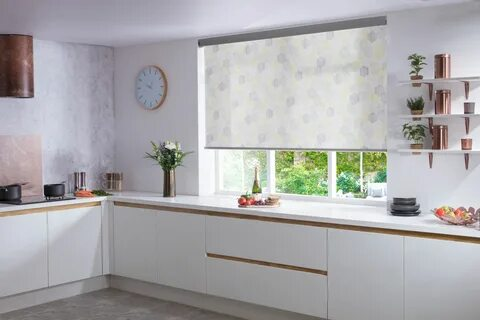
Wipe-clean roller blinds are the most popular choice for UK kitchen windows, and it is easy to see why. A PVC-coated or moisture-resistant polyester roller blind can be wiped down with a damp cloth in seconds — no removal, no washing, no special cleaning products required. The flat, smooth surface of a roller blind does not accumulate grease in the way that venetian slats or Roman blind folds do. And the clean, minimal look of a roller blind suits most kitchen styles from contemporary to traditional. Browse the roller blinds range for kitchen-suitable wipe-clean options.
Waterproof Roller Blinds for Kitchens Above Sinks
For windows positioned directly above a kitchen sink, a fully waterproof blind rather than simply moisture-resistant is advisable. Splashing from the sink will reach the lower portion of the blind on a regular basis, and a moisture-resistant fabric may gradually absorb water over time and develop mould or staining. A waterproof fabric with sealed edges is the more durable choice for this specific location. See the dedicated waterproof blinds range at 1ClickBlinds.
Venetian Blinds for Kitchen Light Control
Aluminium venetian blinds are the second most popular kitchen blind choice. Unlike real wood or faux wood venetians, aluminium slats are completely moisture-proof and can be wiped quickly with a damp cloth. The slat-tilting mechanism allows you to direct light upward — eliminating glare on a worktop or sink without shutting out natural light entirely. This level of light control is useful in kitchens that face the sun at certain times of day and where good task lighting is important. Browse aluminium venetian blinds for kitchen-compatible options.
Tip: For kitchens with a window above the hob, choose a blind that can be mounted high enough to be completely clear of the cooking area. A face-fixed blind mounted well above the window frame keeps the fabric away from rising steam and reduces the risk of heat damage.
Roman Blinds in Kitchens: Worth the Maintenance?
Roman blinds are popular in kitchen-diner rooms where the kitchen flows into a dining or living area, and where a softer, more decorative look is preferred over the utilitarian appearance of a roller or venetian blind. A Roman blind in a PVC-backed or wipeable fabric can be practical in a kitchen environment, but the folds in the fabric inevitably accumulate more grease and steam residue than a flat surface would.
If you choose a Roman blind for a kitchen, opt for a synthetic fabric with a wipeable finish, avoid placing it directly above the hob or sink, and clean it more frequently than you would in a bedroom or living room — roughly monthly, or whenever you notice the folds becoming discoloured.
Day and Night Blinds in Kitchen Diners
Open-plan kitchen diners are a common feature of modern UK homes, and the window treatment needs to suit both functions of the space. Day and night blinds offer an elegant solution — in the morning, open the blind fully to flood the kitchen with light; at midday on a south-facing aspect, close the blind partially to reduce glare on the dining table; in the evening, close fully for privacy while entertaining. The clean lines and contemporary aesthetic of a day and night blind suit open-plan spaces particularly well.
Short Drop Windows Above Worktops
Many kitchen windows have a very short drop — the window sits directly above the worktop and may only be 40 to 60 cm tall. This creates a specific blind-selection challenge: there needs to be enough mechanism space at the top for the blind to stack when raised, while also providing enough coverage when lowered.
For short-drop windows, roller blinds are generally the most practical choice, as the fabric rolls up tightly around the tube and produces a minimal stack height. Roman blinds on a very short window can stack up to half the window height or more when raised, which can look disproportionate. Venetian blinds on a short window can work but the slat configuration may not allow very precise light control on a small number of slats.
Choosing the Right Colour for a Kitchen Blind
Colour choice in the kitchen is partly aesthetic and partly practical. White, cream, and pale grey blinds look clean and bright but show grease and marks more readily than darker tones. Warm neutrals — taupe, ochre, terracotta — add warmth and character to a kitchen without the maintenance burden of white. Dark tones such as charcoal or navy create a bold contrast with white kitchen units but can make a small kitchen feel slightly enclosed. For kitchens that receive good natural light, darker tones are a confident and contemporary choice. For a darker kitchen, pale or reflective tones help to maximise the available light. For the full range of kitchen-suitable blind options, visit the roller blinds and waterproof blinds collections at 1ClickBlinds.