Skip to content


 Vertical Blinds
 Roman Blinds
 Roller Blinds
 Venetian Blinds
 Day and Night Blinds
 Skylight Blinds
 Children
 Wooden Blinds
 Curtains
 Blinds Accessories
 White
White Yellow
 Gold
Gold Green
Green Grey
Grey Pink
Pink Orange
 Animal
 Floral
 Geometric
 Striped
 Motorized Day and Night Blinds
 Motorized Roller Blinds
 No Drill Rollers
 Perfect Fit Wooden
 Perfect Fit Metal
 Thermal Blinds
 Better Sleep Blinds
 Cordless Blinds
 No Drill Blinds
 Blackout Blinds
 Waterproof Blinds
 Easy Wipe Blinds
 Taped Blinds
 Conservatory
 Office
 Kitchen
 Bathroom
 Dining Room
 Kids Room
 Living Room
 Bedroom
 Bay Window
 Conservatory Window
 Tild and Turn Window
 Bi Fold Window
 Roof of Skylight
 French Door
 Sliding Door
Electric Blinds for Bifold Doors: Are Motorised Options Worth It?
- by Mariam Labadze
 Yes, you can get electric blinds for bifold doors, and for many homeowners they are worth the extra cost. Motorised blinds solve the practical problem of reaching and operating blinds across a wide run of doors, remove cords for safety, and integrate with smart-home systems. Whether they justify the price depends on how wide your doors are and how you use the space.
Bifold doors have transformed how people connect their homes to the garden, but they are genuinely awkward to dress. The run of glass is wide, sometimes spanning most of a wall, and the doors fold back on themselves, so any blind has to work around the movement of the panels. Reaching across a three or five-panel run to adjust several blinds by hand quickly becomes a chore. That is precisely where electric blinds for bifold doors come into their own.
[toc]
Why bifold doors are tricky to blind
The width is the first issue. A single wall of bifold doors can be far wider than a normal window, which means several blinds side by side. Operating each one manually, day and night, is tedious, and cords across that span look cluttered and pose a safety risk around children and pets.
The folding action is the second issue. The blind has to allow the doors to open and fold without fouling, and it needs to clear the handles. Get the style wrong and the blind either blocks the doors or gets caught every time you use them. Choosing the right approach from the bifold door blinds collection matters more here than on a standard window.
Can you get electric blinds for bifold doors?
You can, and they are increasingly popular for exactly this setting. Motorised blinds replace cords and manual pulls with a quiet motor, operated by remote, wall switch, app or voice through a smart-home system. Across a wide bifold run, that means closing or opening the whole set at the touch of a button rather than working along each blind by hand.
There are two broad approaches. Blinds fitted to the frame that move with the doors, using perfect fit style frames on each panel, stay with the doors as they fold. Blinds fitted above the whole run, such as a wide track hung at ceiling or lintel height, sit clear of the doors entirely and draw across the front. Motorisation suits both, and it is especially valuable on the wide, single-track approach where reaching the far end by hand is impractical. The motorised blinds range shows the options and how they are powered.
Which blind styles suit bifold doors
Vertical blinds
Vertical blinds are a classic bifold choice because the vanes stack neatly to one side, clearing the full opening when the doors are in use. They give excellent light and privacy control across a wide span, and motorising them makes adjusting a long run effortless. The vertical blinds collection covers fabrics and finishes suited to large glazed areas.
Roller blinds
Rollers give a clean, minimal look that suits contemporary bifold installations. Fitted per panel in a perfect fit frame, they move with the doors; fitted as one wide blind above the run, they draw up clear of the opening. In either format, roller blinds motorise easily, and a thermal or blackout fabric adds insulation to what is usually a large expanse of heat-losing glass.
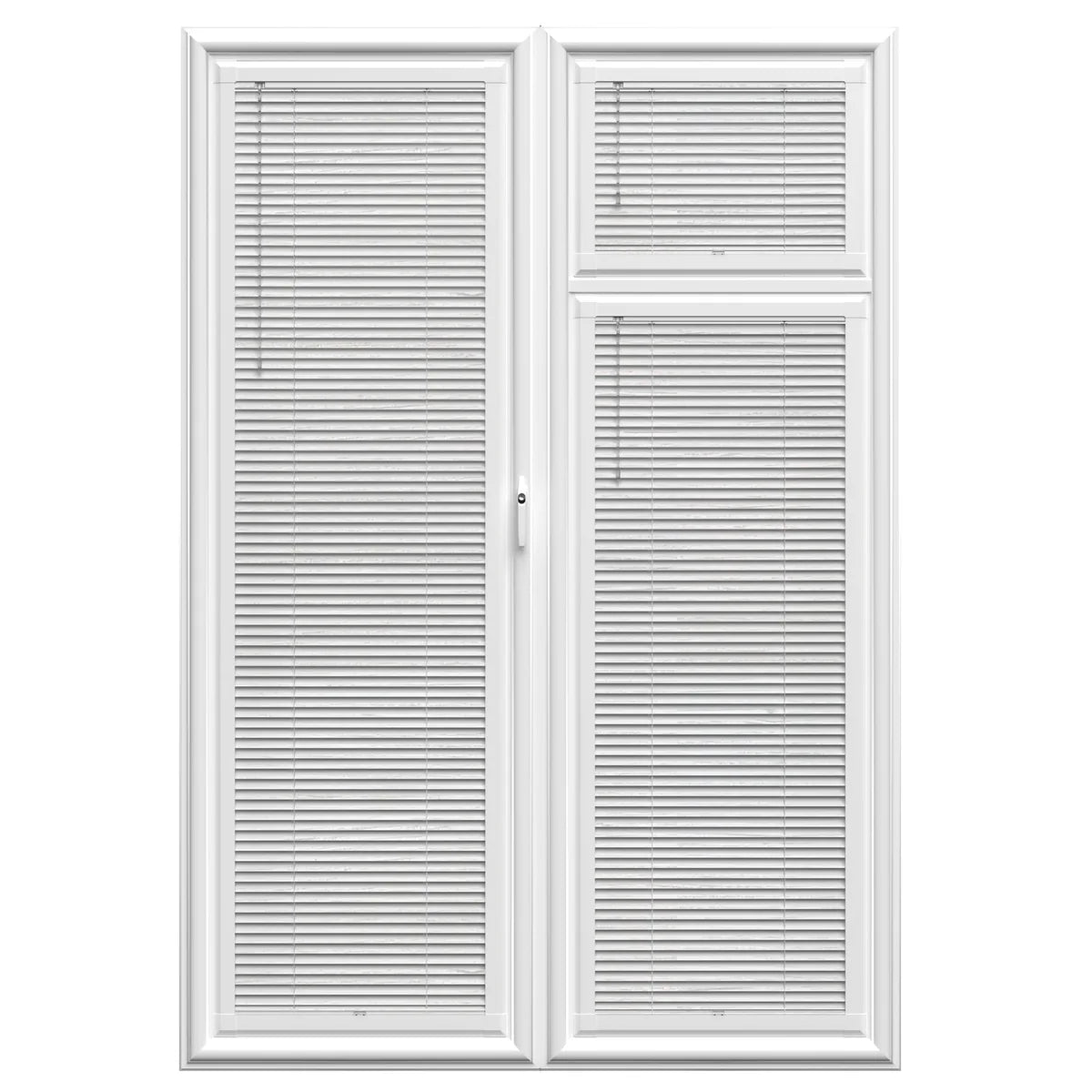
Perfect fit blinds per panel
Fitting a slim blind to each door panel keeps everything moving with the doors and avoids anything hanging across the opening. This is the tidiest solution where you want the doors fully usable at all times, though motorising many small blinds is more complex than motorising one wide blind.
Are motorised options worth the cost?
Motorised blinds cost more than manual ones, because of the motor, control system and often professional fitting. Whether that premium is worth it comes down to your situation.
They make the strongest case on wide runs where manual operation is genuinely awkward, in homes with children or pets where cordless safety matters, for high or hard-to-reach blinds, and in smart homes where you want the blinds on a schedule or tied to voice control. Being able to set them to close automatically at dusk or open in the morning is a real everyday convenience, not just a gadget.
On a narrow two-panel bifold that you happily operate by hand, the extra spend is harder to justify. Be honest about how you actually use the doors. If you open and close the blinds daily across a wide span, motorisation pays you back in convenience every time.
Practical points before you buy
Check whether your motor is battery, mains or hard-wired, as this affects both fitting and where you can place the blind. Battery motors avoid the need for nearby wiring and suit retrofits, while hard-wired systems are neater but usually want planning during a build. Confirm the blind clears the door handles and folds, and think about insulation: a large glass wall benefits from a thermal or blackout fabric for warmth in winter and comfort in summer.
Frequently asked questions
What blinds are best for bifold doors?
Vertical blinds and roller blinds are the usual favourites. Verticals stack neatly to one side and clear the full opening, while rollers give a clean modern look and are easy to motorise. Perfect fit blinds on each panel are best when you want the doors fully usable at all times, since they move with the doors.
Can you get electric blinds for bifold doors?
Yes. Motorised blinds are well suited to bifold doors and can be operated by remote, wall switch, app or voice control. They are especially useful across wide runs where reaching every blind by hand is impractical, and they remove cords for a safer, tidier finish.
Do blinds get in the way of bifold doors?
They should not, provided you choose the right style and fit. Blinds fitted per panel move with the doors as they fold, and blinds hung above the whole run sit clear of the opening entirely. The key is checking that the blind clears the handles and does not foul the folding action before you buy.