Skip to content


 Vertical Blinds
 Roman Blinds
 Roller Blinds
 Venetian Blinds
 Day and Night Blinds
 Skylight Blinds
 Children
 Wooden Blinds
 Curtains
 Blinds Accessories
 White
 Yellow
 Gold
 Green
 Grey
 Pink
 Orange
 Animal
 Floral
 Geometric
 Striped
 Motorized Day and Night Blinds
 Motorized Roller Blinds
 No Drill Rollers
 Perfect Fit Wooden
 Perfect Fit Metal
 Easy Stick Honeycomb
 Easy Stick Wooden
 Easy Stick Metal
 Thermal Blinds
 Better Sleep Blinds
 Cordless Blinds
 No Drill Blinds
 Blackout Blinds
 Waterproof Blinds
 Easy Wipe Blinds
 Taped Blinds
 Conservatory
 Office
 Kitchen
 Bathroom
 Dining Room
 Kids Room
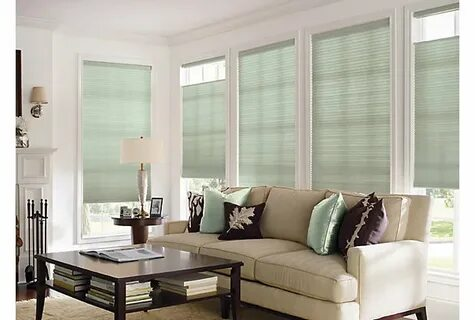 Living Room
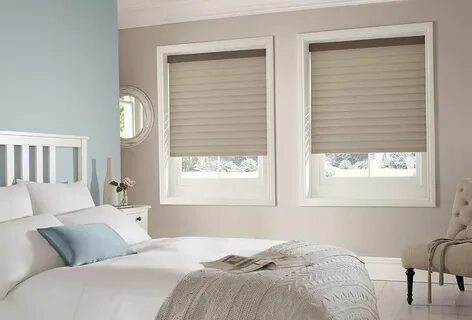 Bedroom
 Bay Window
 Conservatory Window
 Tild and Turn Window
 Bi Fold Window
 Roof of Skylight
 French Door
 Sliding Door
Living Room Blinds: Choosing for a Room You Use Morning and Night
- by Mariam Labadze
Living room blinds have to do two jobs that pull against each other: kill the glare landing on a screen while the sun is up, then stop the street looking in once the lamps come on. Most people buy for the first job and meet the second in November, when it goes dark before dinner.
So the useful way to shop for living room blinds is by problem, not by product. A living room has the biggest window in the house, often a radiator under it, furniture against it, and it is the one room you occupy at both ends of the day.
Key Takeaways
-
Two jobs, one window. Daytime glare and after dark privacy want opposite things from the same fabric.
-
Screens set the brief. If a television faces the window, glare control outranks everything else you might want.
-
Light reverses at dusk. A fabric that hides you at midday shows your outline once the room is lit.
-
Bays need planning, not fabric. Blinds that line up across the bay beat one clever fabric every time.
-
Radiators decide the drop. Living room blinds that land on a radiator trap its heat and mark the fabric.
What Living Room Blinds Have to Do
Every other room in the house has one dominant requirement, which makes it easy to shop for. A bathroom needs a fabric that shrugs off steam, which is why searches for bathroom blinds uk land almost entirely on waterproof bathroom blinds and very little else. A bedroom needs darkness and not much more.
A living room wants daylight, shade, privacy and a bit of insulation, at different hours, from the same opening. The honest starting point for living room blinds is not a swatch book. It is a short list of what actually goes wrong in your room.
This is also why room specific products do not transfer well. Bathroom shutter blinds are built around moisture. Bathroom blackout blinds answer a window you want dark and private at once, and bedroom shutter blinds suit a room you close up and leave closed. A living room spends most of its life half open, and the half open position is where the wrong choice shows itself.
Four problems cover almost all of it: glare on a screen, privacy after dark, a window shape that will not take a single blind, and a radiator sitting under the sill. Those four decide the right living room blinds far more reliably than any fabric name.
Glare on a Screen Is the Problem Nobody Plans For
Glare catches out more living room blinds than any other fault, and it is a question of angle rather than brightness. A room that behaves all morning turns unusable late in the day, when the sun drops low enough to come in under the top of the window and land on the television. Closing the blind fully cures it and leaves you sitting in the dark.
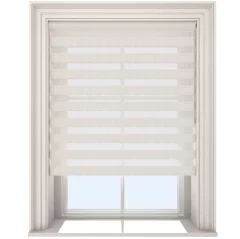
What you want is a fabric that breaks the beam without killing the view, plus a mechanism that covers the bottom of the window while the top stays open. The bands on zebra blinds handle the first part, because alternating solid and sheer strips scatter direct sun rather than blocking it, and they slide in and out of alignment as the afternoon moves on.
Slatted products handle the second part better. Tilting slats upward throws light at the ceiling, which keeps the room bright without putting anything on the screen. The trade off is real: slatted living room blinds need dusting and a plain roller does not.
A dim out or solar fabric is the quiet answer where the television matters more than the view. It takes brightness down without going dark, so you keep daylight and lose the hotspot. You also lose some of the view, which in a room that looks onto a garden is a cost worth thinking about before you order.
Privacy After Dark Works Backwards
After dark the whole thing reverses. During the day the light is outside and the dark is inside, so any fabric with a bit of openness reads as solid from the pavement. Switch the lamps on and the bright side is now your side. The same fabric turns into a screen with people moving across it.
Nothing about living room blinds is harder to judge in a showroom. You can test it tonight without spending anything. Put the lights on, walk out to the gate and look back. The surprise is usually a sheer or a pale solar fabric that somebody chose in daylight and never saw after dark.
Anything with a visible weave does this to some degree. The fixes are a dim out or blackout cloth, a tighter weave, or a product that closes rather than filters. Rotating the slats on wooden blinds shut gives a solid surface in the evening and an adjustable one by day, which is as close as this category gets to having both.
A ground floor front room on a street is the case that justifies spending properly. Living room blinds there are doing a security job as much as a comfort one, and a fabric that only half works at night is a fabric you end up replacing.
Bay Windows, Patio Doors and Radiators
A bay is several openings pretending to be one window, and the difficulty is alignment rather than fabric. Separate blinds look right when the headrails sit at one height and the drops finish level, and wrong the moment they do not. Most complaints about bay window blinds trace back to a sill that was never level.
Measure every section on its own even where they look identical, because they rarely are. Where two blinds meet at an angle you should expect a thin line of light at the join. Roller fabric cannot avoid it. Slatted living room blinds hide it better, because the join disappears into the slat line.
Patio doors break the standard answer again. Wide openings are where living room blinds stop being one purchase. One wide blind across a door you use every day becomes a nuisance by the second week, so verticals that stack clear of the opening, or two separate blinds, keep the door usable.
Radiators are the last of the four and the most common. A blind that drops past a radiator pushes warm air up the back of the fabric and against the glass, and across a winter the fabric will mark. Stop the drop at the sill. If you want the taller look, a dress curtain at either side gives you the drape without covering the heat.
Layering a Blind With Something Softer
A blind on its own can look thin in a room full of soft furniture. Layering fixes that, and it also fixes the day and night conflict, because you are no longer asking one fabric to do both jobs. A light filtering blind handles daylight and a heavier curtain handles the evening.
The combination also buys you flexibility that no single product gives. In the middle sit roman blinds, which are fabric, so they read as soft, and which stack into folds at the top so they clear the glass when open. On a window with a nice view that stacking matters more than people expect.
Be honest about the drawbacks. Layered living room blinds cost more than one product, they need a deeper recess or a face fitting, and a heavy curtain over a radiator undoes the point of stopping the blind at the sill. In a rented flat where you cannot drill freely, the simpler single blind is usually the better call.
If the room is doing one job well and failing at another, it is worth changing only the part that fails. Swapping a fabric costs less than rebuilding the window treatment, and the list you wrote at the start says which part to swap.
Frequently asked questions
How do you clean blinds?
Dust first, wash second, and only wash what the fabric allows. Run a soft brush or a vacuum dust tool along slats and across roller cloth every few weeks, working top to bottom. For marks, use a barely damp cloth with mild detergent and blot rather than rub, because rubbing drives the mark into the weave. Let everything dry fully open, never rolled up wet.
How do you measure for blinds?
Decide first whether the blind sits inside the recess or on the face of the wall. For a recess, measure the width in three places and the drop in three places, then use the smallest width and the longest drop. For a face fitting, add overlap at each side and above the opening. Measure with a steel tape, not a fabric one, and write down which way round each figure goes.
What are day and night blinds?
They are a roller with a double layer of fabric, where solid bands alternate with sheer ones. Pulling the chain slides one layer against the other, so the bands either line up to let light through or offset to close the gaps. That gives you filtered daylight and something closer to privacy from one blind, which suits a front room that is used all day.