Skip to content


 Vertical Blinds
 Roman Blinds
 Roller Blinds
 Venetian Blinds
 Day and Night Blinds
 Skylight Blinds
 Children
 Wooden Blinds
 Curtains
 Blinds Accessories
 White
White Yellow
 Gold
Gold Green
Green Grey
Grey Pink
Pink Orange
 Animal
 Floral
 Geometric
 Striped
 Motorized Day and Night Blinds
 Motorized Roller Blinds
 No Drill Rollers
 Perfect Fit Wooden
 Perfect Fit Metal
 Thermal Blinds
 Better Sleep Blinds
 Cordless Blinds
 No Drill Blinds
 Blackout Blinds
 Waterproof Blinds
 Easy Wipe Blinds
 Taped Blinds
 Conservatory
 Office
 Kitchen
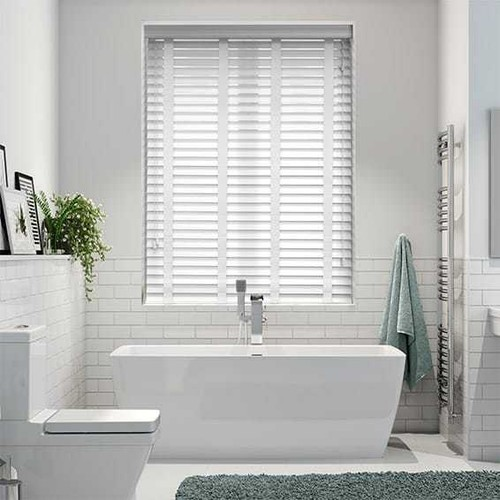 Bathroom
 Dining Room
 Kids Room
 Living Room
 Bedroom
 Bay Window
 Conservatory Window
 Tild and Turn Window
 Bi Fold Window
 Roof of Skylight
 French Door
 Sliding Door
Perfect Fit Roller Blinds vs Perfect Fit Venetians: Which Is Better?
- by Mariam Labadze
 Perfect fit blinds solve the installation problem that conventional window coverings have never adequately addressed — the gap, the drilling, the mismatch between a standard blind and a UPVC frame. But once you've decided on the perfect fit system, a second question follows immediately: which style?
Roller blinds and Venetian blinds are the two most practical, most widely available, and most frequently compared options within the perfect fit range. They share the same clip-frame mounting system and produce the same clean, gap-free appearance from the outside. What they do differently — and what they do better or worse than each other — is everything else.
This is a direct, room-by-room comparison of both formats. Not a diplomatic draw, but an honest assessment of which wins where and why.
[toc]
How They Work: A Quick Recap
Perfect Fit Roller Blinds
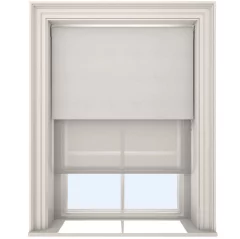
A length of fabric wound onto a tube that sits in end brackets at the top of the perfect fit frame. The blind is raised by rolling the fabric onto the tube — operated by a side chain, a spring mechanism, or a cordless push-button system — and lowered by allowing it to unroll to the desired height. Operation is binary in the sense that the fabric is either covering the window or it isn't, with no intermediate adjustment to the fabric itself.
Available in the full range of opacity levels from sheer voile through to complete blackout. The fabric is the primary variable — the mechanism is consistent across the range.
Perfect Fit Venetian Blinds
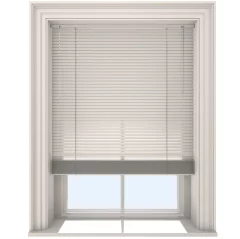
Horizontal slats — typically in aluminium, though faux wood is available in some perfect fit formats — suspended from a headrail at the top of the frame by ladder tapes or cords. The slats tilt through approximately 180 degrees via a wand or cord, from fully open horizontal through to fully closed in either direction. The blind raises by stacking the slats upward into the headrail.
Available primarily in aluminium for the perfect fit format, in a range of widths — typically 16mm, 25mm, or 35mm slats — and a wide range of colours and finishes. The operating mechanism is more complex than a roller, with both tilt and raise functions to consider.
Light Control: The Core Comparison
This is the dimension that separates the two formats most clearly, and it's the place to start because light control is the primary reason most people buy a blind in the first place.
What a Roller Does
A roller blind has two states: raised or lowered to a chosen position. When lowered, the fabric provides whatever light transmission its opacity rating delivers — from near-complete transparency in a sheer fabric to near-complete blockage in a blackout material. There is no adjustment to how light enters the room at a given blind position other than raising or lowering the fabric itself.
For rooms where you want one consistent condition — darkness for sleeping, privacy for working, soft diffusion for a living space — a roller blind delivers that condition reliably and simply. The perfect fit roller blind in a blackout fabric is the strongest blackout solution in the perfect fit range, because the edge-to-edge frame coverage eliminates the light gaps that defeat most conventionally mounted blackout rollers.
What a Venetian Does
A Venetian blind offers a continuous range of light conditions that a roller blind cannot approach. At the fully open position — slats horizontal — the blind is essentially transparent, admitting the same light as an unobstructed window. As the slats tilt downward, they progressively intercept direct light while continuing to admit diffused light. At the fully closed position, the overlapping slats provide near-complete privacy and substantial light reduction, though not the complete blackout that a dedicated blackout fabric achieves.
The practical value of this range is considerable in rooms where conditions change through the day. A south-facing home office at midday needs something different from the same room at 9am. A kitchen window needs full light in the morning and privacy from street level in the evening. A Venetian blind addresses all of these conditions without the blind leaving its lowered position — the slat angle does the work that raising and lowering the blind would otherwise require.
The Verdict on Light Control
For blackout performance: roller wins clearly. A blackout roller in a perfect fit frame is more effective than closed Venetian slats at eliminating light.
For flexible, granular light management across changing conditions: Venetian wins clearly. The tilt function provides a range of options that a roller blind simply doesn't offer.
For straightforward privacy with some light transmission: both perform comparably, though the roller's fabric options give it more flexibility in the middle ground.
Aesthetics: How They Look in the Room
Roller Blinds
The roller format is minimal. When lowered, you see fabric — a flat plane of material filling the frame, available in any colour, texture, or pattern that the fabric range covers. When raised, the fabric rolls onto the tube and sits compactly at the top of the frame, reducing the visual interruption of the window to a narrow cylinder. In rooms where the view, the window architecture, or the natural light are features in their own right, the roller's ability to disappear when raised is a genuine aesthetic advantage.
The fabric itself is the design element. A textured weave, a printed pattern, or a carefully chosen neutral — the roller blind's aesthetic contribution to the room is determined almost entirely by the fabric choice.
Venetian Blinds
The Venetian format has a stronger visual presence regardless of position. The horizontal lines of the slats are visible whether the blind is lowered and tilted or raised into a stack — the stacked slats at the top of a raised Venetian are more visually substantial than a rolled fabric tube. In rooms with clean, linear architecture this horizontal rhythm works well. In rooms with a softer, more layered aesthetic, the structured quality of the Venetian can feel slightly industrial.
Aluminium slats — the dominant material in perfect fit Venetians — have a contemporary, functional character that suits kitchens, bathrooms, and home offices naturally and suits traditional living rooms or bedrooms less intuitively. The metallic sheen of standard aluminium is softened somewhat by brushed or matte finishes, but it remains a more assertive material presence than fabric.
The Verdict on Aesthetics
For rooms where softness, warmth, or the window architecture itself should dominate: roller wins. The blind recedes when raised and contributes fabric texture when lowered.
For rooms with a clean, functional, or contemporary character where strong horizontal lines read as a design element: Venetian holds its own, particularly in narrower slat widths.
For bedrooms and living rooms in most UK domestic settings: roller is the more versatile aesthetic choice.
Practicality by Room
Bedrooms
Roller wins here, and not particularly closely. The blackout performance of a perfect fit roller blind in a blackout fabric is the primary consideration, and aluminium Venetian slats in a closed position do not achieve the same level of darkness. The roller format is also simpler to operate in a half-awake state — raise or lower, no tilt adjustment required.
The aesthetic argument reinforces the practical one. Bedrooms generally benefit from softer, warmer materials, and fabric rollers in a range of textures and neutrals suit this far better than aluminium slats. For those wanting a honeycomb blackout blind for thermal performance as well as darkness, the honeycomb format is a third option that outperforms both roller and Venetian in this specific context.
Verdict: Roller
Kitchens
Venetian wins in kitchens, and the reasons are practical rather than aesthetic. Kitchens generate steam, grease, and cooking residue that settles on window coverings over time. An aluminium Venetian slat wipes clean with a damp cloth. A fabric roller blind absorbs airborne grease gradually and is considerably more difficult to clean once soiled — the fabric cannot be wiped down and washing it typically requires removal of the whole blind.
The light control argument also favours the Venetian in kitchens. Morning light directly at worktop level, afternoon sun at eye height when standing at the sink, evening privacy when the kitchen is lit from inside and dark outside — a Venetian addresses all of these with slat adjustment. A roller requires raising or lowering the whole blind each time conditions change.
For tilt-and-turn windows above kitchen sinks — a common layout in newer UK builds — both formats work well in the perfect fit system, but the Venetian's partial-open positions are more useful when you want ventilation and controlled light simultaneously.
Verdict: Venetian
Bathrooms
Venetian wins again, for the same core reason as kitchens. Moisture resistance is the non-negotiable requirement in a bathroom, and aluminium Venetian slats are inherently moisture-tolerant. Fabric roller blinds in bathrooms accumulate humidity, can develop mould at the edges over time, and require moisture-resistant fabric treatment that adds cost and reduces the range of fabric options available.
A perfect fit aluminium Venetian in a bathroom also handles condensation better than fabric — droplets form on the slat surface and run off rather than being absorbed into the material. For north-facing bathrooms with poor ventilation where condensation is a persistent issue, this is a practical consideration rather than a theoretical one.
Verdict: Venetian
Living Rooms
Roller wins in most living room configurations, though the margin depends on the room's character and the specific window situation.
The primary living room consideration is light management across the day. A roller in a light-filtering fabric provides soft, diffused light throughout the day with the option of full privacy when fully lowered. The Venetian offers more granular control but at the cost of a more structural visual presence in a room where the aesthetic contribution of the window treatment generally matters more than in a kitchen or bathroom.
For south or west-facing living rooms with significant afternoon sun and glare, the Venetian's tilt function becomes more practically useful — being able to angle the slats to deflect direct sunlight away from screen level or seating without darkening the room is a genuine advantage that a roller blind doesn't offer.
For bay windows in period properties, the roller format in a warm fabric typically integrates better with the room's character. For contemporary open-plan kitchen-diners with large rear windows, the Venetian makes a stronger functional argument.
Verdict: Roller (generally), Venetian (for strong south/west sun management)
Home Offices
Venetian wins clearly. Screen glare management is the dominant requirement in a home office, and the tilt function addresses it more precisely than any roller blind configuration. The ability to angle slats to deflect direct sun away from screen height while maintaining ambient room brightness is something a roller blind — which must be either fully raised or lowered to a position that may block the working area's light — cannot replicate.
Aluminium slats also suit the functional, work-focused character of a home office better than fabric. The clean horizontal lines are at home alongside monitors, desks, and shelving in a way that patterned or textured fabric rollers sometimes aren't.
Verdict: Venetian
Nurseries and Children's Rooms
Roller wins, and specifically the honeycomb blackout blind version. Blackout performance is the priority — nap times in daylight hours, early summer sunrises, the particular sensitivity of infant sleep to light. No Venetian configuration achieves the same level of darkness as a blackout roller in a perfect fit frame.
Child safety is the secondary consideration. Perfect fit roller blinds in cordless push-button or spring formats have no accessible operating cord — the entire mechanism is contained within the frame. Perfect fit Venetian blinds have operating cords and wands that, while typically within the frame profile, represent a more complex cord arrangement than a cordless roller. UK regulations require breakaway connectors on all looped cords in homes with children, and most current perfect fit Venetians comply — but the simpler the operating mechanism in a child's room, the better.
Verdict: Roller (specifically blackout or honeycomb)
Cleaning and Maintenance
Roller Blinds
The fabric is the maintenance challenge. Light surface dust can be removed with a soft brush or gentle vacuum attachment. More substantial soiling — marks, stains, or accumulated grime — typically requires the fabric to be removed from the tube, hand or machine washed depending on the material specification, and then refitted. Some fabrics cannot be washed at all without distortion.
The mechanism itself requires no maintenance in normal use. The spring or chain operation is sealed and unlikely to require attention within the product's lifespan.
Venetian Blinds
Individual aluminium slats can be wiped clean in position with a damp cloth — running it along each slat takes a few minutes per blind and keeps them in good condition indefinitely. This is the primary practical advantage over fabric in any room with high dust or grease accumulation.
The mechanism is more complex than a roller and has more components that can wear or fail over time — the ladder tapes that hold the slats in position, the tilt cord, and the raise cord are all subject to wear at high-use points. Individual component replacement is possible on most quality Venetian systems, which extends the usable life considerably.
Verdict: Venetian wins on ease of regular cleaning. Roller wins on mechanism simplicity and longevity.
Operating Mechanisms and Ease of Use
Roller Blinds
The spring rewind mechanism — common on smaller perfect fit rollers — is the simplest operation available. Pull down to lower, release to raise. No chain, no cord to route, no adjustment options to think about. For windows operated frequently by multiple household members, including children, this simplicity is genuinely valuable.
Chain-operated rollers are more precise — you lower to exactly where you want and it stays there — but add a loop of chain to the window, which is a minor visual and practical addition. Cordless push-button versions are available in some perfect fit ranges and represent the cleanest solution for rooms where any exposed operating component is undesirable.
Venetian Blinds
Two separate functions to operate — tilt and raise — each with their own cord or wand. The tilt wand is typically the primary daily-use control, with the raise cord used less frequently. The learning curve is minimal but the operation is meaningfully more complex than a roller, and in rooms where the blind is adjusted multiple times daily the additional step of tilt adjustment versus simple raise-or-lower becomes a small but real friction.
For tilt-and-turn windows specifically, both formats operate identically in terms of the perfect fit frame function — the blind moves with the window regardless of style. The operational difference is purely in the adjustment mechanism once the blind is in its lowered position.
Verdict: Roller wins on ease of operation. Venetian wins on precision of adjustment.
Cost Comparison
At equivalent quality levels and standard casement dimensions, perfect fit roller blinds are generally less expensive than perfect fit Venetian blinds. The difference reflects the greater complexity of the Venetian mechanism and the additional components — slats, ladder tapes, tilt mechanism — compared to a roller tube and fabric.
As a broad guide for the UK market in 2026: a perfect fit roller blind in a standard casement size might cost between £35 and £80 depending on fabric weight and width. An equivalent perfect fit Venetian in aluminium typically ranges from £45 to £100 for the same window dimensions.
The gap narrows when comparing high-specification rollers — heavier blackout fabrics, motorised mechanisms, or premium fabric finishes — against standard Venetians. For basic light-filtering or privacy applications, the roller is the more cost-effective format.
Verdict: Roller is cheaper at equivalent quality levels for most standard applications.
The Decision Framework
Rather than a single winner, the honest conclusion is a clear set of matching criteria:
Choose a perfect fit roller blind if the room is a bedroom or nursery where blackout performance is the priority. If the window is in a living room or dining space where fabric aesthetics contribute to the room's character. If you want the simplest possible operating mechanism. If cost is a significant consideration. If the blind will be combined with curtains and you want the blind to recede visually.
Choose a perfect fit Venetian blind if the room is a kitchen or bathroom where moisture resistance and wipe-clean practicality are required. If the room is a home office where precise screen glare management through slat tilting is a daily requirement. If the window faces south or west and afternoon sun management is a priority. If the room's character suits clean horizontal lines and a functional material aesthetic.
Consider a perfect fit honeycomb blind instead of either if the room is a bedroom or conservatory where thermal insulation and blackout performance are both priorities — the honeycomb format outperforms both roller and Venetian on the combined thermal and blackout brief and is available in the same perfect fit frame system.
The framing of this as a competition with a single winner doesn't quite fit the reality. Both formats sit within the same mounting system and solve the same installation problem. The difference is in what they do once they're fitted — and matching that capability to what the room actually needs produces a better outcome than defaulting to one format for the whole house.
For most UK homes, the answer is probably both — rollers in the bedrooms and living spaces, Venetians in the kitchen and bathroom. The perfect fit system is consistent across all of them.