Skip to content

 Vertical Blinds
 Roman Blinds
 Roller Blinds
 Venetian Blinds
 Day and Night Blinds
 Skylight Blinds
 Children
 Wooden Blinds
 Curtains
 Blinds Accessories
 White
 Yellow
 Gold
 Green
 Grey
 Pink
 Orange
 Animal
 Floral
 Geometric
 Striped
 Motorized Day and Night Blinds
 Motorized Roller Blinds
 No Drill Rollers
 Perfect Fit Wooden
 Perfect Fit Metal
 Easy Stick Honeycomb
 Easy Stick Wooden
 Easy Stick Metal
 Thermal Blinds
 Better Sleep Blinds
 Cordless Blinds
 No Drill Blinds
 Blackout Blinds
 Waterproof Blinds
 Easy Wipe Blinds
 Taped Blinds
 Conservatory
 Office
 Kitchen
 Bathroom
 Dining Room
 Kids Room
 Living Room
 Bedroom
 Bay Window
 Conservatory Window
 Tild and Turn Window
 Bi Fold Window
 Roof of Skylight
 French Door
 Sliding Door
Temporary Blackout Blinds: What Actually Survives a Rental Agreement
- by Mariam Labadze
Temporary blackout blinds exist because a tenancy agreement says no holes in the walls and a body clock says the room has to be dark. Three fittings compete for the job and each one fails in its own way. Which failure you can live with is most of the decision.
The other thing to settle before you spend anything is how long you are staying, because temporary blackout blinds are cheap for a season and expensive across a tenancy.
Key Takeaways
-
Three fittings, three failures. Adhesive lifts paint, tension slips under weight, clip-in frames need a glazing bead to grip.
-
Weight is the enemy. Blackout cloth is heavier than anything else you might hang, and weight is what breaks a temporary fixing.
-
Humidity beats adhesive. A bathroom or kitchen window defeats a stuck bracket faster than any other room in the flat.
-
Check the bead first. Clip-in frames are the tidiest option going, and they only work where there is a bead to hold.
-
Length of stay changes the maths. Replaced twice over a long let, temporary blackout blinds cost more than fitting once.
Why Temporary Blackout Blinds Exist at All
Most UK tenancies treat screw holes as damage, and most landlords hand the flat over with whatever thin roller was cheapest at the time. That blind is not opaque, the window faces a street lamp, and nobody wants to redecorate someone else's property to fix it.
Night shifts are the other half of the market. Sleeping between nine in the morning and five in the afternoon is hard work in a room doing its best to be bright, and curtains are nowhere near enough. Anyone in that pattern has usually worked out that temporary blackout blinds are worth the money.
A third group rarely gets mentioned: people who own the place but are not ready to commit. A room mid redecoration, a nursery for a baby not yet born, a loft waiting on its windows. Temporary blinds buy time.
Adhesive, Tension and Clip-In: Three Different Risks
Stick-on fittings use foam tape or a bonded bracket on the frame or the glass. They go up in minutes and they are honest about nothing. Paint comes away with them more often than not, condensation creeps under the tape across a winter, and a steamy bathroom will have the bracket on the sill by spring. On a clean uPVC frame in a dry bedroom, they hold up reasonably.
Tension rods wedge between the two sides of the reveal and hold by friction alone. Brilliant with voile, poor with anything heavy, and blackout cloth is heavy. The rod creeps a little each time you raise the blind, and one morning it comes down. Keep the drop short if you go this way, and accept that resetting it is part of the deal.
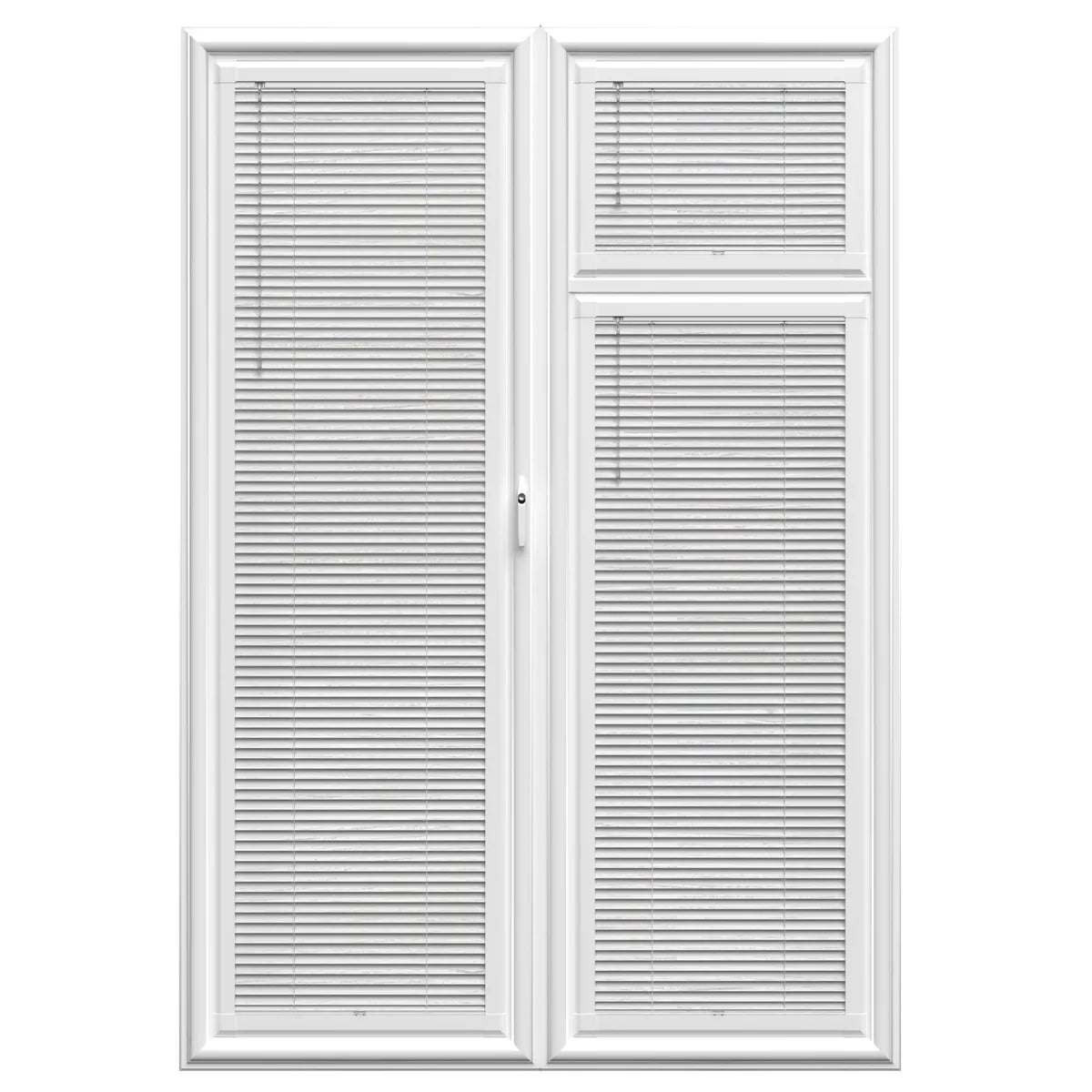
Clip-in frames are the best of the three and the fussiest about where they go. The frame grips the glazing bead on a uPVC unit, holds the blind inside the opening and leaves nothing behind when you unclip it. No screws, no tape, and far less light down the sides, since the fabric sits inside the frame rather than hanging in front of it. The catch is the bead. On timber sashes and old metal frames there is nothing for it to hold, which rules temporary blackout blinds of this type out of a lot of older housing.
What the Landlord Will Notice When You Leave
Take temporary blackout blinds down a fortnight before the inspection rather than the night before, because the damage shows in daylight and takes time to put right.
Adhesive leaves two marks: a glue shadow that solvent shifts, and lifted paint that it does not. Tension rods leave dents where the end caps have been pressing, and those sand and touch up easily. Clip-in frames leave nothing, which is the whole argument for them.
It is also worth asking before you assume the answer is no. Plenty of landlords will agree to a drilled fitting if you offer to leave it behind, and a decent set of blackout blinds improves their property as much as your sleep. Photograph the window either way, since the argument at the end of a tenancy is nearly always about whether a mark was already there.
Travel, Night Shifts and the Spare Room
Portable temporary blackout blinds are a different animal from a fitted set and deserve judging differently. For a hotel room or a holiday let, a suction panel that packs flat and goes up in two minutes is doing its job properly, and expecting it to seal the edges is unfair.
A spare room that becomes a nursery twice a year changes the calculation. The blind lives there permanently and only the fitting is temporary, which argues for a clip-in frame over anything disposable. A clip-in frame takes pleated blinds well, since they stack into very little space.
Settle the cord question at the same time if small children use the room. Switching to cordless blinds removes the hazard outright, and a temporary fitting is no excuse for a loop hanging beside a cot.
When Temporary Stops Being the Cheaper Option
Adhesive fittings want replacing roughly once a year. Tension rods last longer and need constant resetting. Clip-in frames outlast both and can move house with you, which is the quiet advantage nobody puts in the listing.
Run the numbers on temporary blackout blinds across your tenancy, not across one purchase. A blind bought twice, plus filler and an afternoon touching up paint at the end, is not cheaper than one good blind fitted once. That is the point where temporary blackout blinds stop making sense on cost and start being purely about permission.
If permission comes, your options widen immediately. Made to measure blackout blinds fitted with screws darken a room better than any temporary version of the same cloth, and complete blackout blinds with side channels only become possible once holes are allowed. Perfect fit blackout blinds sit between the two: the frame clips in, nothing is drilled, and the result still looks permanent. Choose temporary blackout blinds by how long you are staying, not by what the fabric claims.
Frequently asked questions
How do you take down blackout blinds?
Identify the fixing first. A clip-in frame releases when you squeeze the clips at the corners and pull the frame straight out. Tension rods unscrew to shorten and drop free. Adhesive is the awkward one: warm the tape gently with a hairdryer, then slide dental floss behind the pad and saw sideways, which separates the bond instead of taking the paint with it.
How do you make blinds blackout?
You cannot convert an existing blind reliably, and most attempts make things worse. Blackout lining stuck to a thin roller adds weight the mechanism was never built for, and it creases where it rolls. The change that genuinely works is closing the perimeter: add side channels, deepen the pelmet, or hang a lined curtain over the top. Light escapes at the edges, not through the middle.
What are no drill blinds?
Blinds fitted without screws or wall plugs, using a clip-in frame, a tension rod or an adhesive bracket instead. They suit rentals, fresh plaster and uPVC frames nobody wants to pierce. Clip-in versions grip the glazing bead and leave no mark at all. Expect them to handle light fabrics comfortably, and to need a shorter drop or more care once blackout cloth is involved.