Skip to content


 Vertical Blinds
 Roman Blinds
 Roller Blinds
 Venetian Blinds
 Day and Night Blinds
 Skylight Blinds
 Children
 Wooden Blinds
 Curtains
 Blinds Accessories
 White
White Yellow
 Gold
Gold Green
Green Grey
Grey Pink
Pink Orange
 Animal
 Floral
 Geometric
 Striped
 Motorized Day and Night Blinds
 Motorized Roller Blinds
 No Drill Rollers
 Perfect Fit Wooden
 Perfect Fit Metal
 Thermal Blinds
 Better Sleep Blinds
 Cordless Blinds
 No Drill Blinds
 Blackout Blinds
 Waterproof Blinds
 Easy Wipe Blinds
 Taped Blinds
 Conservatory
 Office
 Kitchen
 Bathroom
 Dining Room
 Kids Room
 Living Room
 Bedroom
 Bay Window
 Conservatory Window
 Tild and Turn Window
 Bi Fold Window
 Roof of Skylight
 French Door
 Sliding Door
Best Blinds for Large Windows: Privacy, Light and Style Guide
- by Mariam Labadze
 Large windows transform a room — flooding it with natural light, framing a garden view, or making a small space feel twice its size. But when it comes to dressing them, large windows present challenges that standard-sized blinds simply do not. Weight becomes a factor. Operating a wide blind by hand gets awkward. And choosing the wrong type can leave you with a sagging, lopsided mess that dominates the room for all the wrong reasons. In this guide, we compare the best blinds for large windows, explain which styles handle wide spans gracefully, and share practical tips on measuring, motorisation and installation.
[toc]
Quick Answer: The best blinds for large windows are vertical blinds, panel blinds, and motorised roller blinds. Vertical blinds handle wide spans without sagging because they hang from individual carriers. Roller blinds work well up to approximately 3 metres with a sturdy tube. For windows wider than 3 metres, splitting into two blinds or using motorisation avoids excessive weight and difficult manual operation.
What Counts as a Large Window?
There is no official definition, but in practical terms, a large window is anything wider than about 1500 mm or with a total area that makes a standard blind mechanism struggle. Patio doors, bi-folds, picture windows, floor-to-ceiling glazing and modern open-plan extensions all fall into this category. The wider the window, the heavier the blind — and the more important it is to choose the right type.
Vertical Blinds: The Natural Choice for Wide Windows
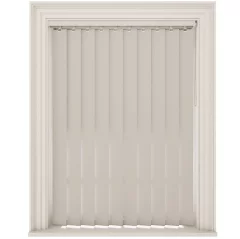
Vertical blindsare purpose-built for large, wide windows. The fabric hangs in individual slats (louvres) from a headrail, and each slat moves independently. This means there is no single heavy fabric panel to lift or roll — the weight is distributed evenly along the track. Vertical blinds can comfortably span 4 metres or more without sagging, making them the default option for wide patio doors and full-width living room windows.
Advantages for Large Windows
-
No weight limit issues — slats are individually hung.
-
Easy to operate across wide spans with a wand or cord.
-
Excellent light control — tilt the slats to any angle.
-
Available in a wide range of colours and textures, includingreplacement slatsfor refreshing the look without replacing the entire blind.
Considerations
Vertical blinds have a functional, office-like reputation that puts some homeowners off. However, modern fabric choices — including textured linens, soft neutrals and wood-effect finishes — have significantly improved their aesthetic appeal for domestic settings.
Roller Blinds: Clean Lines for Large Openings
Aroller blindoffers a sleek, minimalist look that works well on large windows — up to a point. Most standard roller blinds are available in widths up to around 2400–3000 mm. Beyond that, the roller tube can bow under the fabric weight, causing the blind to roll unevenly.
Making Roller Blinds Work on Wide Windows
-
Heavy-duty tubes: Some manufacturers offer 38 mm or 45 mm diameter tubes (vs the standard 28–32 mm) for wider blinds. These resist bowing far better.
-
Centre support brackets: A bracket mounted midway along the headrail stops the tube from flexing on spans over 1800 mm.
-
Split blinds: For very wide windows, two roller blinds mounted side by side — with a minimal gap between them — can look seamless while keeping each blind at a manageable width.
Venetian Blinds: A Classic Option with Limits
Venetian blindsoffer superb light control thanks to their tiltable slats, but they become increasingly heavy and awkward to operate at large sizes. A wide aluminium venetian can weigh several kilograms when fully lowered, and raising it requires sustained pulling on the cord — not ideal for everyday use. Wood venetian blinds are even heavier.
For large windows, venetians work best at widths under 1800 mm. If you love the venetian look on a wider window, consider splitting the span into two or three individually operated blinds, each covering a section of the opening.
Day and Night Blinds: Versatile Light Control
Day and night blindsare available in widths suitable for many large windows and offer the advantage of adjustable light filtering without raising or lowering the blind. For a large bedroom or living room window, they provide a contemporary look with practical benefits. At very wide sizes, the same roller tube limitations apply, so check maximum widths before ordering.
Motorised Blinds: The Best Solution for Large Spans
When a blind is too heavy or too wide to operate comfortably by hand, motorisation is the answer. A small electric motor fitted inside the roller tube or headrail does the lifting for you — activated by a remote, wall switch or smart home system.
Motorised blinds are especially valuable for:
-
High or hard-to-reach windows — stairwell windows, skylights and clerestory glazing.
-
Very wide spans — where manual operation would require significant effort.
-
Multiple large windows — group several motorised blinds on one remote and open or close them simultaneously.
1ClickBlinds offersmotorised day and night blindsthat combine the versatility of vision fabric with push-button convenience — ideal for large bedroom or living room windows.
Panel Blinds: Designed for Wide Openings
Panel blinds (sometimes called panel gliders or sliding panels) consist of wide fabric panels that slide along a multi-channel track. Each panel is typically 400–600 mm wide and moves independently, allowing you to stack them to one side or spread them across the full opening. They are purpose-designed for patio doors, room dividers and very wide windows — and they look striking in modern interiors.
Measuring Tips for Large Windows
The bigger the window, the more critical accurate measuring becomes. A 5 mm error on a 600 mm blind is barely noticeable; the same error on a 3000 mm blind causes a visible tilt or gap.
Key Measuring Advice
-
Use a steel tape measure. Fabric tapes stretch and sag over long distances, introducing errors.
-
Measure in millimetres. Centimetres leave too much room for rounding errors on wide windows.
-
Take width measurements at three heights (top, middle, bottom) and drop measurements at three positions (left, centre, right). Walls and recesses are rarely perfectly true.
-
Get a helper. Holding a tape measure level across a 2.5 metre opening single-handedly is unreliable. A second pair of hands makes a meaningful difference.
-
Double-check before ordering. Made-to-measure blinds for large windows are not cheap to replace if the measurements are wrong.
Installation Considerations for Heavy Blinds
Large blinds are heavy, and the fixings must be up to the task. Standard plastic wall plugs may not hold a 5 kg blind in plasterboard. Use heavy-duty fixings — spring toggles, metal hollow-wall anchors, or fix directly into timber studs or a concrete lintel. For motorised blinds, you will also need a power source nearby, whether that is a mains socket, a hardwired connection or a rechargeable battery tube.
Which Blind Type Should You Choose?
Here is a quick summary based on window width.
-
Up to 1800 mm: Almost any blind type works — roller, venetian, roman, day and night.
-
1800–3000 mm: Roller blinds (with heavy-duty tube), vertical blinds, or day and night blinds are reliable choices.
-
Over 3000 mm: Vertical blinds, panel blinds or split roller blinds. Motorisation is strongly recommended.
Frequently Asked Questions
What type of blind is best for very wide windows?Vertical blinds and panel blinds are best for very wide windows (over 3 metres) because they distribute weight across individual slats or panels rather than relying on a single roller tube. Motorised roller blinds are also effective if the tube diameter is sufficient.
Can you get roller blinds for large windows?Yes, roller blinds are available in widths up to approximately 3000 mm, depending on the manufacturer and tube diameter. For windows wider than this, use two roller blinds side by side or choose a heavy-duty tube with a centre support bracket to prevent sagging.
Do large blinds need motorisation?Motorisation is not essential for all large blinds, but it is highly recommended for wide or heavy blinds that are difficult to operate manually. It is also the best option for high or hard-to-reach windows where manual cords or chains would be impractical.
How do I measure a very large window for blinds?Use a rigid steel tape measure and take width measurements at three heights and drop measurements at three positions. Measure in millimetres for accuracy. Have someone help you hold the tape level across wide spans, and double-check all figures before ordering.