Skip to content


 Vertical Blinds
 Roman Blinds
 Roller Blinds
 Venetian Blinds
 Day and Night Blinds
 Skylight Blinds
 Children
 Wooden Blinds
 Curtains
 Blinds Accessories
 White
White Yellow
 Gold
Gold Green
Green Grey
Grey Pink
Pink Orange
 Animal
 Floral
 Geometric
 Striped
 Motorized Day and Night Blinds
 Motorized Roller Blinds
 No Drill Rollers
 Perfect Fit Wooden
 Perfect Fit Metal
 Thermal Blinds
 Better Sleep Blinds
 Cordless Blinds
 No Drill Blinds
 Blackout Blinds
 Waterproof Blinds
 Easy Wipe Blinds
 Taped Blinds
 Conservatory
 Office
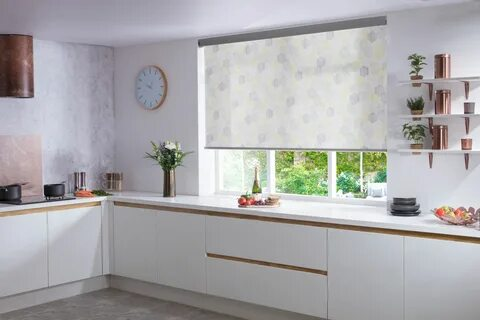 Kitchen
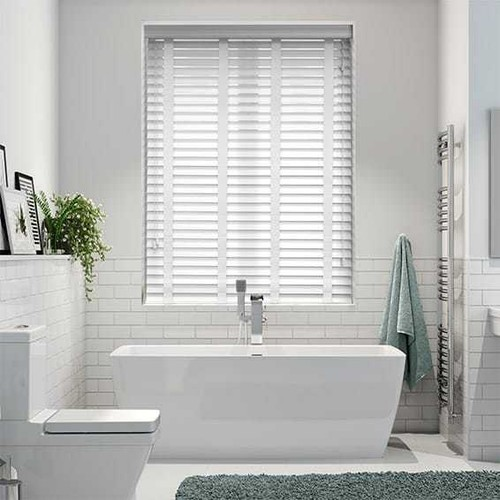 Bathroom
 Dining Room
 Kids Room
 Living Room
 Bedroom
 Bay Window
 Conservatory Window
 Tild and Turn Window
 Bi Fold Window
 Roof of Skylight
 French Door
 Sliding Door
Best Waterproof Blinds for Bathrooms and Kitchens 2026
- by Mariam Labadze
 Most blind failures in bathrooms and kitchens are not failures of the blind itself. They are failures of specification — the wrong material chosen for the environment, performing predictably badly under conditions it was never designed to handle. Fabric blinds in shower rooms. Real wood in kitchen steam. Roller coatings that absorb grease and become impossible to clean without damaging the surface beneath.
The right waterproof blind for a bathroom or kitchen doesn't require compromise on appearance. The product range available in 2026 is wide enough that moisture-resistant materials come in finishes that are genuinely attractive rather than merely functional, and in formats that suit both the aesthetic of contemporary kitchen design and the specific spatial constraints of most UK bathrooms.
This guide covers the best options for both rooms, what to look for in each, and which products to avoid regardless of how they're described in the listing.
[toc]
What Waterproof Actually Means for Blinds
The term is used loosely enough in product marketing that it's worth establishing a working definition before evaluating specific products.
A genuinely waterproof blind is one where the slat or fabric material itself is impervious to water — not water-resistant, not moisture-tolerant, not splash-proof. Impervious. The material does not absorb moisture, does not swell, does not warp, does not support mould growth, and does not deteriorate in surface finish when exposed to condensation, steam, or direct water contact over a sustained period.
The distinction matters because bathroom and kitchen environments don't present a single moisture event — they present daily, repeated moisture exposure over years. A material that tolerates occasional splashing but absorbs sustained steam will fail progressively rather than immediately. The timeline to visible damage may be twelve to eighteen months rather than immediately, which means the failure is often attributed to something other than the original specification error.
The headrail, operating mechanism, and bottom rail also need consideration. A waterproof slat material fitted to a steel headrail that rusts in a bathroom steam environment is a partially waterproof blind that will still fail — at the mechanism rather than the slat. Quality waterproof blind systems use aluminium headrails and corrosion-resistant operating components throughout.
The Best Waterproof Blind Materials
PVC — The Benchmark for Wet Rooms
PVC is the standard against which all other waterproof blind materials are measured, because it is the only option with zero moisture sensitivity across all exposure levels. It does not absorb water. It does not swell. It does not support mould. Condensation sits on the surface and evaporates or wipes away without any effect on the material beneath.
PVC blinds are available in Venetian slat format — the most common PVC blind type — and in vertical blind slat format for wider bathroom or kitchen windows where a traversing system is needed. Both use extruded PVC profiles that are consistent in dimension and resistant to the deformation that moisture causes in wood-based materials.
The appearance limitation of PVC has diminished considerably as the product range has developed. Contemporary PVC Venetian blinds are available in a range of metallic finishes, high-gloss colours, and wood-effect prints that read well in both bathroom and kitchen settings. The woodgrain PVC options — sometimes marketed as faux wood Venetians — replicate the visual warmth of timber without any of the moisture sensitivity, and in painted or natural wood finishes are convincing at normal room viewing distances.
Wipe-down cleaning is the maintenance requirement — a damp cloth removes condensation, soap residue, and kitchen grease without any risk to the surface. In a kitchen environment above a hob, a mild degreasing agent on a cloth removes cooking deposits without damaging the PVC surface.
Aluminium Venetian Blinds
Aluminium Venetian blinds are the traditional waterproof solution for UK kitchens and bathrooms, and remain entirely appropriate in both environments in 2026.
Aluminium slats are completely impervious to moisture — the metal is inert in the humidity levels of domestic bathrooms and kitchens, and the anodised or powder-coated finish that most aluminium blind slats carry provides a durable, cleanable surface that resists the adhesion of grease and soap residue more effectively than fabric alternatives.
The aesthetic of aluminium Venetians has benefited from the same contemporary finish development that has improved PVC products. Slimline 16mm slat profiles in brushed, pearl, and metallic finishes suit contemporary kitchen and bathroom design more comfortably than the heavy 50mm slat blinds that characterised aluminium Venetians in earlier decades. At the narrower slat widths, aluminium blinds have a quality that reads as considered rather than functional-default.
The operating mechanism for aluminium Venetians — tilt wand for slat angle, cord for raising and lowering — requires corrosion-resistant components for wet room use. Quality aluminium blinds for bathroom installation use aluminium headrails and corrosion-treated or plastic operating hardware. Avoid aluminium Venetians where the headrail is steel — the slats will outlast the mechanism considerably.
Aluminium slats wipe clean with a damp cloth. The tilt mechanism and ladder tape accumulate dust more than the slats themselves — periodic inspection and removal of dust from the headrail area prevents the mechanism becoming gritty. In kitchen environments, the headrail area above a hob accumulates grease-and-dust combination that requires a more thorough clean than the slats — remove the blind from its brackets periodically and clean the headrail with a degreasing cloth.
Faux Wood — For the Appearance of Timber Without the Risk
Faux wood blinds in PVC or wood-polymer composite provide the visual character of timber Venetian blinds in a moisture-resistant format that suits kitchens and bathrooms. As covered in the real wood versus faux wood comparison, the appearance difference between real and faux wood at normal viewing distances in painted or natural finish is minimal — particularly in bathrooms and kitchens where the blind is a background element rather than a close-inspection design feature.
For kitchen-diners where the window covering needs to relate visually to timber kitchen cabinetry or wooden flooring, a faux wood Venetian in a finish that matches or complements the timber tones throughout the space provides a cohesive result that aluminium or plain PVC alternatives can't offer. The moisture-resistant construction handles the steam environment without any of the warping and finish deterioration that real wood would experience in the same room.
For bathrooms with natural material character — stone tiles, timber-effect flooring, wooden accessories — faux wood blinds continue the material reference in the window treatment without creating a moisture management problem.
Pure PVC faux wood is the more conservative choice for heavy moisture environments — shower rooms and bathrooms where daily steam is the constant. Wood-polymer composite, with its partial wood content, performs well in most domestic bathroom conditions but is marginally less moisture-stable than pure PVC in sustained high-humidity environments.
Waterproof Roller Blind Fabrics
Waterproof roller blinds use a PVC-coated or PVC-laminated fabric that is moisture impervious on the surface while retaining the softer appearance of fabric rather than hard slat formats.
These suit bathrooms and kitchens where the brief is a softer, more domestic window treatment than Venetian slats provide — small bathroom windows where a simple roller has the right visual weight, kitchen windows where a fabric appearance suits the room character better than aluminium or PVC slats.
The material assessment is important. Genuine waterproof roller fabric uses a PVC coating that extends to the edges of the fabric and prevents moisture wicking up from cut edges. Budget waterproof roller fabrics use a coated surface that is moisture-resistant on the face but allows moisture absorption at cut edges and through pinholes in the coating over time. In a bathroom environment, edge absorption leads to mould development at the base of the blind within months.
Quality waterproof roller fabrics are smooth-surfaced and wipe clean completely — no absorption, no residue retention. Poor quality waterproof fabrics have a slightly textured surface that appears to wipe clean but retains microscopic deposits that accumulate and eventually discolour the fabric.
For bathrooms, a waterproof roller blind in a perfect fit no-drill format offers the most complete solution — the clip frame eliminates the side gaps that allow steam to accumulate behind a conventionally mounted blind, and the no-drill mounting avoids creating fixings in tiled or plastered bathroom walls that risk moisture ingress at the fixing point.
Bathroom Blinds: Specific Considerations
Privacy at the Window
Bathroom privacy has a specific quality — complete opacity when the room is occupied, with the option to admit daylight when it isn't. This requirement is simpler than living room light management because there is rarely a need for an intermediate filtered state in a bathroom. The blind is down when in use, up when the room is empty.
This simplicity makes the roller blind format well-suited to bathroom use — a single piece of fabric that covers the window completely when lowered and disappears cleanly when raised. The operating mechanism is as simple as any blind format provides.
For bathrooms with overlooked windows — particularly ground floor bathrooms, rear bathrooms in terraced properties, or windows that face a neighbouring property closely — an obscure glazing approach, where the window itself is frosted or etched, can supplement or replace a blind for privacy. Translucent PVC roller blinds that admit light while preventing a direct view are an alternative for windows where daylight is wanted but direct sightlines are a concern.
Condensation and Steam Accumulation
The specific moisture challenge of bathroom environments is not splash but condensation. A hot shower in a poorly ventilated bathroom raises the humidity substantially, and when warm humid air contacts the cooler surface of a blind that sits between the shower steam and the window glass, condensation forms on the blind surface facing the room.
A blind mounted flat against the glass — or within the frame in the perfect fit system — accumulates less condensation on its room-facing surface than a blind mounted on brackets 50 to 100mm in front of the glass, because the air gap between a bracket-mounted blind and the glass is precisely where humid air cools most rapidly and deposits moisture most heavily.
The practical advantage of the perfect fit no-drill mounting system in a UPVC bathroom window is therefore double — it eliminates side gaps that allow steam circulation behind the blind, and it reduces the cold air pocket between blind and glass where condensation most readily forms.
For bathrooms without UPVC windows — older timber-framed bathroom windows in period properties — an aluminium Venetian blind in a corrosion-resistant headrail, mounted as close to the glass as the reveal allows, is the most condensation-resistant conventionally mounted option.
Mould and Mildew Resistance
Mould requires three things simultaneously: moisture, a surface to grow on, and organic material to feed on. Genuinely waterproof blind materials — aluminium, PVC, waterproof-coated roller fabric — provide the surface without the organic material, so mould cannot establish on the slat material itself.
Mould in bathroom blinds typically establishes at two specific points: the bottom rail, where water collects in any channels or cavities in the rail profile, and the ladder tape or operating cord of Venetian blinds, where the textile material absorbs moisture and provides the organic substrate mould needs.
Quality bathroom Venetian blinds use monofilament nylon ladder tape rather than woven textile tape. Nylon doesn't absorb water and doesn't support mould growth. Cotton or polyester ladder tape in a bathroom blind will develop mould at the bottom where it sits in any moisture pool, regardless of how moisture-resistant the slat material is.
Inspect the ladder tape specification before buying a bathroom Venetian blind — this detail is more important for long-term performance than the slat material, and is the component most commonly overlooked in product specifications.
Sizing and Fitting for Small Bathroom Windows
Bathroom windows in UK properties are typically smaller than other domestic windows — standard bathroom casements are often 600mm to 900mm wide and 600mm to 900mm tall, with some smaller obscure-glass openings in older terraced and semi-detached housing.
At these widths, the mechanical demands on the blind are modest and most operating systems are entirely adequate. The fitting consideration is the reveal depth — many bathroom windows, particularly in solid-walled older properties, have shallow reveals that don't accommodate a Venetian blind headrail inside the recess. Measuring the reveal depth and confirming it's sufficient for the headrail profile before ordering avoids a situation where the blind needs to be mounted outside the reveal at a larger effective width.
For shallow-reveal bathroom windows, a roller blind — with its minimal headrail depth — is often more practical than a Venetian, which requires a deeper reveal for the headrail plus the raised slat stack.
Kitchen Blinds: Specific Considerations
Grease and Cleanability
The primary long-term performance challenge for kitchen blinds is not moisture — it is grease. Cooking in a domestic kitchen generates airborne grease particles that settle on all surfaces within the room, including the blind. A blind that is theoretically moisture-resistant but has a surface texture that traps grease — either because of the material's surface characteristics or because of accumulated dust that adheres to a greasy surface — is a kitchen blind that becomes increasingly difficult to clean over time and progressively less presentable in appearance.
The cleanability hierarchy for kitchen blinds, from easiest to most difficult: aluminium Venetian slats with a smooth anodised finish, PVC slats with a smooth surface, faux wood PVC in a smooth painted finish, waterproof roller fabric with a smooth coated surface. Any material with a textured or embossed surface finish traps grease in the texture and requires more effort to clean.
In kitchens where serious cooking is regular — daily hob use, frying, roasting — the clean-down interval matters. A blind above a hob needs cleaning every two to four weeks to prevent grease accumulation becoming visible. If this cleaning commitment isn't realistic, choose the material with the smoothest surface possible — typically an aluminium Venetian in a plain anodised or gloss finish — to minimise the cleaning effort per session.
Heat and Solar Management
South-facing kitchen windows present a solar gain problem alongside the grease challenge. A kitchen already generates heat from cooking; adding significant solar heat gain through unprotected south or west-facing glazing makes the room uncomfortable to work in during summer afternoons.
A waterproof roller blind in the lowered position reduces solar heat gain through the fabric but doesn't eliminate it — the fabric absorbs solar radiation and re-radiates some as heat into the room. An aluminium Venetian with the slats tilted to deflect direct sun while maintaining air circulation between the slats is a more thermally effective solution for solar management — the deflected light leaves the room rather than being absorbed and re-radiated.
For kitchen windows where both solar management and easy cleaning are priorities, an aluminium Venetian in a mid-slat width — 25mm or 35mm slats are more manageable to clean than 50mm — is the most practical specification.
Proximity to Cooking Areas
For windows directly above or adjacent to a hob, the grease accumulation rate is significantly higher than for windows elsewhere in the kitchen. The heat from cooking also affects the blind material over time — PVC can soften very slightly with sustained radiant heat from a hob, and any material positioned too close to a direct heat source can discolour.
The practical minimum distance between a hob and a blind is approximately 600mm horizontally. If the window above the hob is closer than this, an extractor hood between the hob and the window is the priority installation — the hood captures airborne grease before it reaches the window, which benefits the blind as much as the rest of the kitchen.
For hob-adjacent windows where clearance is limited, an aluminium Venetian with a robust anodised finish is the most heat-tolerant option. PVC products are appropriate in all normal kitchen positions but are less suitable for very close hob proximity where direct radiant heat is a concern.
Kitchen Aesthetics and Design Integration
Contemporary kitchen design in UK homes has moved substantially toward integrated, considered interiors where the window treatment is part of a deliberate design scheme rather than a functional afterthought. The waterproof blind options available in 2026 accommodate this aspiration more fully than in earlier product generations.
Faux wood Venetian blinds in finishes that match or complement kitchen cabinet colours are the most common design-integrated choice in contemporary kitchen-diners — the timber reference connects the window treatment to the cabinetry and flooring in a way that aluminium or plain PVC alternatives can't offer, and the moisture-resistant construction handles the kitchen environment without the maintenance problems that real wood creates.
For very minimal contemporary kitchens — handle-less cabinetry, single surface materials throughout — a roller blind in a waterproof fabric that matches the wall colour almost exactly creates a window treatment that reads as part of the wall rather than a distinct element. This disappearing-blind approach suits kitchens where the window treatment should be a non-presence rather than a statement.
Best Blind Types by Room and Window
Shower Rooms and En-Suites
The highest humidity environment in any domestic property. PVC Venetian or waterproof roller in a perfect fit or aluminium-headrailed bracket mounting. Nylon ladder tape mandatory if Venetian format. Perfect fit no-drill mounting on UPVC windows for condensation management and no-fix installation.
Real wood: never. Fabric roller without waterproof coating: never. Standard roller blind with a coated fabric that isn't specified as genuinely waterproof: avoid.
Family Bathrooms
PVC Venetian, aluminium Venetian, faux wood Venetian, or waterproof roller. The choice is primarily aesthetic — all perform adequately in standard bathroom humidity. Perfect fit blinds for UPVC windows offer the most complete installation.
For households with young children — where the window might be reached from a bath or toilet lid — cordless operating formats are the appropriate specification. Cord cleats are mandatory for any looped cord, fixed at a minimum of 1.5 metres from the floor, but in a bathroom where children regularly climb surfaces, eliminating the cord entirely is the safer approach.
Kitchens Above the Hob
Aluminium Venetian in smooth anodised finish, or PVC roller with smooth waterproof surface — positioned at least 600mm from the hob horizontally. Regular cleaning schedule essential.
Kitchen-Diners
Faux wood Venetian for design integration with timber kitchen elements. Aluminium Venetian for maximum cleanability. Waterproof roller for simplicity and a softer appearance. All are appropriate — the choice is aesthetic and depends on how much cleaning commitment the occupant is prepared to make.
Utility Rooms
Aluminium Venetian or PVC roller — function over form. Utility rooms typically generate steam from tumble dryers and washing machines and have the moisture challenge of a bathroom without the design aspiration. The most robust, most easily cleaned option is the appropriate specification.
What to Avoid
Real Wood Blinds in Any Wet Room
Covered in detail elsewhere but worth stating directly: real wood blinds in bathrooms or kitchens are a maintenance problem rather than a window treatment. The finish provides temporary protection that the steam environment progressively defeats. Faux wood provides the same appearance without the sensitivity.
Standard Fabric Roller Blinds
Fabric roller blinds — including linen, cotton, and polyester fabrics without waterproof coating — absorb moisture, support mould growth, and in kitchen environments absorb grease irreversibly. They are not appropriate in bathrooms or kitchens regardless of price point.
Cheap Waterproof Rollers With Textile Backing
Some roller blinds marketed as waterproof have a PVC-coated face with a textile backing. The face is moisture-resistant; the backing is not. In a bathroom environment, moisture that reaches the backing — through the cut edge, through the roller mechanism at the top, or through the gap between the blind and the wall — is absorbed by the textile and creates a mould substrate that isn't visible until it has established significantly.
Genuine waterproof roller fabric is PVC or PVC-laminated throughout — face and backing — with no exposed textile at cut edges. Check the product specification before purchasing.
Woven Ladder Tape in Bathroom Venetians
As discussed above — woven cotton or polyester ladder tape in a bathroom Venetian blind will develop mould at the base regardless of the slat material's moisture resistance. Nylon monofilament tape or equivalent synthetic non-absorbing tape is the correct specification. This detail is worth specifically confirming when purchasing a Venetian blind for bathroom use.
Price Guide for 2026
PVC Venetian blinds for standard bathroom or kitchen windows: £20 to £60 depending on slat width, finish quality, and mechanism specification. The budget end of this range is adequate for shower rooms and utility spaces. The upper end provides better finish quality and more robust mechanisms appropriate for a main bathroom or kitchen where the blind is visible and regularly used.
Aluminium Venetian blinds: £25 to £80 for standard window widths. Slimline 16mm slat formats at mid to upper range. 25mm and 35mm slat widths across the full range.
Faux wood Venetian blinds for kitchen-diners: £45 to £120, reflecting the premium for the woodgrain finish and the generally higher specification mechanism required to handle the additional slat weight compared to aluminium or PVC alternatives.
Waterproof roller blinds: £30 to £70 for standard bathroom and kitchen window widths. Perfect fit waterproof roller blinds for UPVC windows at the upper end of this range, reflecting the clip-frame system cost.
Summary
The waterproof blind category in 2026 is well-developed enough that there is no need to compromise on appearance for the sake of moisture resistance. The materials that perform correctly in bathroom and kitchen environments — PVC, aluminium, faux wood, waterproof-coated roller fabric — are available in finishes that suit contemporary interiors as well as any fabric alternative.
The mistakes to avoid are specification errors rather than product quality failures: real wood where faux wood should be chosen, standard fabric where waterproof coating is required, woven ladder tape where nylon should be specified, and steel headrails where aluminium is the correct choice.
Get the specification right and the maintenance requirement reduces to a periodic wipe-down. Get it wrong and the blind is a progressive deterioration problem from the first shower onwards.
For UPVC bathroom and kitchen windows, perfect fit no-drill waterproof blinds are the most complete solution available — moisture-resistant material, edge-to-edge frame coverage that reduces condensation accumulation, and no wall fixings to create moisture ingress risk in tiled or plastered surfaces. The no-drill advantage in wet rooms is not just about avoiding deposit liability. It's about avoiding the specific problem of fixing holes in moisture-exposed surfaces that most bathroom and kitchen installations need to manage.