 Skip to content


 Vertical Blinds
 Roman Blinds
 Roller Blinds
 Venetian Blinds
 Day and Night Blinds
 Skylight Blinds
 Children
 Wooden Blinds
 Curtains
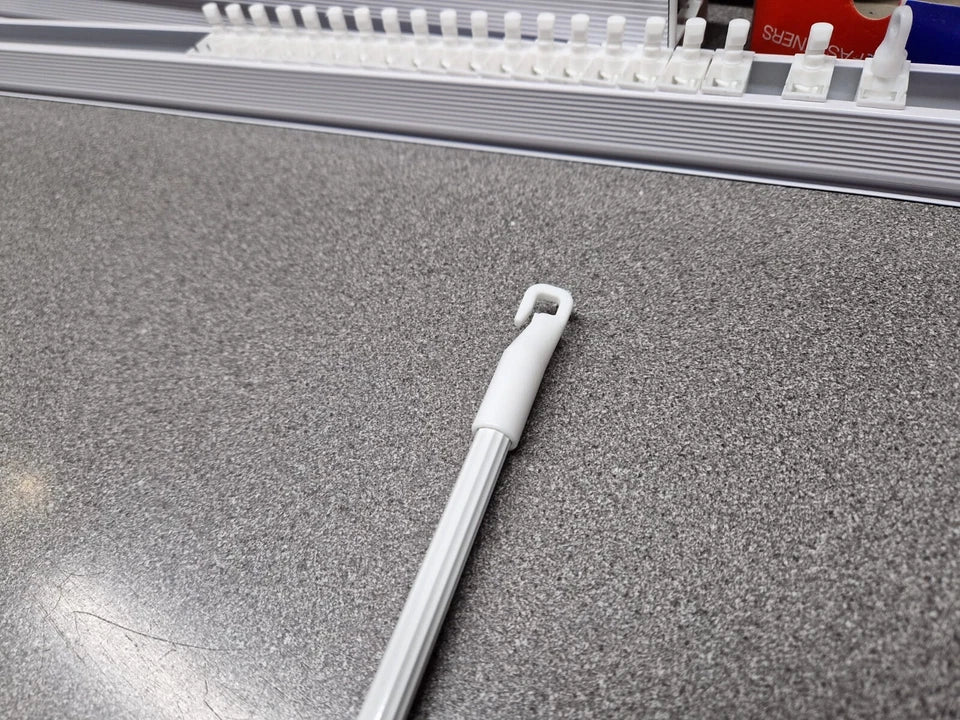 Blinds Accessories
 White
White Yellow
 Gold
Gold Green
Green Grey
Grey Pink
Pink Orange
 Animal
 Floral
 Geometric
 Striped
 Motorized Day and Night Blinds
 Motorized Roller Blinds
 No Drill Rollers
 Perfect Fit Wooden
 Perfect Fit Metal
 Thermal Blinds
 Better Sleep Blinds
 Cordless Blinds
 No Drill Blinds
 Blackout Blinds
 Waterproof Blinds
 Easy Wipe Blinds
 Taped Blinds
 Conservatory
 Office
 Kitchen
 Bathroom
 Dining Room
 Kids Room
 Living Room
 Bedroom
 Bay Window
 Conservatory Window
 Tild and Turn Window
 Bi Fold Window
 Roof of Skylight
 French Door
 Sliding Door
Blinds Accessories: What You Actually Need (and What You Don't)
- by Mariam Labadze
 The accessories market around window blinds is a mixture of genuinely useful products, things that solve problems most people don't have, and items that exist primarily to generate additional revenue at the point of sale. Knowing which category each accessory falls into before you buy saves money, reduces installation complexity, and means the blind you've chosen actually works the way it should rather than the way the upsell suggested it might.
This guide works through every significant blind accessory category — brackets, safety devices, operating hardware, fixing systems, and the various add-ons that appear in blind product listings — and gives a direct assessment of which are worth buying, which are conditional on your specific situation, and which can be skipped entirely.
[toc]
Brackets and Fixing Hardware
Standard Mounting Brackets
What they are: The brackets that fix a blind's headrail to the wall, ceiling, or window reveal. Supplied with the blind in most cases.
Verdict: Essential — and usually already included.
The brackets that come with a blind are designed specifically for that headrail profile. Using aftermarket brackets on a different blind to avoid buying the correct ones is a false economy — mismatched brackets affect how the headrail sits and can cause the blind to operate unevenly or pull away from the wall over time.
What matters is the fixing appropriate to the substrate. Standard wall plugs and screws suit masonry. Plasterboard — common in newer UK properties and in ceilings — requires cavity fixings that distribute load rather than concentrating it at a single point. A wide roller blind or a heavy wooden Venetian pulling on inadequately fixed brackets in plasterboard is the most common cause of blind installation failure, and the fix is always to use the correct fixing type at installation rather than to deal with the consequences later.
If additional brackets are needed for a wide blind — most manufacturers specify bracket spacing by width — order them from the blind supplier rather than substituting generic alternatives.
Extension Brackets
What they are: Deeper brackets that hold the headrail further away from the wall or ceiling, typically used to clear an obstruction such as a window handle, deep frame, or radiator pipe.
Verdict: Conditional — worth having if your window has protruding hardware.
Standard brackets on a shallow reveal bring the blind close to the wall surface. If the window has a handle, trickle vent, or other hardware that protrudes into the space where the blind would sit, a standard bracket creates a conflict that either prevents the blind from hanging correctly or means the fabric contacts the hardware when lowered.
Extension brackets solve this by holding the headrail further forward. The depth required depends on the specific obstruction — measure the protrusion before ordering. Most blind retailers supply extension brackets in 30mm, 50mm, and 75mm depths.
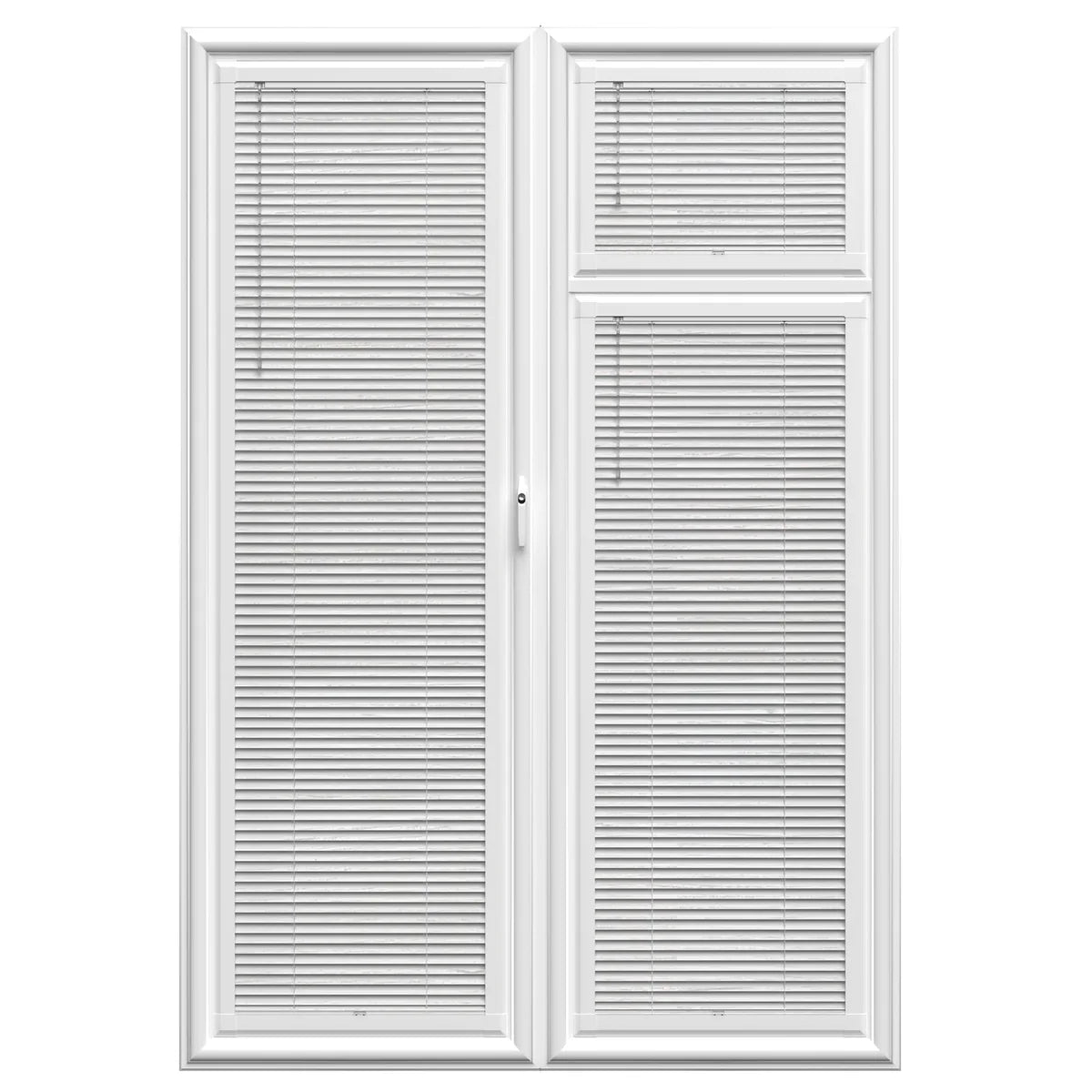
For perfect fit blinds within the UPVC frame, window handle conflicts are usually avoided by the design of the clip frame rather than requiring extension hardware — the perfect fit system is designed around the specific profiles of UPVC windows including standard handle positions.
Ceiling Fix Brackets
What they are: Brackets oriented for ceiling rather than wall or reveal mounting, typically with a different fixing angle from standard brackets.
Verdict: Essential if ceiling mounting — usually specified by the blind type.
Vertical blind tracks and roman blind battens are most commonly ceiling-mounted. The brackets designed for these products are typically ceiling-fix as standard. For roller and Venetian blinds that are conventionally wall-mounted but being ceiling-mounted for a specific installation — a dormer window, a velux-adjacent position, or a design preference — ceiling-fix brackets are a necessary addition. Confirm the specific bracket for the headrail profile before ordering.
Child Safety Accessories
Cord Cleats and Tie-Down Devices
What they are: Wall-mounted cleats that hold the operating cord of a blind in a figure-eight wrap, keeping it taut against the wall and out of reach of children.
Verdict: Essential in any home with children under 18 — and legally required.
UK regulations introduced in 2023 require that looped operating cords in blinds — the continuous chain or cord loop used to operate roller, Venetian, and Roman blinds — either use a breakaway safety connector that releases under load, or are secured by a cord cleat or tie-down device that keeps the loop inaccessible to children.
A looped cord at accessible height creates a strangulation risk that is well-documented and serious. The regulation reflects a long-standing safety guidance that has now been made a legal requirement for blinds sold in the UK for use in domestic settings.
Cord cleats are supplied with most blinds sold in the UK and should be fitted as part of the standard installation — not left in the packaging as an optional extra. Position the cleat at a height of at least 1.5 metres from the floor. The cord should be wrapped securely in a figure-eight pattern that cannot be released by a child pulling on the loop.
Breakaway Safety Connectors
What they are: A fitting in the operating chain or cord loop that releases under a defined load — typically around 10 to 15 Newtons — allowing the loop to open rather than maintain tension around a neck.
Verdict: Essential if the blind has a continuous cord loop — usually factory-fitted on compliant products.
Most roller blinds, Venetian blinds, and Roman blinds sold in the UK since 2023 include breakaway connectors as standard. If you have older blinds without them — bought before the regulations changed or imported outside UK compliance channels — retrofit breakaway connectors are available and should be fitted.
Breakaway connectors are not a substitute for cord cleats. Both serve different failure modes — the cleat prevents the cord from being accessible in the first place, the breakaway connector is the last resort if the cord is reached. Both should be present on any blind with a looped operating cord in a home with children.
Cordless Operating Systems
What they are: Blind mechanisms that operate without any external cord or chain — push-up, push-down, or spring-rewind systems where the operating force is applied directly to the bottom rail.
Verdict: The preferred option for children's rooms — eliminates the cord risk entirely.
For nurseries, children's bedrooms, and playrooms, a cordless operating mechanism is a more complete solution than relying on cord management accessories. Cordless honeycomb blinds and cordless roller blinds in perfect fit formats are widely available and operate by pressing the bottom rail upward to raise or pulling it down to lower — no cord, no chain, no loop of any kind accessible at any height.
The operating experience is slightly different from chain mechanisms — there is no precise click-stop positioning, and wider blinds require more force than narrower ones. For children's rooms where the blind is adjusted infrequently and the priority is safety rather than precise positioning, the cordless format is the correct specification.
Operating Hardware
Wand Extensions
What they are: Extended tilt wands for Venetian or vertical blinds, allowing the tilt function to be operated without reaching up to the headrail.
Verdict: Conditional — worth having for ceiling-mounted or high blinds.
Standard tilt wands are approximately 300 to 400mm long, which suits a blind mounted at standard window height. For blinds mounted at ceiling height — vertical blinds on patio doors, Venetian blinds on high windows — the standard wand doesn't reach comfortably from a standing position. An extended wand of 600 to 900mm makes daily operation practical without stretching.
For perfect fit blinds at standard casement window height, wand extensions are rarely necessary — the operating hardware sits within the frame at a reachable position.
Motorisation Kits
What they are: Retrofit motor units that replace the manual chain or cord mechanism with an electric motor operated by remote control, wall switch, or smart home integration.
Verdict: Conditional — worthwhile for wide blinds, high windows, or smart home integration. Unnecessary for standard domestic use.
Motorisation adds genuine convenience in specific situations: very wide blinds where chain operation requires significant effort, windows that are difficult to reach, or homes with smart home systems where automated blind control integrates with lighting and temperature management.
For a standard casement bedroom window with a roller blind that's adjusted twice a day, motorisation adds cost and mechanism complexity that the use case doesn't justify. The additional components — motor, receiver, power supply — are additional failure points over a chain mechanism that has no electronic components and is essentially indefinitely reliable.
If motorisation is the brief, it's worth specifying at the time of blind purchase rather than retrofitting — purpose-built motorised blinds are better integrated and more reliable than retrofit motor kits added to manually-specified blinds.
Fixing Accessories for No-Drill Installations
Replacement Perfect Fit Clips
What they are: Individual replacement clips for perfect fit blind systems, allowing damaged or fatigued clips to be replaced without replacing the entire outer frame.
Verdict: Worth having a set of spares — and a reliable indicator of product quality.
Perfect fit clips are the most mechanically stressed component in a no-drill blind installation — they're engaged and disengaged every time the blind is removed for cleaning or moved between properties. Quality clips use reinforced nylon or polycarbonate that handles repeated engagement cycles without fatigue. Cheaper clips use lighter plastic that loses grip over time.
Confirming that replacement clips are available separately before purchasing a perfect fit blind is a reliable indicator of whether the manufacturer expects the product to be maintained and reused over a reasonable lifespan or treats it as a disposable product. Suppliers who stock replacement clips separately are, in practice, the ones whose clip quality is worth trusting.
For perfect fit honeycomb blackout blinds in particular — where the blind represents a meaningful investment — having replacement clips available protects that investment if an individual clip is damaged during removal or reinstallation.
Adhesive Mounting Strips
What they are: Double-sided adhesive strips or pads for fixing blind components to smooth surfaces without drilling.
Verdict: Conditional — appropriate for some accessories, not reliable for primary mounting.
Adhesive mounting is suitable for securing cord cleats, cable tidies, and lightweight accessories to smooth wall or frame surfaces. It is not a reliable primary mounting system for blinds themselves on most surfaces — the load that a blind places on adhesive fixings, particularly in wider formats and particularly in rooms with humidity variation, exceeds what most adhesive systems sustain reliably over time.
For accessories rather than primary fixings, adhesive strips are a practical and reversible solution. Confirm the specific adhesive is appropriate for the surface material — painted plaster, smooth PVC, and glass all have different surface energies that require different adhesive formulations.
Maintenance Accessories
Blind Cleaning Tools
What they are: Specialised tools for cleaning Venetian blind slats — typically a U-shaped device with microfibre fingers that clean both sides of a slat simultaneously, or an extended duster format that reaches across multiple slats.
Verdict: Useful for wooden Venetians. Unnecessary for everything else.
A standard microfibre cloth, run along each slat individually, cleans wooden Venetian blinds adequately and requires no specialist equipment. For aluminium Venetians and faux wood blinds in kitchens or bathrooms where grease or soap residue accumulates, a damp cloth with mild detergent is more effective than any dry-cleaning tool.
Specialist blind cleaning tools sell on the convenience argument — cleaning both sides simultaneously, reaching slats without removing the blind. The practical result for most people is similar to a standard cloth approach. For a large installation of wooden Venetian blinds across multiple windows where the cumulative cleaning time is significant, a double-sided slat tool has genuine time-saving value. For one or two windows, it doesn't justify the purchase.
Restringing Kits
What they are: Replacement cord, cord connectors, and bottom rail fittings for repairing the operating cords of Venetian and Roman blinds.
Verdict: Worth having if the blind is quality and worth repairing — skip if it isn't.
The operating cords of a Venetian blind are the component most likely to fail over its lifespan — the cord wears at contact points, particularly at the headrail routing guides and at the bottom rail connection. When a cord fails, the options are restringing the blind or replacing it.
For a quality wooden Venetian blind in a well-maintained interior, restringing is worth doing — the slats and mechanism are intact, and the cord is a replaceable consumable. Restringing kits for standard Venetian cord diameters are available from blind suppliers and the process, while fiddly, is achievable with patience and the instructions available from most suppliers.
For a budget Venetian blind where the slats are also showing wear, cord failure is usually the signal to replace rather than repair.
Accessories You Can Skip
Valances and Pelmet Boxes
What they are: Decorative covers that sit above the blind and conceal the headrail and any wall fixings.
Verdict: Skip unless the headrail is visually objectionable in your specific installation.
Most contemporary blind headrails are trim enough that a valance adds visual weight without solving a real problem. For perfect fit blinds within the frame, there is no exposed headrail above the window at all — the question doesn't arise. For conventionally mounted blinds, the decision is aesthetic rather than functional.
Fabric pelmet boxes require their own fixings and add installation complexity. In a period property where exposed headrails look out of place against detailed cornicing and architraves, a pelmet is worth considering. In a contemporary room with clean lines, the headrail is typically unobtrusive and a pelmet would look decoratively heavy rather than purposeful.
Thermal Backing Kits
What they are: Retrofit adhesive thermal linings that attach to the back of an existing roller blind fabric.
Verdict: Skip — buy the correct product in the first place.
Retrofit thermal backing is a solution to having bought the wrong blind. It's less effective than a purpose-made thermal blind, adds weight that the original mechanism wasn't designed for, and frequently peels at the edges within months of fitting.
If thermal performance is a requirement — which in UK bedrooms and conservatories it very often is — the correct solution is a honeycomb blind designed around the cellular insulation principle from the outset. A retrofit thermal backing applied to an existing roller blind is a compromise that rarely achieves the performance it promises.
Scalloped Edge Trims
What they are: Decorative trims applied to the bottom rail of roller blinds, typically in contrasting fabric or fringing.
Verdict: Personal choice — no functional implication.
Scalloped edges and fringe trims are purely decorative. They suit specific interior styles — traditional or maximalist rooms where the window treatment is a strong aesthetic statement — and look out of place in minimal or contemporary settings. They add no functional value and can make the bottom rail slightly heavier, which on spring-mechanism roller blinds affects the rewind tension over time.
The Essential Short List
For the majority of blind installations in UK homes, the accessories that genuinely matter are few:
Cord cleats or breakaway connectors on any blind with a looped operating cord — non-negotiable in homes with children and good practice everywhere. The correct fixing type for the substrate — cavity fixings in plasterboard, wall plugs in masonry, no assumptions. Replacement clips for perfect fit blinds — a small investment that protects a larger one. Wand extensions for ceiling-mounted vertical or Venetian blinds where standard wand length doesn't reach comfortably.
Everything else in the accessories catalogue is either conditional on a specific situation or unnecessary for most installations. The blind itself does the work. The accessories should enable that work cleanly and safely — nothing more.





)