Skip to content


 Vertical Blinds
 Roman Blinds
 Roller Blinds
 Venetian Blinds
 Day and Night Blinds
 Skylight Blinds
 Children
 Wooden Blinds
 Curtains
 Blinds Accessories
 White
White Yellow
 Gold
Gold Green
Green Grey
Grey Pink
Pink Orange
 Animal
 Floral
 Geometric
 Striped
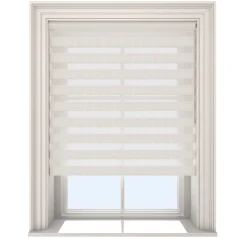 Motorized Day and Night Blinds
 Motorized Roller Blinds
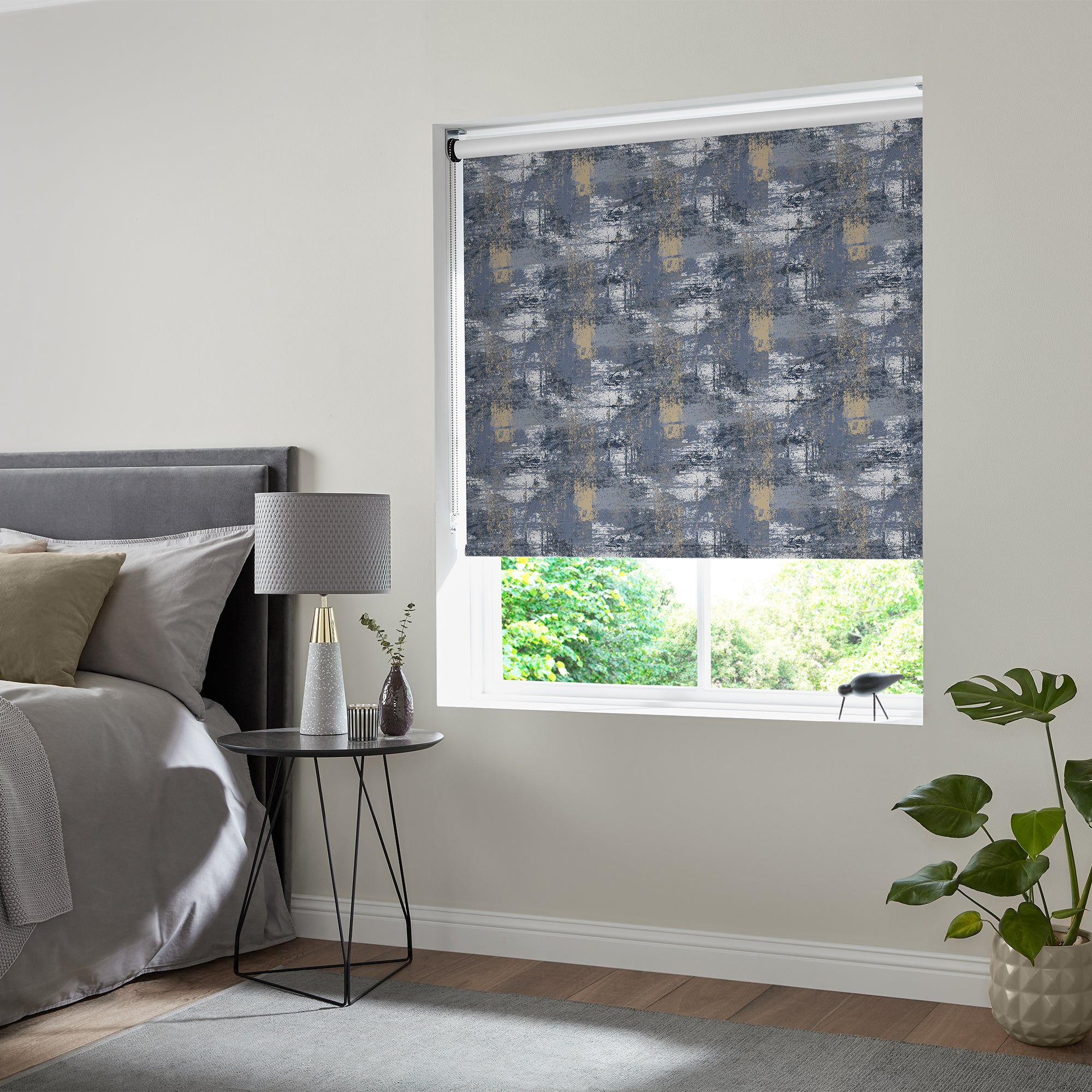 No Drill Rollers
 Perfect Fit Wooden
 Perfect Fit Metal
 Thermal Blinds
 Better Sleep Blinds
 Cordless Blinds
 No Drill Blinds
 Blackout Blinds
 Waterproof Blinds
 Easy Wipe Blinds
 Taped Blinds
 Conservatory
 Office
 Kitchen
 Bathroom
 Dining Room
 Kids Room
 Living Room
 Bedroom
 Bay Window
 Conservatory Window
 Tild and Turn Window
 Bi Fold Window
 Roof of Skylight
 French Door
 Sliding Door
Day and Night Roller Blinds: How Do They Work?
- by Mariam Labadze
 The standard roller blind has one fundamental limitation that becomes apparent the moment you actually live with one. It has two states: up or down. When it's raised, you have light and no privacy. When it's lowered, you have privacy and reduced light. The middle ground — the position where you want both daylight and a degree of privacy simultaneously — requires the blind to be partially lowered to a specific height that covers the lower portion of the window while leaving the upper portion open. It works, after a fashion, but it's a compromise rather than a solution.
Day and night roller blinds — also called zebra blinds, vision blinds, or duo roller blinds depending on the manufacturer — were designed specifically to solve this problem. The mechanism is elegantly simple once understood, and the result is a blind that provides genuine flexibility across the full range of light and privacy conditions without the mechanical complexity of a Venetian or the aesthetic limitations of a plain roller.
[toc]
The Basic Principle
A day and night roller blind consists of a single piece of fabric wound onto a standard roller tube. The fabric, however, is not uniform — it alternates between horizontal bands of sheer material and opaque material, repeating in equal widths across the full drop of the blind.
When the blind is lowered to a position where the sheer bands align with the sheer bands on the opposite side of the fabric loop — because the fabric doubles back on itself as it unrolls from the tube — the result is a window where the sheer sections are aligned and light passes through, while the opaque bands between them provide a degree of privacy and pattern. When the blind is lowered slightly further, the opaque bands shift to cover the sheer sections on the opposite layer, creating a surface with no open areas and no light transmission.
The transition between these two states — open, filtered, and closed — happens continuously as the blind is raised or lowered through its range. There are no fixed click positions or discrete settings. The blind can sit anywhere between fully transparent and fully opaque, with the degree of openness determined by how far the opaque bands overlap the sheer sections of the opposing fabric layer.
How the Fabric Is Constructed
The alternating band structure requires a fabric that can be manufactured with consistent, precise band widths across its full height — because the alignment of bands when the blind is in its filtered position depends on the sheer and opaque sections lining up accurately across the doubled fabric.
Most day and night blind fabrics use bands of approximately 75mm to 100mm — roughly equal widths of sheer and opaque. The sheer sections are typically a woven voile or similar light-transmitting fabric. The opaque sections are a denser woven or coated material that blocks light in the same way as a standard roller blind fabric.
The join between sheer and opaque sections within the fabric requires precise manufacturing — any inconsistency in band width accumulates as misalignment across the blind's height, causing the filtered position to show partial overlaps rather than the clean alternating pattern. Quality day and night blinds have consistent band widths and crisp transitions between materials. Budget products often show band width variations that become visible as irregular alignment patterns when the blind is in its filtered position.
The fabric is finished with a weighted bottom bar — typically aluminium — that keeps the lower edge of the blind flat and prevents the fabric from billowing, which would continuously shift the band alignment away from the desired position.
The Operating Mechanism
Day and night roller blinds use a chain-operated mechanism rather than a spring rewind system — and this is a deliberate design choice rather than a cost consideration. The spring mechanism in a standard roller blind is designed to retract the fabric when released, which would immediately shift the band alignment away from any chosen filtered position. The chain mechanism holds the blind at precisely the position where it's set, allowing the specific band alignment to be maintained indefinitely without the blind drifting.
The chain operates a clutch mechanism in the headrail in the same way as a standard chain roller blind — pulling one side of the chain lowers the blind, pulling the other raises it. The difference is in how the position translates to visual effect: each 75 to 100mm of travel through the chain moves the band alignment through one full cycle from open to closed to open again.
In practice this means the blind has a regular rhythm of open and closed positions as it's lowered — approximately every 80mm of drop, the blind cycles through one full transition from sheer-aligned to opaque-aligned. Finding the desired filtered position is a matter of lowering the blind until the band alignment looks right, then leaving the chain at that point. Most people settle into a familiar chain position within the first few days of use.
Some day and night blind systems are available in motorised format, where the blind is raised and lowered via a remote control or smart home integration. The motorised format makes the precise positioning easier — particularly on wider or taller blinds where the chain travel distances are greater — and suits rooms where the blind is adjusted frequently throughout the day.
What It Looks Like in Practice
The Open Position
When the blind is fully raised, it presents as a standard rolled blind at the top of the window — the fabric is wound onto the tube and the window is unobstructed. There is no visual difference from a standard roller blind in its raised position.
The Filtered Position
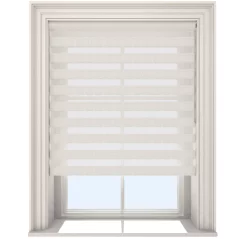
In the filtered position — sheer bands aligned — the blind appears as a series of horizontal stripes across the window. The sheer bands transmit light diffusely, softening direct sun and reducing contrast while maintaining a general level of brightness in the room. The opaque bands between them provide privacy — the alternating pattern prevents a clear direct view through the window from outside, because the eye cannot form a continuous image through the broken surface, while from inside the room the diffused light through the sheer sections is sufficient for most activities.
The visual quality of the filtered position is the feature that distinguishes day and night blinds most clearly from standard rollers. The horizontal stripe pattern reads as an intentional design element rather than a practical compromise — it has a quality reminiscent of a louvred shutter or a Venetian blind at partial tilt, with a textile softness that hard surfaces don't achieve.
The Closed Position
When the opaque bands fully cover the sheer sections — the blind shifted to its darkened position — the surface presents as a uniform opaque fabric panel. Light transmission is approximately equivalent to a standard roller blind in a similar fabric weight — the degree of light reduction depends on the specific opaque fabric used rather than the day and night mechanism itself.
Genuinely blackout day and night blinds are available, where the opaque bands use a blackout-rated fabric. In the fully closed position these provide complete light exclusion. In the filtered position, however, the sheer sections admit light freely — the blind cannot simultaneously provide blackout performance and the filtered day position. For rooms where both states are required, the closed position is the blackout solution and the filtered position is the daytime mode.
Day and Night Blinds vs Standard Roller Blinds
The comparison that most buyers are making when they first encounter day and night blinds is straightforward — is the additional capability worth the additional cost?
The honest answer depends on how the window is actually used. For a window that's either fully open — blind raised — or fully covered for privacy or sleep, a standard blackout roller blind or perfect fit roller blind is entirely adequate and considerably less expensive. The day and night mechanism adds value specifically at the in-between positions — the partial privacy and filtered light states that a standard roller can only approximate by leaving the blind at an intermediate height.
For rooms used throughout the day where conditions change continuously — a living room with afternoon sun, a kitchen-diner with morning light and evening privacy requirements, a home office where glare management is a daily task — the ability to stay in the filtered position rather than choosing between fully open and fully closed is a genuine functional upgrade. The tilt function of a Venetian blind provides comparable flexibility but with a harder, more structural aesthetic. The day and night blind provides the same functional range with a softer fabric quality.
Day and Night Blinds vs Venetian Blinds
The functional comparison with Venetian blinds is more direct, because both formats are providing the same core capability — a continuous range of light and privacy conditions rather than a binary open-closed choice.
The differences are material and aesthetic rather than functional. Venetian blinds use rigid slats — aluminium, wood, or faux wood — that tilt mechanically to control light. The result is clean horizontal lines, a relatively hard surface quality, and the practical advantage of being completely wipeable. Venetians suit kitchens, bathrooms, and functional spaces where the wipe-clean advantage matters and a more structural aesthetic is appropriate.
Day and night blinds use fabric throughout — the sheer and opaque bands are both textile rather than rigid material. The result is softer, more domestic in character, and more at home in living rooms and bedrooms where the hardness of aluminium slats would be tonally out of place. The fabric surface also diffuses light more softly than rigid slats — the filtered position on a day and night blind produces a gentler, more evenly distributed light quality than partially tilted Venetian louvres, which admit direct light through gaps rather than filtering it through a diffusing material.
The practical limitation of day and night blinds compared to Venetians is cleanability. Fabric absorbs dust and grease over time — particularly in kitchens. The alternating band construction is also more complex to clean than uniform fabric because the two material types have different surface characteristics and may require different cleaning approaches. For rooms where cleanability is a priority, a Venetian blind in the perfect fit format is the more practical choice.
Where Day and Night Blinds Work Best
Living Rooms
The strongest domestic application. Living rooms are used across the full daylight range — morning reading, afternoon glare management, evening privacy with interior lighting — and the day and night blind's ability to stay in the filtered position for the majority of that range without being either too exposed or too dark suits the room's requirements more closely than a standard roller.
For south and west-facing living rooms where afternoon sun is a persistent glare issue, the filtered position reduces direct light transmission without darkening the room to a degree that requires artificial lighting. This is the specific use case where the format adds most value over a standard roller blind and where the cost premium is most clearly justified.
The aesthetic contribution also suits living rooms — the horizontal stripe pattern in the filtered position is a designed element rather than a neutral background, with more visual interest than a plain fabric panel and more softness than the rigid lines of a Venetian blind.
Kitchen-Diners
Open-plan kitchen-diners with large rear-facing windows or glass doors use their primary window continuously throughout the day in a way that makes the filtered position practically valuable. Morning light for breakfast, privacy from garden-facing neighbours in the evening, glare management at worktop height in the afternoon — a day and night blind addresses all of these without needing to be adjusted through multiple full positions.
The cleanability consideration applies — for windows directly above a hob or sink, the fabric will accumulate cooking residue over time. For windows in the dining or living zone of an open-plan space, away from the cooking area, cleanability is less of a constraint.
Home Offices
Screen glare management is the daily problem in home offices, and the filtered position's ability to reduce direct light at screen height while maintaining general room brightness is well-matched to this requirement. A day and night blind in a home office window can sit in the filtered position for the full working day — diffusing the direct sun during morning and afternoon sun angles without requiring the blind to be raised or lowered as conditions change.
The comparison with Venetian blinds is closest in this application. Both formats provide continuous light adjustment, and the choice between them in a home office is primarily aesthetic — the fabric quality of a day and night blind versus the harder, more functional character of aluminium Venetian slats.
Bedrooms
The case for day and night blinds in bedrooms depends entirely on the sleeping pattern of the occupant. For rooms used primarily for nighttime sleep, the closed position's light-reducing capability is the primary requirement — and if genuine blackout performance is the brief, a perfect fit honeycomb blackout blind or perfect fit blackout roller blind delivers more complete darkness than most day and night products achieve in their closed position.
For bedrooms used as daytime spaces as well — a main bedroom that doubles as a reading or dressing room — the filtered position's ability to provide soft, private light during the day while the closed position manages nighttime privacy makes the day and night format a more useful choice than a plain blackout roller that offers no intermediate state.
Conservatories
Day and night blinds suit conservatories where the brief is primarily solar management and privacy rather than complete blackout. The filtered position reduces solar heat gain through the sheer sections while maintaining the bright, open character that most conservatory owners want to preserve. The closed position provides privacy in the evening when interior lighting would otherwise make the conservatory visible from outside.
For conservatories where thermal performance is a priority alongside solar management, a perfect fit honeycomb blind provides better insulation. For conservatories where the primary requirement is light management and the thermal performance of cellular construction isn't needed, the day and night format is an attractive alternative.
No-Drill Day and Night Blinds
Day and night blinds are available in the perfect fit no-drill format for UPVC windows, with the same clip-frame system used by other perfect fit blind styles. The chain mechanism that the day and night format requires — rather than a spring rewind — is entirely compatible with the perfect fit frame, and the edge-to-edge coverage of the clip system improves the filtered position's privacy performance by eliminating the side gaps that would create uncovered strips at the window's edges.
For renters with UPVC windows who want the day and night blind's functional range without drilling, the perfect fit format provides the full capability of the product without fixings, wall damage, or deposit risk. The blind clips into the glazing bead, operates with the same chain mechanism as a conventionally mounted day and night blind, and removes cleanly when you leave.
Fabric and Colour Options
Band Width
The width of the alternating bands is typically standard across a manufacturer's range — 75mm to 100mm is the most common specification — but some suppliers offer wider bands for a bolder, more widely-spaced stripe effect. Wider bands suit larger windows where narrower stripes would create a fine, dense pattern that reads as busy at the scale of the opening.
Sheer Transparency
The degree of transparency in the sheer bands varies between products. More open sheer fabrics provide more light transmission in the filtered position but slightly less daytime privacy — the diffusion effect is reduced when the sheer material is more open. Denser sheer fabrics provide better privacy in the filtered position but admit less light. Most standard day and night blind fabrics sit at a mid-point that balances these requirements adequately for most domestic rooms — specific rooms with higher privacy requirements, such as ground-floor living rooms in terraced properties, benefit from a denser sheer specification.
Colour Range
Day and night blinds are typically available in a range of neutrals — white, off-white, natural linen tones, light grey, and mid-grey are the most common. The alternating band construction limits the practical colour range somewhat, because the sheer and opaque bands are manufactured from different base fabrics and achieving the same colour in both while maintaining a visible tonal difference between the states requires careful fabric selection.
Bold colours are less widely available in day and night formats than in standard rollers, and the alternating band pattern changes the reading of any colour — what appears as a mid-grey uniform fabric in standard roller format appears as alternating light and slightly darker grey horizontal stripes in the day and night equivalent. The aesthetic implication is worth considering before ordering — day and night blinds always have a striped character at the filtered position regardless of the nominal colour.
Installation
Day and night blinds install in the same way as standard chain-operated roller blinds. The headrail brackets fix to the ceiling or window reveal above the window, the roller tube clips into the brackets, and the fabric hangs from the tube with the weighted bottom bar keeping the lower edge flat.
For ceiling mounting — the typical configuration for large living room or kitchen windows — fixing into ceiling joists or solid material is required for security. The weight of a wide day and night blind in full fabric is manageable but not negligible, and fixings into plasterboard without appropriate cavity fixings will pull through over time.
The chain should hang on the side of the window that is most practically accessible — typically the side nearest the room entry point, or the side away from other window furniture. Confirm the chain side before ordering, as most roller blind headrails are configured for a specific chain position at manufacture.
For no-drill UPVC installations in the perfect fit format, the installation follows the standard perfect fit process — clips engaged with the glazing bead, outer frame seated, blind mechanism inserted into the frame. The chain hangs within the frame profile rather than outside it in the perfect fit configuration, which produces a cleaner appearance and keeps the chain away from the wall surface.
Common Questions
Can I get blackout performance from a day and night blind?
In the fully closed position — opaque bands covering sheer sections — a day and night blind with a blackout-rated opaque fabric provides substantial light reduction. Whether it achieves genuine 0% transmission depends on the specific fabric specification. The mechanism itself does not add or subtract from the fabric's opacity performance in the closed position.
What a day and night blind cannot provide is blackout performance combined with the filtered light position simultaneously. In the filtered position, the sheer sections admit light freely — that's the function of the format. For rooms where complete blackout is the primary requirement, a dedicated blackout roller blind or honeycomb blackout blind outperforms the day and night format in that specific mode.
Do they suit all window shapes?
Day and night blinds are manufactured for standard rectangular windows and are not typically available in shaped formats — arched, circular, or triangular windows aren't served by the day and night mechanism. For rectangular windows of standard proportions, from small casements to wide patio doors, the format is available across a wide range of widths and drops.
How do I clean them?
The fabric can be spot-cleaned with a damp cloth for minor marks. For more thorough cleaning, the blind can be removed from its brackets and the fabric gently hand-washed or wiped along its full length. Machine washing is not generally recommended as the stress of machine agitation can cause the weighted bottom bar to damage the fabric at the connection point and can distort the band alignment through the blind's height. Allow the fabric to dry fully before rehanging — rehanging a damp fabric blind can cause band misalignment as the fabric dries and contracts unevenly.
Price Guide for 2026
Day and night roller blinds carry a premium over equivalent standard roller blinds of approximately 30 to 60 percent, reflecting the more complex fabric construction and the requirement for a chain mechanism rather than a spring rewind. In the UK market for 2026, standard day and night roller blinds for a typical casement window typically range from £45 to £100 depending on width and fabric specification. Wider blinds for patio doors and large windows sit at £80 to £160 for standard product ranges.
Perfect fit day and night blinds in the clip-frame format are typically at the higher end of the price range for equivalent widths — the additional outer frame system adds cost — but remain competitive with other premium perfect fit blind formats such as pleated and honeycomb options.
Motorised day and night blinds are available from specialist suppliers at a significant premium — typically two to three times the equivalent chain-operated product — with the cost reflecting the motor unit, remote control system, and in some cases smart home integration capability.
Day and night roller blinds are not a universal upgrade over standard rollers. For rooms and windows where the binary up-down function of a plain roller blind adequately serves the brief — a bedroom where blackout performance is the only requirement, a bathroom where privacy is complete or not at all — the day and night mechanism adds cost without adding relevant capability.
For rooms that are used throughout the day across a range of light and privacy conditions — which describes most living rooms, kitchen-diners, and home offices in UK homes — the ability to sit in the filtered position indefinitely, providing diffused light and comfortable privacy simultaneously, is a genuine functional improvement over any blind format that only offers open or closed states.
The mechanism is simple, the aesthetic is considered, and the problem it solves is a real one that most people don't identify as solvable until they discover that it is.