Skip to content


 Vertical Blinds
 Roman Blinds
 Roller Blinds
 Venetian Blinds
 Day and Night Blinds
 Skylight Blinds
 Children
 Wooden Blinds
 Curtains
 Blinds Accessories
 White
White Yellow
 Gold
Gold Green
Green Grey
Grey Pink
Pink Orange
 Animal
 Floral
 Geometric
 Striped
 Motorized Day and Night Blinds
 Motorized Roller Blinds
 No Drill Rollers
 Perfect Fit Wooden
 Perfect Fit Metal
 Thermal Blinds
 Better Sleep Blinds
 Cordless Blinds
 No Drill Blinds
 Blackout Blinds
 Waterproof Blinds
 Easy Wipe Blinds
 Taped Blinds
 Conservatory
 Office
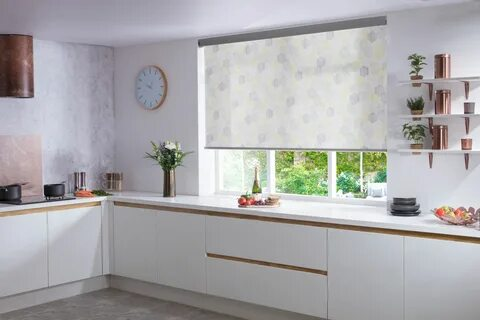 Kitchen
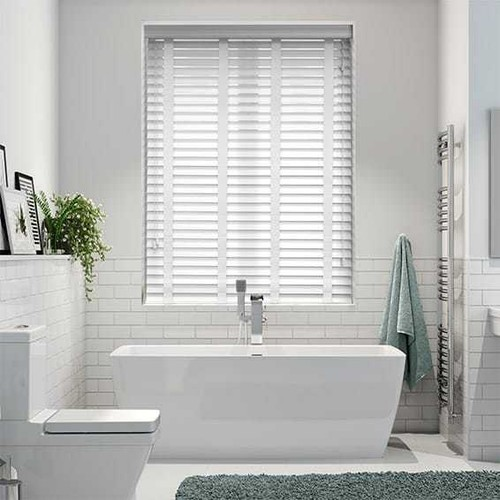 Bathroom
 Dining Room
 Kids Room
 Living Room
 Bedroom
 Bay Window
 Conservatory Window
 Tild and Turn Window
 Bi Fold Window
 Roof of Skylight
 French Door
 Sliding Door
Metal Venetian vs Wood Venetian Blinds: Side-by-Side Comparison
- by Mariam Labadze
 Venetian blinds are one of the oldest continuous blind formats in domestic interiors, and the reason they've survived every design trend since the 1930s is that the core mechanism — horizontal slats that tilt to control light and raise to clear the window — remains functionally better than any alternative for a specific set of applications. What has changed is the material range. The original Venetian blind was metal. Wood came later as a premium domestic alternative. Faux wood followed as a moisture-resistant substitute for timber. Each material iteration addressed a limitation of the one before it while introducing its own.
The metal versus wood comparison is the version of this comparison that most buyers are actually making when they arrive at the Venetian blind category. Both are established, quality materials with genuine arguments in their favour. Neither is universally better. The right answer depends on the room, the aesthetic brief, the window width, and the conditions the blind will operate in — and those variables produce genuinely different conclusions in different situations.
This comparison works through each relevant dimension in turn and arrives at specific recommendations by room rather than a single verdict that ignores the context that changes the answer.
[toc]
The Materials
Metal Venetian Blinds
Metal Venetian blinds use aluminium slats — extruded and rolled into their profile, then finished with an anodised or powder-coated surface treatment. Aluminium is the material of choice rather than steel because it is light relative to its structural strength, completely corrosion-resistant without surface treatment, and easily finished in a wide range of colours and effects.
The manufacturing process for aluminium slats is highly consistent — extrusion and rolling produce slats with very tight dimensional tolerances and a uniform profile that translates into precise, smooth tilt operation across all slats simultaneously. The regularity of industrial aluminium production is the reason metal Venetian mechanisms tend to be more precise in operation than timber equivalents.
Finish options for aluminium Venetian slats include plain anodised — the natural silver-grey of oxidised aluminium — a range of powder-coated solid colours from white through to anthracite and black, metallic effects including brushed silver, brushed gold, and chrome, and pearlescent or satin finishes that sit between solid colour and metallic character. Some manufacturers offer printed woodgrain finishes on aluminium slats — an attempt to bring the warmth of timber in a metal format that has limited success at close inspection but reasonable visual approximation at room distance.
Slat widths for metal Venetians are available in a wider range than timber: 16mm, 25mm, 35mm, and 50mm are all standard in the UK market. The narrow widths — 16mm and 25mm — are available only in metal, because timber cannot be reliably milled and finished at these widths with sufficient structural integrity for blind slat application.
Wood Venetian Blinds
Wooden Venetian blinds use real timber slats, with the choice of timber species determining the slat weight, grain character, and the quality of finish that can be achieved. Basswood is the premium domestic standard — a fine-grained, lightweight hardwood from North America that takes paint and stain with exceptional consistency and can be finished to a quality that reads as genuinely premium at close range. Paulownia is lighter still and less expensive, used more commonly in budget real wood blinds where cost is the primary constraint. Bamboo is a distinct aesthetic category — the distinctive grain and natural variation of bamboo suits specific interior styles rather than providing a general-purpose wood blind material.
The manufacturing process for timber slats is inherently less mechanically consistent than aluminium extrusion. Each slat is cut from a natural material that varies in grain density, moisture content, and structural character across individual pieces — even within a single production batch. Quality manufacturers select and grade timber carefully to minimise variation, but the natural variation of wood is both part of its appeal and the source of the minor inconsistencies that distinguish a wood blind from a metal one in operation.
Standard slat widths for timber Venetians in the UK market are 25mm, 35mm, and 50mm. The 25mm width in basswood is mechanically feasible because basswood's fine grain provides sufficient structural integrity at narrow widths, but it requires higher quality timber than 35mm and 50mm slats and is accordingly priced. The 35mm width is the most common premium basswood format — the slat is wide enough to show the grain character clearly while maintaining good operational precision.
Appearance: The Most Significant Difference
The appearance difference between metal and wood Venetian blinds is the most immediately apparent distinction and the one that drives most buying decisions in this category. Understanding what that difference actually consists of — rather than relying on general impressions — helps apply it to specific rooms and design briefs.
The Quality of the Surface
Aluminium slats have a surface that is consistent, precise, and uniform. The powder coat or anodised finish has a mechanical evenness that reads as industrial in the best sense — clean, controlled, without variation. In a contemporary interior with other manufactured materials — lacquered kitchen cabinetry, polished concrete flooring, glass surfaces — the metallic precision of an aluminium Venetian blind sits within that material language comfortably.
Timber slats have a surface that varies. The grain pattern shifts across each slat and differs between slats. The stain absorbs differently into grain and knot patterns, creating subtle tonal variation across the blind's width. This variation is exactly what distinguishes natural material from manufactured surface — it has warmth and depth that no industrial process replicates convincingly. In a room with other natural materials — timber flooring, linen upholstery, stone surfaces — that natural variation creates a visual coherence that aluminium, regardless of its woodgrain print options, doesn't achieve.
At Various Distances
At the distance of a desk or bedside table — 600 to 900mm — the material difference is fully apparent. Timber grain, surface texture, and the warmth of stained wood are clearly readable at this distance. Aluminium's manufactured uniformity is equally apparent. Neither is better at this distance — they are different materials with different qualities, and the correct choice depends on which material language suits the room.
At normal room distance — 2 to 4 metres — the tonal difference between metal and wood is visible but the specific material character is less readily distinguishable. A light grey aluminium Venetian and a painted white wood Venetian at this distance read similarly as horizontal white lines across the window. The difference is in tone and visual weight rather than material character.
From outside the property — the view most relevant to kerb appeal — the distinction is minimal in most finishes. Both read as horizontal lines within the window opening. The slat width is more visible from outside than the material.
Slat Width and Visual Rhythm
The width of the slat creates different visual rhythms across the window that affect the blind's presence in the room independently of the material.
16mm metal slats — available only in aluminium — create a very fine, dense horizontal rhythm. At this width, the closed blind reads almost as a solid plane rather than a series of distinct lines. The effect is light, minimal, and modern. This format suits contemporary spaces where the blind should be present but not prominent — a home office window, a kitchen, a bathroom.
25mm slats in either material create a standard domestic rhythm — the most common format, appropriate across the widest range of room types and design styles. Neither particularly prominent nor particularly fine.
35mm slats in timber are the format that most clearly expresses the wood material — the slat is wide enough that the grain character is clearly visible and the natural material quality is evident across the whole blind. This width in basswood is the premium domestic specification that wooden blind suppliers position as their flagship product for a reason.
50mm slats — available in both materials but the natural territory of timber — create a bold, widely-spaced horizontal rhythm that suits large windows, high-ceilinged rooms, and interiors where the blind is a design statement rather than a background element. In aluminium at 50mm, the slat width can read as heavy and industrial. In timber at 50mm, the width allows the grain to be fully appreciated and the material quality is at its most apparent.
Light Control: Functional Differences
Both materials provide the same fundamental light control principle — tilting slats from fully open to fully closed. The functional differences arise from the specific material properties rather than the mechanism.
Tilt Precision and Consistency
Metal slats, because of their dimensional consistency from the manufacturing process, tend to tilt more uniformly across the blind's width than timber. Each aluminium slat is almost identical in weight and profile, and the tilt mechanism operates all slats simultaneously through the ladder tape connection — the uniformity of the slats means the tilt is transmitted evenly.
Timber slats have minor dimensional and weight variations between individual slats. In a quality blind with carefully selected and graded timber, these variations are minimal and the tilt operation is smooth. In a budget timber blind with less rigorous timber selection, the variations accumulate as slight tilt inconsistencies — one slat tilting fractionally more or less than its neighbours — that are visible when the blind is in a partially tilted position against a bright window.
This difference is most significant in wider blinds where more slats are in the tilt mechanism simultaneously. A narrow 60cm window with twelve 50mm slats will show minimal tilt inconsistency even in budget timber. A wide 180cm window with thirty-six slats will amplify any per-slat inconsistency into a clearly visible unevenness across the blind.
Light Diffusion at the Slat Surface
Timber slats — particularly unfinished or lightly finished natural wood surfaces — scatter light slightly at the slat surface when the blind is backlit. The grain and surface texture of timber creates a diffusion quality that aluminium's smooth, reflective surface doesn't replicate. In a room where the filtered light quality matters — a reading room, a bedroom in partial-open position — the diffused light through a timber Venetian blind has a softer character than the same amount of light through equivalent aluminium slats.
This is a subtle effect rather than a dramatic functional difference, and it's only perceptible in specific lighting conditions. But it contributes to the general warmth that timber blinds add to a room that aluminium alternatives don't quite match.
Slat Stiffness and Gap Width
Metal slats — particularly at the narrower widths — are stiffer than timber slats of equivalent width. This stiffness means the slat holds its tilt position precisely and doesn't flex along its length. On wide blinds, timber slats at 25mm or 35mm can develop a slight bow along their length over time — particularly in rooms with uneven humidity — which affects the evenness of the light gap between adjacent slats in the partially open position.
For wide blinds where consistent light control across the full width is important — a wide south-facing window in a study where glare management is a daily concern — aluminium slats' stiffness is a practical advantage. For narrower blinds in standard domestic rooms, the difference is not functionally significant.
Moisture and Environment
This is the dimension where the comparison produces its clearest and most unequivocal conclusion.
Metal in Wet Environments
Aluminium Venetian blinds are appropriate in any domestic environment including bathrooms, shower rooms, kitchens, utility rooms, and conservatories. The aluminium itself is completely unaffected by moisture, humidity, steam, and direct water contact. The powder-coated or anodised finish is not degraded by moisture. The operating mechanism — if specified with corrosion-resistant components, which all quality bathroom-specification aluminium blinds include — functions indefinitely in humid conditions.
The only moisture-related vulnerability of an aluminium Venetian blind is the ladder tape. Standard woven textile ladder tape absorbs moisture and can develop mildew in sustained high-humidity environments. Quality bathroom aluminium blinds use nylon monofilament ladder tape that doesn't absorb moisture and doesn't support mould growth. This specification detail is the single most important quality indicator for an aluminium Venetian blind in a wet room — confirm it before purchasing.
Wood in Wet Environments
Wooden Venetian blinds are not appropriate in bathrooms, shower rooms, or kitchen cooking zones. This is not a qualification or a caveat — it is a direct specification exclusion. Wood is hygroscopic. The finish on a wooden Venetian slat provides temporary protection against moisture absorption. In a bathroom environment with daily steam exposure, that protection is progressively compromised. Moisture penetrates at cut edges and end grain where the finish is thinnest, the timber swells, and the slat warps. The warp is irreversible — it accumulates with each moisture cycle rather than recovering when the room dries.
The timeline to visible warping in a bathroom is typically twelve to eighteen months of regular use. The failure is therefore not immediately apparent at point of installation — the blind performs adequately initially, the warping develops gradually, and by the time it's clearly visible it's well past the point where return or exchange is an option.
The appropriate material for bathroom and wet room Venetian blinds is aluminium or PVC faux wood. Wooden blinds belong in living rooms, bedrooms, dining rooms, and studies — dry living spaces where the humidity variation is moderate and the finish protection is adequate for the environment.
For kitchen-diners where the window is in the dining zone rather than directly above cooking areas, timber performs adequately. For windows above or adjacent to a hob where steam and grease are present in combination, aluminium or faux wood is the correct specification.
Weight and Operating Experience
Metal
Aluminium is light — significantly lighter than timber at equivalent slat dimensions. A wide aluminium Venetian blind in 25mm slats is considerably easier to raise, lower, and tilt than a comparable timber blind, because the cord and ladder tape mechanism is carrying a fraction of the weight.
This weight advantage becomes more significant as blind width increases. For windows over approximately 120cm wide, the cumulative weight of thirty or more full-length timber slats is enough to make raising the blind a noticeably effortful operation — particularly on a spring-tension or thin cord mechanism. The same width in aluminium raises with considerably less effort.
The lightness of aluminium also means the operating mechanism experiences less stress over its lifespan. Cord and tape wear is partly a function of load — the heavier the blind, the faster the cord wears at friction points and the more quickly the tape ladder stretches. Aluminium blinds at wide widths last longer mechanically than equivalent timber blinds under the same use conditions.
Wood
Timber Venetian blinds are heavier than aluminium equivalents, and this weight has a quality dimension as well as a practical one. A timber blind feels substantial when operated — the weight of the slats creates a solidity in the raising and lowering movement that aluminium's lightness doesn't replicate. Some buyers experience this as a positive quality indicator — the weight reads as material substance rather than as mechanical disadvantage.
For narrower blinds on standard casement windows, the weight difference is manageable and the quality impression may outweigh the mechanical consideration. For wide blinds — patio-adjacent windows, wide bay window sections, large picture windows — the weight becomes a genuine practical consideration.
The mechanism quality matters more in timber blinds than metal ones precisely because it is working harder. A quality mechanism in a timber blind — with correctly tensioned cord, quality cord guides in the headrail, and tape ladder of sufficient strength for the slat weight — performs reliably for years. A budget mechanism in a wide timber blind will show wear faster than the same mechanism in an aluminium blind at the same width.
Cleaning and Maintenance
Metal
Aluminium slats wipe clean with a damp cloth. The smooth, non-absorbent surface resists adhesion of dust, grease, and airborne deposits, and a single pass with a damp cloth restores the surface to its original condition in the vast majority of cases.
For kitchen aluminium blinds where grease accumulation is regular, a mild detergent solution removes deposits that a plain damp cloth doesn't shift, without any risk to the anodised or powder-coated surface. The slats can be removed from the blind for more thorough cleaning if needed — aluminium slats disconnect from the ladder tape at the bottom weight and can be laid flat for cleaning before reinsertion.
The headrail of a metal Venetian blind accumulates dust in the cord guides and mechanism channels — a periodic clean with a dry cloth or soft brush prevents the mechanism becoming gritty, which affects tilt smoothness over time.
Wood
Wooden Venetian blind slats require more careful cleaning than aluminium. A dry or very slightly damp cloth, wiped along the grain of each slat, removes surface dust without introducing moisture to the finish. The emphasis on wiping along the grain rather than across it is not merely conventional — a cloth dragged across the grain at the slat edge can catch the finish and begin to lift it at edges or corners where the surface treatment is thinnest.
Water should not be allowed to sit on the slat surface. A damp cloth is acceptable for light cleaning; a wet cloth or any standing water on a slat face introduces moisture risk to the finish. Cleaning agents that contain solvents — many household spray cleaners — can soften or strip lacquer and stain finishes on timber and should not be used on wooden blinds.
The maintenance implication is that wooden Venetian blinds require more attentive care than metal, and the care protocol is more restrictive. In rooms where the blind is cleaned regularly and carefully, this is a manageable routine. In rooms where the blind is cleaned infrequently or where thorough cleaning with household products is the expectation, the maintenance constraint of timber is worth factoring into the material decision.
Cost Comparison
Entry Level
At the budget end of the UK market, aluminium Venetian blinds are considerably less expensive than timber. Entry-level 25mm aluminium blinds for standard casement windows start at approximately £15 to £30. Entry-level real wood blinds for the same window start at approximately £40 to £60, with the cost reflecting the more expensive raw material and more labour-intensive manufacturing.
The quality difference at entry level is marked in both materials. Budget aluminium blinds use thinner gauge slats that are more susceptible to buckling at the slat ends, and lighter mechanisms that wear faster. Budget timber blinds use lighter paulownia rather than basswood, with thinner finish application. Both improve significantly with modest additional spend.
Mid-Range
The mid-range represents the best value in both categories. Quality 25mm aluminium blinds from a reputable UK blind supplier in the £35 to £70 range provide robust mechanisms, good-quality anodised or powder-coated finishes, and reliable performance across a wide range of window sizes.
Quality wooden blinds in the £65 to £120 range use basswood or premium paulownia with well-applied stain or paint finishes and quality mechanisms rated for the additional slat weight. At this price point, the timber blind is a genuinely premium product — the finish quality and material character justify the premium over aluminium in rooms where the natural material contribution matters.
Premium
At the top of the market, premium aluminium Venetian blinds offer distinctive finishes — brushed metals, deep anodised colours, bespoke powder coat colours — and precision mechanisms that represent the best the format achieves aesthetically and functionally.
Premium timber blinds at this level use hand-selected basswood in wide 35mm or 50mm slats with handfinished stain or high-gloss painted finishes and quality mechanisms. These are the blinds that most clearly justify timber's material premium — the finish quality at close inspection is markedly superior to anything achievable with manufactured alternatives.
Side-by-Side Summary
|
Dimension |
Metal (Aluminium) |
Wood |
|
Moisture resistance |
Complete |
Unsuitable for wet rooms |
|
Weight |
Light — better for wide blinds |
Heavier — quality feel, more mechanism stress |
|
Slat widths |
16mm, 25mm, 35mm, 50mm |
25mm, 35mm, 50mm |
|
Aesthetic |
Clean, contemporary, industrial |
Warm, natural, domestic |
|
Tilt precision |
High and consistent |
Very good in quality products |
|
Cleaning |
Easy — damp cloth, detergent fine |
Careful — dry or slightly damp cloth only |
|
Entry price |
Lower |
Higher |
|
Longevity in dry rooms |
Excellent |
Excellent |
|
Longevity in wet rooms |
Excellent |
Poor |
|
Best room fit |
Kitchens, bathrooms, offices, contemporary living |
Living rooms, bedrooms, period properties |
Recommendations by Room
Living Rooms
Wooden Venetian blinds in 35mm or 50mm basswood are the stronger choice for living rooms where the blind is a considered design element. The natural material quality, grain character, and warmth of timber sit within the domestic material language of a living room — upholstery, rugs, natural flooring — more comfortably than the industrial precision of aluminium.
For contemporary minimal living rooms with a harder material palette — concrete, glass, lacquered surfaces — a 25mm aluminium blind in a carefully chosen metallic or neutral finish suits the room character better than timber would.
Bedrooms
Wood blinds suit bedrooms used as designed domestic spaces where the material quality of surfaces matters. The 35mm basswood in a natural stain or painted white is the format that most closely approaches the warmth and surface quality expected in a well-considered bedroom.
For bedrooms where complete blackout is the primary brief, neither metal nor wood Venetian in conventional mounting provides the edge-to-edge coverage that a perfect fit honeycomb blackout blind achieves — the side gaps of any bracket-mounted blind admit light that the slat material doesn't address. In these rooms, the Venetian blind format in either material is secondary to the perfect fit no-drill system that eliminates the gap problem structurally.
Kitchens
Aluminium Venetian blinds are the correct specification for kitchen windows, particularly those near cooking areas. The moisture and grease resistance, easy cleaning, and light weight at wider widths are all practical advantages over timber in this environment. A 25mm aluminium blind in white, off-white, or a metallic finish suits most kitchen colour schemes and reads as a clean, appropriately functional window treatment.
Bathrooms
Aluminium only. The moisture argument for timber in bathrooms is conclusive — warping is inevitable with regular steam exposure. A quality aluminium Venetian in a corrosion-resistant mechanism with nylon ladder tape is the correct specification.
Home Offices
Both materials are appropriate — the choice is aesthetic. For a contemporary home office with a clean, work-focused brief, 25mm aluminium in a neutral or metallic finish is tonally appropriate. For a study or home library with a warmer, more domestic character, a wooden blind in a natural stain adds material warmth to a room that is otherwise dominated by desk and technology surfaces.
Period Properties
Wooden Venetian blinds in living rooms and bedrooms of Victorian, Edwardian, and 1930s properties suit the natural material character of period architecture better than aluminium. The warmth of timber connects to the material language of the property — timber floors, sash windows, wooden architraves and skirtings — in a way that manufactured metal doesn't.
For bathrooms in period properties where the window frame is timber rather than UPVC, aluminium is still the correct moisture-resistant specification — the period character argument doesn't override the moisture performance argument in a wet room.
The Honest Conclusion
Metal Venetian blinds win on practical performance: moisture resistance, weight, cleaning ease, precision, and value at entry and mid-range price points. For any room where the functional requirements are the primary consideration — wet rooms, kitchens, wide windows, contemporary functional spaces — aluminium is the rational choice.
Wooden Venetian blinds win on material quality and aesthetic contribution in the rooms where that contribution matters. A bedroom, living room, or study in a property where natural materials are valued and the window treatment is a deliberate design decision — not a functional afterthought — is better served by the warmth, depth, and variation of real timber than by the manufactured precision of aluminium, regardless of how well-finished the aluminium product is.
Neither material is universally superior. The correct approach is to identify the room's requirements — functional, environmental, and aesthetic — and apply the material that answers them. In most properties, that means aluminium in the wet rooms and kitchens, wood in the living spaces and bedrooms where the brief rewards the premium. The two materials are not in competition so much as in complementary roles — each doing the job it was designed for in the rooms where that job is required.