Skip to content


 Vertical Blinds
 Roman Blinds
 Roller Blinds
 Venetian Blinds
 Day and Night Blinds
 Skylight Blinds
 Children
 Wooden Blinds
 Curtains
 Blinds Accessories
 White
White Yellow
 Gold
Gold Green
Green Grey
Grey Pink
Pink Orange
 Animal
 Floral
 Geometric
 Striped
 Motorized Day and Night Blinds
 Motorized Roller Blinds
 No Drill Rollers
 Perfect Fit Wooden
 Perfect Fit Metal
 Thermal Blinds
 Better Sleep Blinds
 Cordless Blinds
 No Drill Blinds
 Blackout Blinds
 Waterproof Blinds
 Easy Wipe Blinds
 Taped Blinds
 Conservatory
 Office
 Kitchen
 Bathroom
 Dining Room
 Kids Room
 Living Room
 Bedroom
 Bay Window
 Conservatory Window
 Tild and Turn Window
 Bi Fold Window
 Roof of Skylight
 French Door
 Sliding Door
Framed Blackout Blinds: Complete Guide to No-Light-Gap Solutions
- by Mariam Labadze
 Anyone who has fitted a standard blackout roller blind knows the frustration. The fabric itself blocks light perfectly well, but thin strips of brightness still creep in around the edges — at the sides, along the top, and sometimes at the bottom. These light gaps might seem minor, but in a dark bedroom at six o'clock on a summer morning, even a sliver of light can be enough to wake you.
Framed blackout blinds solve this problem at its source. By enclosing the blind fabric within a rigid frame that seals against the window, they eliminate the gaps that conventional blinds leave behind. This guide explains how they work, what types are available, and how to choose the right option for your home.
[toc]
Quick Answer: Framed blackout blinds feature a rigid surround — typically aluminium or reinforced plastic — that encloses the blind fabric and seals it against the window glass or recess. This frame eliminates the light gaps that standard roller and pleated blinds leave at the sides, top, and bottom. They are the most effective solution for achieving near-total darkness, making them ideal for bedrooms, nurseries, home cinemas, and shift workers' sleeping spaces.
What Makes Framed Blackout Blinds Different
A standard blackout blind consists of a piece of light-blocking fabric mounted on a roller, pleated mechanism, or similar system. The fabric does its job — it prevents light from passing through. But the fabric has to end somewhere, and the gap between the edge of the fabric and the window frame or wall is where light leaks in.
Framed blackout blinds address this by adding a physical border around the blind. This frame clips onto the window beading (for uPVC windows) or fits within the window recess, creating a continuous seal between the blind and the surrounding surface. The blind fabric runs inside channels within the frame, so there is nowhere for light to enter.
How the Frame Eliminates Light Gaps
The frame works in three ways simultaneously. First, the side channels hold the fabric edges tightly against the glass, preventing lateral light leaks. Second, the top cassette encloses the rolled or folded fabric, blocking light from above. Third, the bottom rail sits flush against the glass or windowsill, closing the final gap. The combined effect is a sealed unit that blocks 99-100% of incoming light.
Types of Framed Blackout Blinds
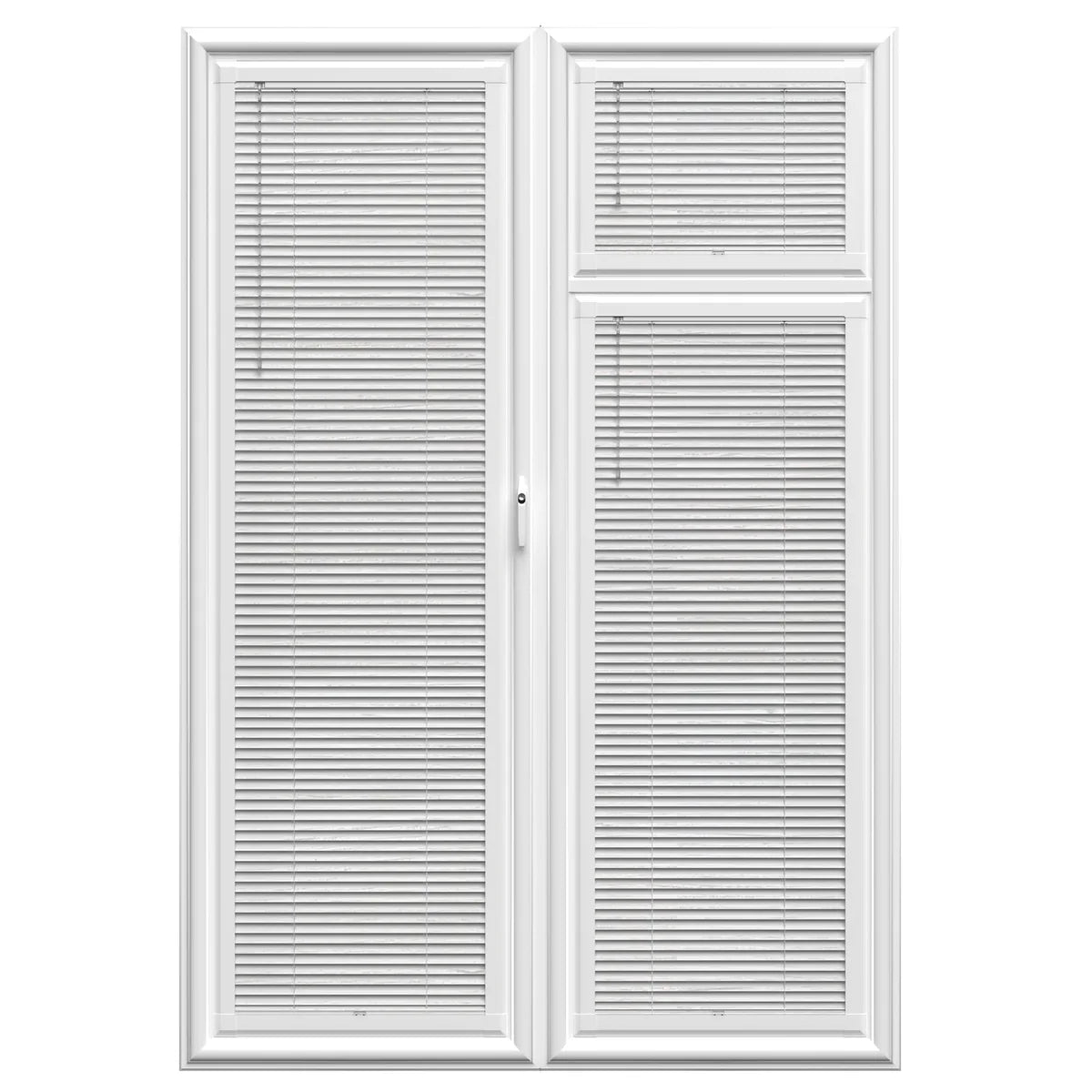
Perfect-Fit Framed Roller Blinds
The most common type in UK homes, these feature a blackout roller blind set within a perfect-fit frame that clips onto uPVC window beading. No drilling is required — the frame uses spring-loaded clips or push-fit connectors. Theblackout blinds collectionat 1ClickBlinds includes several options in this style, available in a range of colours and sizes.
Honeycomb Framed Blackout Blinds
Honeycomb (cellular) blinds combined with a frame offer both light blocking and thermal insulation. Theno-drill honeycomb blackout blindsuse a cellular fabric structure that traps air for insulation while the blackout coating prevents light transmission. When set within a frame, they provide exceptional performance across both functions.
Pleated Framed Blackout Blinds
Pleated blinds fold neatly into a compact stack when raised, making them an excellent choice for doors and tilt-and-turn windows. A framed pleated blackout blind combines this practical folding action with the light-sealing benefits of the frame surround. They are particularly popular forFrench doorsand conservatories.
Cassette Roller Blinds
A cassette roller blind features a box at the top that encloses the roller mechanism and fabric when raised. While not a full frame, the cassette eliminates the top light gap and gives a polished, finished appearance. When combined with side guide rails, a cassette system can approach the light-blocking performance of a fully framed blind at a lower price point.
Best Rooms for Framed Blackout Blinds
Bedrooms
The primary market for framed blackout blinds is the bedroom. Quality sleep depends on darkness, and even small amounts of ambient light can suppress melatonin production and disrupt sleep cycles. During British summer time, when sunrise can be as early as 4:30am, framed blackout blinds ensure your bedroom stays dark until you choose to let the light in.
Nurseries and Children's Rooms
Getting young children to nap during the day or sleep through light summer evenings is significantly easier with effective blackout. Framed blinds are especially well-suited to nurseries because many models arecordless, eliminating any risk of cord-related accidents.
Home Cinemas and Media Rooms
For the best viewing experience, projector screens and even large televisions perform dramatically better in a dark room. Framed blackout blinds on every window can transform a standard living room into a convincing cinema space without the need for heavy curtains or permanent fixtures.
Home Offices
Screen glare is one of the biggest productivity killers in a home office. While full blackout is rarely needed during working hours, the ability to completely eliminate direct sunlight hitting your monitor can make a significant difference. A framed blackout blind lets you kill the glare without sacrificing all natural light — simply lower it to cover the area of glass where sunlight enters.
Shift Workers' Sleeping Spaces
Night shift workers who sleep during the day have particularly demanding requirements. Standard blinds are rarely sufficient, and even blackout curtains often leak light at the edges. Framed blackout blinds are the most reliable solution for daytime sleeping, creating genuine darkness regardless of the conditions outside.
Measuring Guide for Framed Blackout Blinds
Precision matters more with framed blinds than with any other type, because the frame must fit tightly within the window beading or recess to achieve its light-sealing function.
For Perfect-Fit Frames on uPVC Windows
-
Measure the glass width at the top, middle, and bottom of the pane
-
Measure the glass height on the left, centre, and right
-
Record the depth of the beading — this determines which frame profile will fit
-
Note the beading shape (square or chamfered) as this affects the clip type
-
Use the smallest width and height measurements when ordering
For Recess-Mounted Frames
-
Measure the recess width at the top, middle, and bottom
-
Measure the recess height on the left, centre, and right
-
Measure the recess depth to confirm the frame will not protrude
-
Deduct 2-3mm from the smallest width to allow for insertion
Most suppliers, including 1ClickBlinds, provide measuring guides specific to each product. If in doubt, it is always better to err on the side of slightly smaller — a fractionally undersized blind can be shimmed with the frame adjusters, while an oversized one cannot be fitted at all.
No-Drill Fitting: How It Works
The majority of framed blackout blinds available in the UK are designed forno-drill installation. The frame clips directly onto the uPVC window beading using integrated spring clips or push-fit connectors. This process takes five to ten minutes per window and requires no tools whatsoever.
No-drill fitting is not just a convenience — it is a genuine advantage for homeowners with new or guaranteed windows. Drilling into a uPVC frame can void the manufacturer's guarantee, compromise the weather seal, and create entry points for moisture. Clip-on frames avoid all of these risks while providing a fit that is actually more precise than a bracket-mounted alternative.
Frame Materials and Finishes
Most framed blackout blinds use aluminium or reinforced PVC for the frame itself. Aluminium is lightweight, rigid, and resistant to warping over time. PVC frames are softer and slightly more forgiving during installation, but may not hold their shape as well over many years. Both are available in white, grey, black, and woodgrain finishes to match common window frame colours.
Frequently Asked Questions
Do framed blackout blinds block 100% of light?
High-quality framed blackout blinds block 99-100% of incoming light when correctly fitted. In practice, a very faint glow may be visible at the frame edges under intense direct sunlight, but the room will be effectively dark. The key to maximum performance is accurate measuring and proper installation.
Can framed blackout blinds be fitted without drilling?
Yes. Most framed blackout blinds designed for uPVC windows use clip-on or push-fit frames that attach to the window beading without any screws or drilling. Installation typically takes five to ten minutes per window with no tools required. This preserves window guarantees and leaves no marks if the blinds are later removed.
What is the difference between framed blackout blinds and blackout curtains?
ramed blackout blinds seal directly against the glass within a rigid frame, eliminating light gaps at the sides, top, and bottom. Blackout curtains hang from a pole or track and inevitably leave gaps at the edges and where the fabric meets the wall. Framed blinds provide significantly better light blocking, take up less space, and look neater, though quality blackout curtains can complement them in rooms requiring maximum darkness.
Are framed blackout blinds suitable for tilt-and-turn windows?
Absolutely. Perfect-fit framed blackout blinds are one of the best options for tilt-and-turn windows because they attach directly to the glass panel and move with the sash. Whether the window is tilted for ventilation or fully opened, the blind stays in place and continues to block light.