Skip to content


 Vertical Blinds
 Roman Blinds
 Roller Blinds
 Venetian Blinds
 Day and Night Blinds
 Skylight Blinds
 Children
 Wooden Blinds
 Curtains
 Blinds Accessories
 White
White Yellow
 Gold
Gold Green
Green Grey
Grey Pink
Pink Orange
 Animal
 Floral
 Geometric
 Striped
 Motorized Day and Night Blinds
 Motorized Roller Blinds
 No Drill Rollers
 Perfect Fit Wooden
 Perfect Fit Metal
 Thermal Blinds
 Better Sleep Blinds
 Cordless Blinds
 No Drill Blinds
 Blackout Blinds
 Waterproof Blinds
 Easy Wipe Blinds
 Taped Blinds
 Conservatory
 Office
 Kitchen
 Bathroom
 Dining Room
 Kids Room
 Living Room
 Bedroom
 Bay Window
 Conservatory Window
 Tild and Turn Window
 Bi Fold Window
 Roof of Skylight
 French Door
 Sliding Door
Kitchen Roller Blinds: Practical, Wipeable Options That Last
- by Mariam Labadze
 Kitchen roller blinds are one of the most practical choices for the room, because a single flat panel of coated, wipeable fabric handles steam, grease and splashes far better than fussier styles with cords, slats or folds. Choose a moisture-resistant or PVC-coated fabric, fit it clear of the hob and sink, and you get a window covering that wipes clean in seconds and keeps looking sharp for years.
Kitchens are hard on soft furnishings. Cooking throws up steam and grease, hands touch everything, and windows above sinks get splashed daily. A blind that traps dirt in pleats or gathers dust on slats becomes a chore. A roller avoids all of that with one smooth surface you can wipe down. Below I will cover which fabrics genuinely last, how to fit around the practical hazards of a kitchen, and how to keep the blind clean with minimal effort.
[toc]
Are roller blinds good for kitchens?
They are, and for most kitchens they are the sensible default. The flat fabric gives grease and steam nowhere to hide, so cleaning is a quick wipe rather than a fiddly job. The mechanism is simple and sits high, away from worktops and hobs, and the blind rolls fully out of the way when you want maximum light and air.
Compare that with the alternatives. Fabric that folds or gathers holds cooking residue in its creases. Slatted blinds collect dust and grease along every louvre. A single roller panel sidesteps both problems, which is why the roller blinds format is the one most people choose for a working kitchen.
There is a safety angle too. Away from the hob, a blind with a hanging cord is less of a concern, but near an open flame you want the fabric well clear and the operation tidy. Keeping the blind above and to the side of cooking zones is good practice whatever the style.
Which kitchen roller blind fabrics last
Fabric choice is what separates a blind that ages well from one that stains and sags. For a kitchen, look for coated, moisture-resistant fabrics rather than open, uncoated weaves.
Waterproof and wipeable fabrics
Above a sink or beside a hob, a waterproof or PVC-coated fabric is the one to reach for. The coating stops moisture soaking in and lets you wipe splashes straight off, so the fabric does not mark or harbour damp. These are the same fabrics that work in bathrooms, and the crossover is deliberate: both rooms punish anything that absorbs water. The waterproof blinds range covers the fabrics best suited to steamy, splash-prone windows.
Wipeable blinds in a coated weave are the workhorses of the kitchen. They shrug off grease, resist staining and clean with a damp cloth, which is exactly what a busy kitchen window needs. If your kitchen doubles as a laundry or utility space, the same fabrics that suit bathroom roller blinds will serve you well there too.
Patterned, blackout and made to measure options
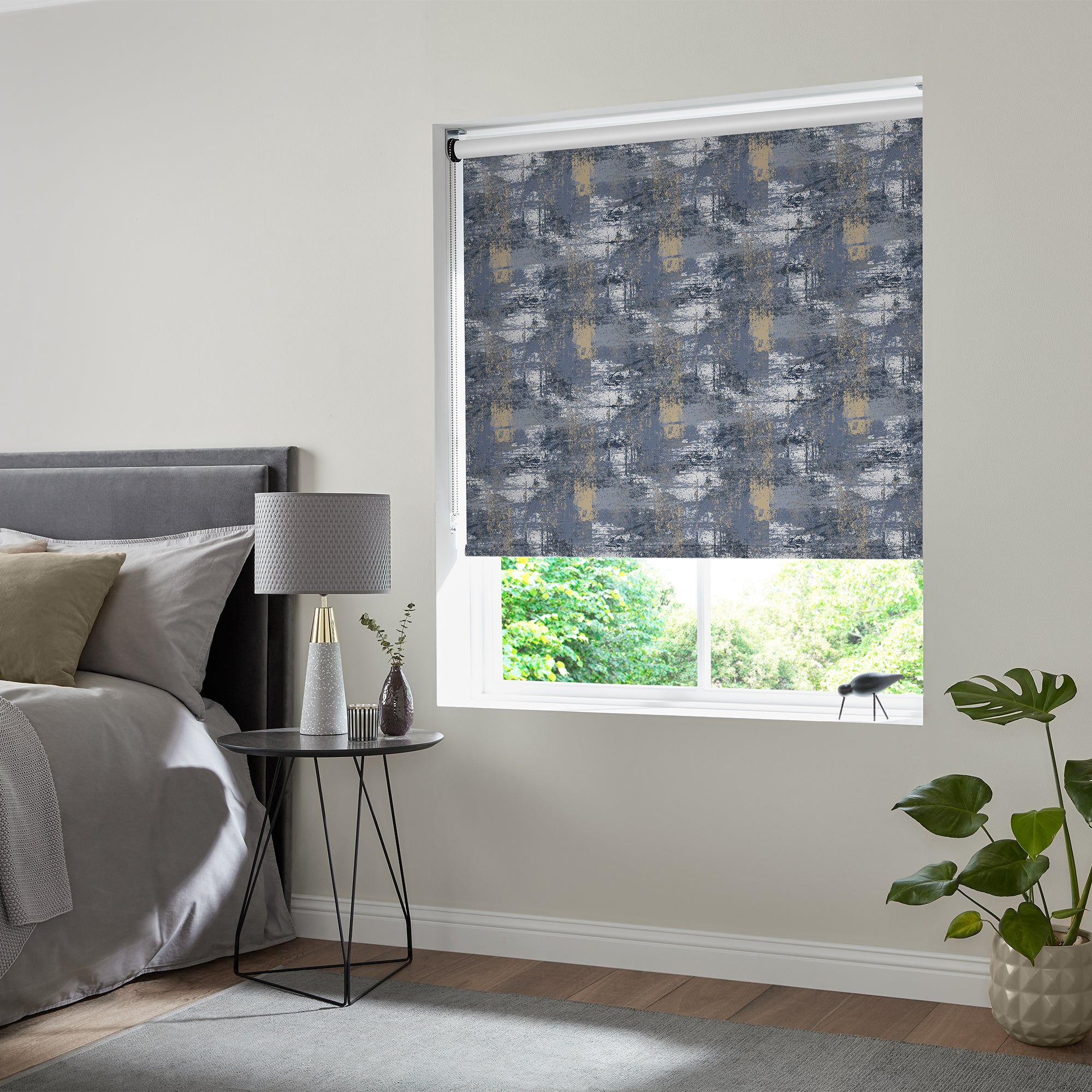
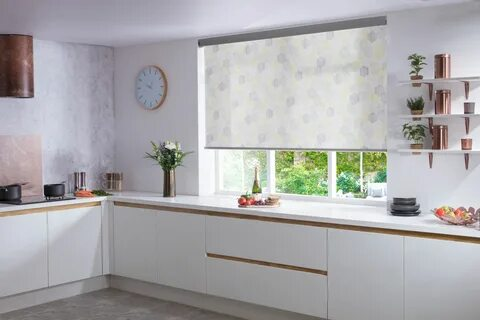
Practical does not mean plain. Patterned roller blinds let you bring colour and character to the room while keeping the wipeable, coated backing that does the hard work. A pattern also disguises the odd mark better than a flat pale fabric, which is a quiet advantage over the sink.
If your kitchen window faces strong morning or evening sun, or the room is open plan with a sleeping area nearby, a blackout roller blind cuts glare and light without changing the easy-clean nature of the blind. And because kitchen windows are so often an awkward size, made to measure roller blinds give you a fit that sits neatly in the recess and covers the glass properly, rather than an off-the-shelf size that leaves gaps.
Fitting kitchen roller blinds around the practical stuff
A kitchen window rarely sits in isolation. There is usually a tap, a worktop, sometimes a hob nearby, and the blind has to work around all of it.
Mount the blind so the fabric clears the tap and any splashback when it is lowered, and so the bottom bar does not foul the window handle. Above a sink, an inside-recess fit keeps the blind tucked out of the way of the worktop. Keep any operating chain to the side away from the hob and secure it so it cannot swing towards a flame or get caught while you cook.
The hardware matters more in a kitchen than people expect, because you will be raising and lowering the blind often and around moisture. Solid brackets and a smooth mechanism make daily use painless. Our guide to roller blind brackets and the right hardware is worth a read before you fit, so you match the brackets to your window and the weight of the fabric.
No drill fitting for rented and tiled kitchens
Kitchens are full of tiles and UPVC, both of which make drilling awkward or undesirable, and renters often cannot drill at all. No drill fittings grip the window frame with tension or adhesive brackets, so you get a tidy blind without a single hole in the tiles. For a snug recess it is a genuinely good solution, and the no drill blinds options cover the fittings that suit kitchen windows and UPVC frames.
Keeping kitchen roller blinds clean
This is where the roller earns its keep. For everyday grease and splashes on a coated or waterproof fabric, a wipe with a damp cloth and a little mild detergent lifts most marks. Do it regularly and grease never gets the chance to build up into a stubborn film.
For a deeper clean, lower the blind fully, wipe from top to bottom so drips run down and off rather than back into the fabric, and let it dry before rolling it up. Avoid harsh scourers or strong solvents, which can damage the coating that makes the fabric wipeable in the first place. Uncoated or fabric-only blinds are far harder to clean, which is the main reason a coated weave is the better buy for this room.
A quick monthly wipe of the bottom bar and brackets keeps the mechanism running smoothly, since kitchens deposit a fine greasy dust on everything over time. That small habit keeps the blind operating as well in its fifth year as its first.
Frequently asked questions
What blinds are best for a kitchen?
Roller blinds in a coated, wipeable or waterproof fabric are the best all-round choice, because the flat panel wipes clean and resists steam and grease. Faux wood is another durable option, but for easy cleaning and a tidy fit above a sink, a waterproof roller is hard to beat. Avoid fabrics that fold or gather, as they trap cooking residue.
Are roller blinds good for kitchens?
Yes. Their single flat surface gives grease and steam nowhere to collect, so cleaning is a quick wipe rather than a chore. The mechanism sits high and clear of worktops, and a coated or waterproof fabric stands up to the moisture and splashes a kitchen window sees every day.
How do you clean kitchen roller blinds?
For coated and waterproof fabrics, wipe with a damp cloth and a little mild detergent, working top to bottom so drips run off. Clean regularly to stop grease building up, let the fabric dry before rolling it away, and avoid harsh scourers or solvents that can strip the wipeable coating.