Skip to content


 Vertical Blinds
 Roman Blinds
 Roller Blinds
 Venetian Blinds
 Day and Night Blinds
 Skylight Blinds
 Children
 Wooden Blinds
 Curtains
 Blinds Accessories
 White
White Yellow
 Gold
Gold Green
Green Grey
Grey Pink
Pink Orange
 Animal
 Floral
 Geometric
 Striped
 Motorized Day and Night Blinds
 Motorized Roller Blinds
 No Drill Rollers
 Perfect Fit Wooden
 Perfect Fit Metal
 Thermal Blinds
 Better Sleep Blinds
 Cordless Blinds
 No Drill Blinds
 Blackout Blinds
 Waterproof Blinds
 Easy Wipe Blinds
 Taped Blinds
 Conservatory
 Office
 Kitchen
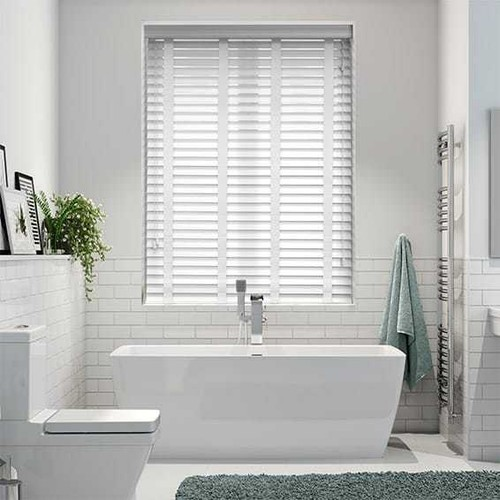 Bathroom
 Dining Room
 Kids Room
 Living Room
 Bedroom
 Bay Window
 Conservatory Window
 Tild and Turn Window
 Bi Fold Window
 Roof of Skylight
 French Door
 Sliding Door
Venetian Blinds for Bathrooms: Waterproof Options and Buying Tips
- by Mariam Labadze
 Bathrooms are tough environments for window coverings. Steam, splashes, condensation, and fluctuating temperatures conspire to warp, stain, and rot anything that is not designed to handle moisture. Venetian blinds remain one of the most popular choices for bathrooms because their adjustable slats give you precise control over privacy and light — but only if you choose a material that can genuinely cope with a wet room. This guide covers which materials work, which to avoid, and how to pick the right venetian blind for your bathroom.
[toc]
Quick answer: The best venetian blinds for bathrooms are made from aluminium, faux wood (PVC or composite), or solid PVC. These materials are fully waterproof, resist warping and mould, and clean easily with a damp cloth. Avoid real wood venetian blinds in bathrooms, as prolonged exposure to moisture causes them to swell, crack, and deteriorate. Choose 25 mm slats for small windows and 50 mm for larger ones.
Why Venetian Blinds Work Well in Bathrooms
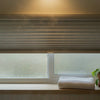
Bathrooms need privacy, but they also need ventilation and light. Unlike a roller blind that is either up or down,venetian blindslet you tilt the slats to any angle. You can block the view from outside while still allowing air to circulate and daylight to filter in. This makes them ideal for bathrooms where opening the window during or after a shower is essential for reducing damp.
Venetian blinds also offer a clean, structured look that suits modern bathrooms. Their horizontal lines complement tiled walls, and their slim profile does not encroach on limited bathroom space.
Waterproof Materials Compared
Aluminium Venetian Blinds
Aluminium is the classic choice for bathroom venetians. It is completely impervious to water — it will not swell, warp, peel, or develop mould regardless of how steamy your bathroom gets. Aluminium slats are lightweight, easy to clean with a quick wipe, and available in a vast range of colours and finishes, from matt neutrals to high-gloss metallics.
The main consideration with aluminium is that the slats are thin and can bend if handled roughly. Standard aluminium slats are 25 mm wide, which suits small to medium bathroom windows well. For a more substantial look, some ranges offer 35 mm slats, though 50 mm aluminium slats are less common.
Faux Wood Venetian Blinds
Faux wood blinds are made from PVC, composite, or a combination of both. They replicate the appearance of real wood remarkably well — complete with grain textures and warm tones — but without any vulnerability to moisture. Faux wood slats are typically 50 mm wide, giving them the chunky, premium look associated with plantation-style blinds.
Faux wood is heavier than aluminium, which means the slats hang with a satisfying weight and are less prone to clinking together in a breeze. They are also less likely to bend than aluminium slats. For a bathroom where you want the aesthetics of wood without the risk, faux wood is an excellent middle ground.
Solid PVC Venetian Blinds
Solid PVC venetians are the most budget-friendly waterproof option. They are completely moisture-proof and extremely easy to clean. The trade-off is that they tend to look and feel less premium than aluminium or faux wood. Colour options are also more limited, typically confined to white, cream, and a handful of neutral shades.
For a rental property or a secondary bathroom that does not need a designer finish, PVC venetians are a practical, no-fuss choice. Browse thewaterproof blinds collectionat 1ClickBlinds for options that suit wet rooms.
Why You Should Avoid Real Wood in Bathrooms
Real wood venetian blinds look beautiful in living rooms, dining rooms, and bedrooms — but bathrooms are their nemesis. Wood is hygroscopic, meaning it absorbs moisture from the air. In a bathroom, where humidity can spike above 80% during a hot shower, real wood slats absorb that moisture and swell. When they dry out, they shrink again. This constant expansion and contraction cycle causes warping, cracking, and eventual splitting.
Even wood blinds marketed as having a moisture-resistant coating will deteriorate over time in a bathroom environment. The coating eventually breaks down, and once moisture penetrates the wood, the damage is irreversible. Save real wood blinds for dry rooms and choose faux wood or aluminium for the bathroom.
Choosing the Right Slat Size
25 mm Slats
The standard 25 mm slat is the most common width for aluminium venetians. Narrow slats suit smaller bathroom windows because they create a proportionate, refined look. They also stack more compactly when raised, leaving more of the window clear for light and ventilation.
35 mm Slats
A 35 mm slat offers a middle ground between the slimness of 25 mm and the boldness of 50 mm. It works well on medium-sized windows and provides slightly more privacy overlap between slats when tilted closed.
50 mm Slats
The 50 mm slat is the standard for faux wood venetians and gives the most pronounced, contemporary look. Wider slats mean fewer gaps and a cleaner visual line across the window. They are best suited to larger bathroom windows or feature windows where you want the blind to make a design statement.
For privacy, wider slats actually offer a slight advantage — there are fewer joints between slats, which means fewer potential sightlines when the slats are tilted to the closed position.
Privacy Considerations
Privacy is arguably the primary concern in a bathroom. Venetian blinds in the closed position provide full privacy, but the angle at which you tilt the slats matters. Tilting slats upward (so the convex side faces outward) prevents people at ground level from seeing in while still allowing light to enter from above. Tilting them downward does the opposite — useful if you are on a ground floor and want to block views from taller buildings.
For bathrooms that face directly onto a busy street or neighbouring property, consider pairing venetian blinds with frosted or obscured glass. This dual approach means you maintain privacy even when the blinds are fully open for ventilation.
Colour Choices for Bathroom Venetians
White remains the most popular colour for bathroom venetian blinds — it is clean, bright, and matches most bathroom colour schemes. However, pure white aluminium can show water marks and fingerprints more readily than off-white or grey tones.
If your bathroom has a specific colour palette, consider these options:
-
Grey or silver — suits modern, minimalist bathrooms and hides water spots well
-
Cream or ivory — warmer than white, works beautifully with natural stone tiles
-
Black or anthracite — bold and dramatic, pairs well with monochrome or industrial-style bathrooms
-
Wood-effect faux wood — adds warmth and texture, complements wooden vanity units and shelving
Cleaning Venetian Blinds in a Humid Environment
Bathroom venetians accumulate a combination of dust, steam residue, and sometimes soap film. Regular cleaning prevents this build-up from becoming stubborn. Here is a simple routine:
-
Weekly — close the slats and run a dry microfibre cloth or duster across them. Flip the slats and repeat on the other side.
-
Monthly — wipe each slat with a cloth dampened in warm water with a small drop of washing-up liquid. Dry immediately with a second cloth to prevent water spots.
-
Quarterly — for aluminium or PVC blinds, you can remove the blind from its brackets and lay it flat in the bath. Give it a thorough clean with warm soapy water, rinse, and allow it to drip-dry before refitting.
Avoid abrasive cleaners, bleach, or scouring pads, as these can damage the surface finish of aluminium slats and cause faux wood coatings to peel.
Installation Options for Bathroom Windows
Most bathroom venetian blinds are installed using a standard bracket system screwed into the window frame, the recess, or the wall above. If you would prefer not to drill — particularly useful on tiled walls where drilling risks cracking tiles —no-drill blindsoffer adhesive and clip-on alternatives.
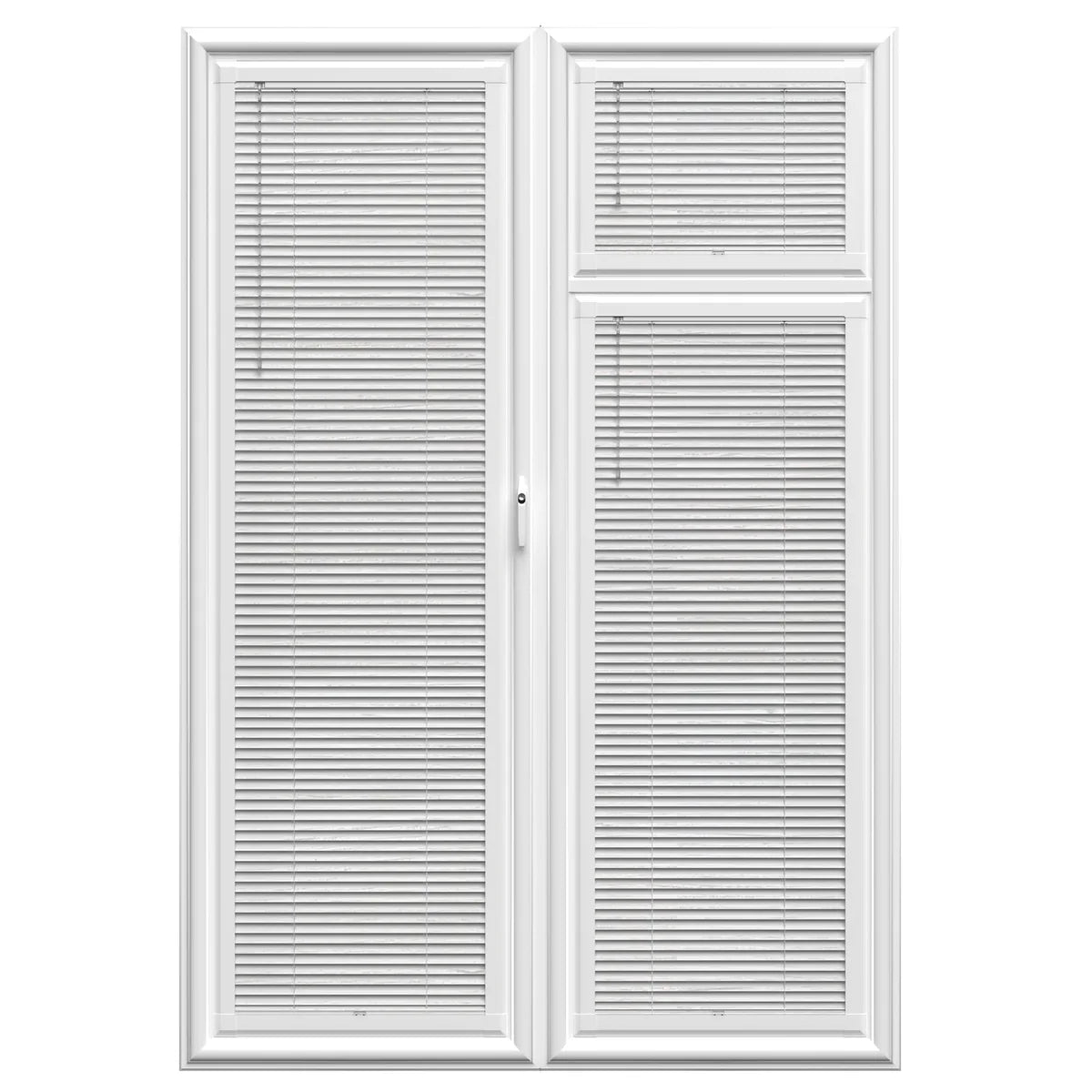
For bathroom windows that tilt open for ventilation, acordless venetian blindor a perfect fit system ensures the blind moves with the window and does not interfere with the opening mechanism.
Taped vs Corded Venetian Blinds
Venetian blinds use either thin cords or decorative fabric tapes to connect the slats.Taped blindslook more polished and hide the cord holes in each slat, giving a cleaner front-facing appearance. However, in a bathroom, tapes can absorb moisture over time and may develop mildew if not dried properly.
Corded (ladderstring) venetians are more practical in wet environments because there is less fabric to absorb moisture. If you prefer the look of tapes, choose a blind with synthetic tapes that dry quickly and resist mould, rather than cotton or woven fabric tapes.
Frequently Asked Questions
Can faux wood blinds handle a very steamy bathroom?
Yes. Quality faux wood blinds are manufactured from PVC or composite materials that are completely waterproof. They will not swell, warp, or discolour in steam. Even if water splashes directly onto the slats, it simply wipes off. They are a genuinely worry-free option for even the steamiest bathrooms.
Are venetian blinds easy to keep clean in a bathroom?
They are straightforward to maintain. A weekly wipe with a dry cloth keeps dust at bay, and a monthly clean with warm soapy water handles any steam or soap residue. Aluminium and PVC slats are particularly low-maintenance because their smooth surfaces do not trap dirt.
What size venetian blind slats are best for bathroom privacy?
Both 25 mm and 50 mm slats provide full privacy when closed. However, 50 mm slats have fewer gaps between them, offering marginally better privacy when tilted at an angle. For maximum privacy without sacrificing light, pair your venetian blind with obscured window glass.
Do venetian blinds go mouldy in bathrooms?
Aluminium and PVC venetian blinds do not go mouldy because mould cannot grow on these non-porous surfaces. Faux wood is similarly resistant. If you notice mould on a blind, it is usually growing on a film of dust or soap residue rather than the blind material itself — a wipe with a mild anti-mould spray will clear it immediately.