 Skip to content


 Vertical Blinds
 Roman Blinds
 Roller Blinds
 Venetian Blinds
 Day and Night Blinds
 Skylight Blinds
 Children
 Wooden Blinds
 Curtains
 Blinds Accessories
 White
White Yellow
 Gold
Gold Green
Green Grey
Grey Pink
Pink Orange
 Animal
 Floral
 Geometric
 Striped
 Motorized Day and Night Blinds
 Motorized Roller Blinds
 No Drill Rollers
 Perfect Fit Wooden
 Perfect Fit Metal
 Thermal Blinds
 Better Sleep Blinds
 Cordless Blinds
 No Drill Blinds
 Blackout Blinds
 Waterproof Blinds
 Easy Wipe Blinds
 Taped Blinds
 Conservatory
 Office
 Kitchen
 Bathroom
 Dining Room
 Kids Room
 Living Room
 Bedroom
 Bay Window
 Conservatory Window
 Tild and Turn Window
 Bi Fold Window
 Roof of Skylight
 French Door
 Sliding Door
Best Blinds for Skylight and Roof Windows (2026 UK Guide)
- by Mariam Labadze
 Skylight windows bring remarkable amounts of natural light into loft conversions, extensions, and top-floor rooms — but they also bring challenges that standard windows do not. Direct overhead sunlight can turn a room into an oven within minutes. Rain drumming on the glass is amplified. And at night, an uncovered skylight becomes a black hole in the ceiling that leaks heat straight out. The right skylight blinds solve all of these problems while preserving the airy, open feel that made you want roof windows in the first place.
[toc]
Quick answer: The best skylight blinds for UK homes are blackout roller blinds for bedrooms, honeycomb thermal blinds for energy efficiency, and motorised blinds for hard-to-reach roof windows. When buying, you need to match your blind to the specific window brand and model (such as Velux, Fakro, or Keylite), measure accurately using the data plate on the window, and choose between manual and motorised operation based on the window's height and accessibility.
Why Skylight Windows Need Specialist Blinds
A skylight is not just a window turned sideways. It sits at an angle — sometimes completely horizontal — which means a standard blind would simply hang away from the glass and flap about. Skylight blinds are engineered with side channels, tensioned cables, or cassette systems that hold the fabric tight against the glass at any angle, from a gentle 15-degree pitch to a fully flat roof light.
Skylights also receive significantly more solar radiation than vertical windows. The sun hits them more directly, especially during summer when it is high in the sky, so heat gain through a skylight can be two to three times greater than through a wall-mounted window of the same size. This makes thermal performance a genuine priority when choosing skylight blinds, not just a nice extra.
Types of Skylight Blinds
Blackout Skylight Blinds
Bedrooms with skylights almost always needblackout blinds. Because the window is overhead, even a small amount of light leakage is amplified — it falls directly onto the bed rather than entering at an angle. A quality blackout skylight blind uses side channels to seal the edges and a cassette housing at the top to prevent light bleeding above the roller.
Blackout skylights are also invaluable for home cinemas, photography studios, and any room where you need total darkness during daylight hours.
Light-Filtering Skylight Blinds
For living areas, kitchens, and home offices, a light-filtering skylight blind softens harsh overhead glare without darkening the room completely. These blinds diffuse direct sunlight into a gentle, even glow that illuminates the space comfortably. They are particularly effective in loft conversions where the skylight is the primary light source and you do not want to lose brightness during overcast days.
Thermal and Honeycomb Skylight Blinds
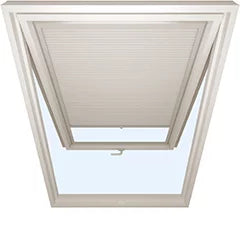
Honeycomb (cellular) blinds are arguably the smartest choice for skylights from an energy efficiency standpoint. Their cellular structure creates insulating air pockets that reduce heat transfer in both directions — keeping solar heat out in summer and retaining warmth in winter. For a roof window, where heat loss through the glass can be significant, a honeycomb blind can make a noticeable difference to your energy bills.
Thehoneycomb blackout blindsavailable at 1ClickBlinds offer both thermal insulation and complete light blocking — a combination that works exceptionally well in loft bedrooms.
Venetian Skylight Blinds
Aluminiumvenetian blindsfor skylights use tensioned cords or side guides to keep the slats in position at an angle. They allow you to tilt the slats to redirect sunlight rather than blocking it entirely, which is useful in rooms where you want to control glare without losing natural light. However, they offer less thermal insulation than honeycomb or roller options.
Manual vs Motorised Skylight Blinds
Manual Operation
Manual skylight blinds are operated by a pull cord, a telescopic rod, or a handle attached to the bottom bar. They are the most affordable option and work well when the window is within comfortable reach — typically at heights below about 2.5 metres. Many manual skylight blinds come with an extension rod for slightly higher windows.
Motorised Operation
For skylights that are high up in a vaulted ceiling, positioned above a stairwell, or simply awkward to reach, motorised blinds are a practical necessity rather than a luxury. Solar-powered motorised skylight blinds are particularly convenient because they do not require mains wiring — a small solar panel on the blind's cassette charges an internal battery, and you operate the blind via a remote control or a smart home app.
Motorised options can also be programmed on timers or linked to sensors. A heat sensor can close the blind automatically when the roof window reaches a certain temperature, while a rain sensor integrated into the window itself can trigger both the blind and the window to close.
Matching Blinds to Your Roof Window Brand
Velux Windows
Velux is by far the most common roof window brand in the UK. Each Velux window has a data plate on the top edge of the frame (visible when you open the window) that shows the model code and size code. When ordering skylight blinds, you will need this code to ensure the blind matches your exact window dimensions and operating mechanism.
Both Velux's own branded blinds and compatible third-party blinds are available. Third-party options often offer the same fit at a lower price point, with a wider range of colours and fabrics.
Fakro, Keylite, and Other Brands
Fakro and Keylite are the next most popular brands in the UK market. Like Velux, each uses its own sizing system, so you need to identify your window's model and size code before ordering. Most reputable skylight blind suppliers carry options compatible with all three brands.
If you have an unbranded or very old roof window, you may need to measure the glass area manually and order a custom-sized blind. Measure the width and height of the visible glass, then check with the supplier whether their system can accommodate a bespoke size.
How to Measure for Skylight Blinds
Measuring for skylight blinds differs from standard windows:
-
Find the data plate — open the window and look along the top edge of the frame. Note the brand, model code, and size code.
-
If no data plate exists — measure the visible glass width and height in millimetres. Measure in three places for each dimension and use the smallest figure.
-
Note the window depth — some blinds require a minimum recess depth. Measure from the glass to the front edge of the frame.
-
Check the opening type — centre-pivot, top-hung, or fixed. This affects which blind mechanisms are compatible.
Safety Considerations
Skylight blinds with long hanging cords present a strangulation hazard, particularly in children's bedrooms. UK regulations recommendcordless blindsor blinds with inaccessible cords in any room where children sleep or play. Motorised skylight blinds are inherently cordless and therefore meet safety requirements without any additional modifications.
If you choose a manual blind with a cord, fit a cord cleat high on the wall to keep loops out of reach, and consider a cord tensioner for any chain-operated mechanisms.
Thermal Benefits and Energy Savings
An unshaded skylight can account for a disproportionate share of a room's heat gain and heat loss. In summer, closing a reflective or honeycomb skylight blind before the sun hits the glass can reduce the room temperature by several degrees. In winter, a honeycomb blind adds an insulating layer that slows heat escaping through the glass, particularly at night when temperatures drop sharply.
For maximum efficiency, choose a blind with a reflective backing on the window side. White or silver-coated fabrics reflect solar radiation before it enters the room, which is more effective than absorbing it with a dark fabric (which then re-radiates heat into the space).
Popular Styles and Aesthetics
Skylight blinds are visible from below, so their appearance matters. White and off-white are the most popular colours because they blend with ceilings and reflect light. However, bold colours and patterned fabrics can turn a skylight into a design feature, especially in children's rooms or creative spaces.
For a cohesive look, consider matching your skylight blinds with theroller blindson your vertical windows in the same room. Many fabric ranges are available across both formats, allowing a coordinated finish.
Frequently Asked Questions
Can I fit skylight blinds myself?
Yes. Most skylight blinds designed for Velux, Fakro, or Keylite windows use a bracket system that clips into the existing window frame without drilling. Installation typically takes 10–15 minutes per window with no tools beyond a screwdriver.
Do skylight blinds work on flat roof windows?
They can, but flat roof lights require blinds specifically designed for horizontal installation. Standard skylight blinds rely on gravity or spring tension calibrated for an angled position, so they may not function correctly on a completely flat surface. Look for blinds marketed specifically for flat roof lights or roof lanterns.
How much do skylight blinds cost in the UK?
Manual skylight blinds typically range from 30 to 80 pounds depending on size, fabric, and brand compatibility. Motorised versions range from 120 to 300 pounds. Solar-powered motorised blinds sit at the upper end but save on installation costs because no electrician is needed.
Are blackout skylight blinds completely dark?
High-quality blackout skylight blinds with side channels block 99% or more of light. Some minimal light may still enter where the blind meets the frame, but this is barely perceptible in practice. For absolute darkness, look for blinds with a cassette housing and sealed side guides.


)