 Skip to content


 Vertical Blinds
 Roman Blinds
 Roller Blinds
 Venetian Blinds
 Day and Night Blinds
 Skylight Blinds
 Children
 Wooden Blinds
 Curtains
 Blinds Accessories
 White
White Yellow
 Gold
Gold Green
Green Grey
Grey Pink
Pink Orange
 Animal
 Floral
 Geometric
 Striped
 Motorized Day and Night Blinds
 Motorized Roller Blinds
 No Drill Rollers
 Perfect Fit Wooden
 Perfect Fit Metal
 Thermal Blinds
 Better Sleep Blinds
 Cordless Blinds
 No Drill Blinds
 Blackout Blinds
 Waterproof Blinds
 Easy Wipe Blinds
 Taped Blinds
 Conservatory
 Office
 Kitchen
 Bathroom
 Dining Room
 Kids Room
 Living Room
 Bedroom
 Bay Window
 Conservatory Window
 Tild and Turn Window
 Bi Fold Window
 Roof of Skylight
 French Door
 Sliding Door
Best Blackout Blinds for Bedrooms 2026 (No Drill Included)
- by Mariam Labadze
 Blackout blinds are one of those purchases that most people make once, make badly, and then make again properly after six months of substandard sleep. The first attempt is usually a cheap roller blind described as blackout on the product listing that turns out to admit light around every edge, through a faded coating, and occasionally straight through the fabric in the form of tiny pinholes that glow like a constellation at 5am.
The second purchase — the one that actually works — involves understanding what blackout performance really means, why fit matters as much as fabric, and which specific product type suits your window, your room, and your situation.
This guide covers the best blackout blind options for UK bedrooms in 2026, with specific attention to no-drill formats that suit rented properties and UPVC windows.
[toc]
What Makes a Blackout Blind Actually Blackout
The term is used loosely enough in product marketing that it's worth establishing what genuine blackout performance requires before looking at specific products.
A true blackout blind does two things simultaneously: it blocks light transmission through the fabric, and it eliminates light paths around the fabric. Both are necessary. Either one failing independently means the blind fails as a blackout solution regardless of how well the other performs.
Light Through the Fabric
Genuine blackout fabric is rated at 0% light transmission — no measurable light passes through the material itself. This is achieved either through a dense woven construction, a blackout coating or laminate applied to the fabric backing, or in the case of cellular honeycomb blinds, through the density of the cell wall construction.
Coated fabrics — where a separate layer is applied to the back of a woven fabric — are the most common blackout construction in roller blinds. The coating is effective when new but can develop pinholes or crack at the roll point over time, particularly in blinds that are rolled and unrolled repeatedly. This degradation is gradual and often goes unnoticed until the blind is backlit at dawn and the pinhole pattern becomes visible.
Cellular blackout fabric — used in honeycomb blinds — achieves opacity through the structural density of the cell walls rather than a surface treatment. Because it's a material property rather than an applied coating, it doesn't degrade with use. The blackout performance of a cellular blind is as complete in year five as it was on day one.
Light Around the Fabric
This is where most blackout blinds fail in practice, and where the gap between a product's claimed performance and its real-world performance is largest.
Any blind mounted conventionally — brackets fixed to the wall above the window, blind hanging in front of the glass — creates a gap between the blind's edge and the surrounding wall. In a bedroom at 5am in June, with the sky already bright outside, even a 10mm gap at each side of the blind acts as a light source. The contrast between a dark room and even a small amount of dawn light is extreme enough that the gap registers clearly against the darkness.
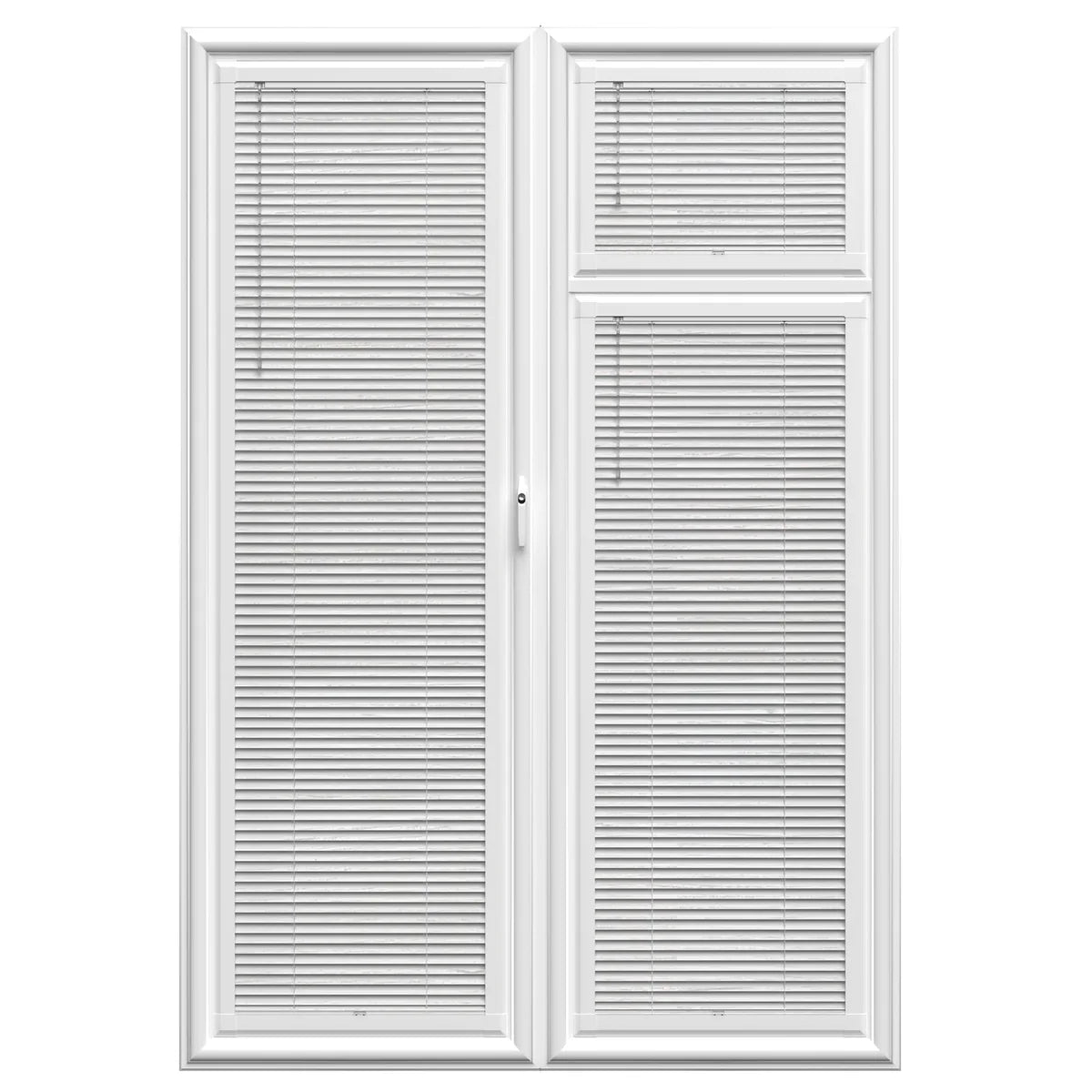
The only way to eliminate this problem structurally is to fit the blind within the window frame rather than in front of it — which is precisely what the perfect fit no-drill mounting system achieves. A perfect fit blind clips into the UPVC glazing bead and covers the glass edge to edge with no gap at any side. The blackout performance is complete rather than compromised by the uncovered perimeter that conventionally mounted blinds always leave.
The No-Drill Advantage for Bedrooms
No-drill blackout blinds are not a compromise format for renters who can't drill. For UPVC windows — the dominant frame type in UK homes built or refurbished since the mid-1980s — the no-drill perfect fit mounting system is technically superior to conventionally drilled alternatives for blackout purposes.
The reason is the gap. As described above, any blind mounted to the wall or reveal above the window hangs in front of the glass with unavoidable side gaps. A perfect fit blind sits within the frame itself, eliminating those gaps structurally. The no-drill format produces better blackout performance than the drilled alternative on the same window, not worse.
For renters, the additional benefit is the absence of deposit risk. No holes, no filled patches, no repainting required on exit. A correctly fitted and removed perfect fit blind leaves the window in precisely the condition it was found.
The Best Blackout Blind Types for Bedrooms
1. Perfect Fit Honeycomb Blackout Blind
Best for: Maximum performance bedrooms, nurseries, east-facing rooms, shift workers
The strongest overall blackout solution available without specialist installation, and the recommendation for anyone for whom sleep quality is the primary purchase driver.
The honeycomb blackout blind combines three properties in a single product that no other blind format matches simultaneously. The blackout fabric eliminates light transmission through the material. The perfect fit clip-frame eliminates light transmission around the material. The cellular honeycomb structure traps insulating air between the glass and the room, reducing both heat loss in winter and solar heat gain in summer — the two thermal problems that affect bedroom comfort alongside light.
The cellular construction means the blackout performance doesn't degrade over time. Unlike coated roller fabrics that can develop pinholes after years of rolling and unrolling, the cell wall construction of a honeycomb blind is structural rather than surface-applied. The darkness it produces on day one is the darkness it produces in year five.
For east-facing bedrooms where summer sunrise before 5am is the specific problem, this is the definitive solution. The edge-to-edge frame coverage eliminates every light path simultaneously — through the fabric, around the sides, over the top, and under the bottom — in a way that no conventionally mounted alternative achieves.
For nurseries, the thermal stability argument adds to the blackout performance case. The NHS recommends 16 to 20 degrees Celsius for infant sleep, and a room with large uncovered windows fluctuates significantly across the day and night. The cellular insulation of a honeycomb blind reduces the thermal impact of the glass surface, contributing to a more consistent room temperature through cold nights and warm mornings.
What to look for: Single cell construction is sufficient for most bedrooms. Double cell is worth the additional cost for rooms with very large glazed areas or where energy efficiency is a priority alongside sleep quality. Confirm 0% light transmission rating — not "near blackout" or "room darkening."
2. Perfect Fit Blackout Roller Blind
Best for: Straightforward blackout performance, budget-conscious buyers, secondary bedrooms
The perfect fit blackout roller blind is the most widely available and most cost-effective no-drill blackout solution for standard UPVC casement bedrooms. It delivers the edge-to-edge coverage of the perfect fit frame — eliminating the side gaps that defeat most blackout rollers — with a straightforward roller mechanism and a wide range of fabric options.
The operating mechanism is as simple as any blind gets. Raise or lower — typically via a side chain or a spring rewind mechanism. No tilt adjustment, no cord management, no complexity. For a bedroom blind that's adjusted twice a day every day, this simplicity is a genuine practical advantage.
The fabric range available in perfect fit roller format covers the full opacity spectrum, with genuine blackout fabrics at the darker end rated at 0% light transmission. Fabric colour and texture choice is wider in roller format than any other blind type — if the aesthetic contribution of the blind to the bedroom matters alongside its blackout function, the roller format gives the most options.
The honest limitation compared to the honeycomb format is thermal performance. A blackout roller blind in a perfect fit frame provides excellent light exclusion but minimal insulation — the flat fabric doesn't trap air or resist heat transfer the way the cellular structure does. For bedrooms where cold glass in winter is a comfort issue as well as light in summer, the honeycomb blind is the more complete solution.
What to look for: A quality spring or chain mechanism rated for the blind width — cheaper spring mechanisms lose tension over time and eventually fail to retract fully. Blackout fabric with a 0% light transmission rating and a separate backing layer rather than a coated surface only.
3. No-Drill Blackout Blinds for Non-UPVC Windows
Best for: Rented properties with timber sash windows, older housing stock
Not all bedrooms have UPVC windows. Period properties — Victorian and Edwardian terraces and semis that make up a significant proportion of UK rental housing stock — typically have original or replacement timber sash windows that don't have the UPVC glazing bead required for perfect fit clip systems.
For these windows, the no-drill options are tension rod systems and adhesive clip systems. Neither performs at the level of a perfect fit installation, but well-chosen and correctly fitted examples can provide reasonable blackout performance with appropriate expectations.
Tension rod systems use a spring-loaded rod that wedges into the window recess under tension. The blind hangs from the rod with no fixings to the frame or surrounding surfaces. The limitation for blackout purposes is coverage — a tension rod sits within the recess rather than at the glass, which means the blind hangs behind the sash reveal and the gap between the blind edge and the sash frame admits light at the sides.
The practical workaround for timber sash windows and blackout requirements is a combination approach: a tension or adhesive-mounted roller blind within the recess providing most of the light blocking, combined with a lined curtain on a pole above the window providing the side coverage. The blind does the primary work; the curtain fills the gaps. It requires more investment than a single perfect fit product but achieves comparable practical darkness in rooms where the perfect fit system isn't compatible.
What to look for: For tension systems, a rod rated for the blind width with enough tension range for the specific recess depth. For adhesive systems, a bond designed for the specific surface material of the frame — smooth painted timber and textured or painted plaster have different surface energy levels that require different adhesive formulations.
4. Blackout Blinds for Bay Windows
Best for: Front bedrooms in Victorian and Edwardian properties
Bay windows are one of the most common bedroom configurations in UK period housing and one of the most challenging for blackout purposes. The geometry of the bay — typically a wide centre section with angled return panels on each side — creates multiple light entry paths that a single conventionally mounted blind cannot address.
The correct approach for a bay window bedroom is to treat each section of the bay as an individual window and fit a separate blind to each section. For UPVC bay windows — present in a significant proportion of 1970s and 1980s housing — perfect fit blackout blinds fitted to each section individually provide complete coverage with no gaps between sections.
For timber bay windows in Victorian properties, the per-section approach still applies but with tension or adhesive mounting. The junction between sections — where the angled return meets the centre panel — is the most likely light leak point and worth paying specific attention to when fitting.
The temptation with bay windows is to hang a single wide curtain treatment that sweeps across the full bay on a bent pole. This looks clean in a styled interior photography context and performs poorly as a blackout solution — the curtain cannot cover the angles of the bay without either leaving gaps at the sides or being pulled so far forward it sits in the room rather than at the window. Individual blinds per section, fitted within each frame, are the more effective and more practical solution.
5. Blackout Blinds for Tilt-and-Turn Bedrooms
Best for: Newer builds and flats with modern window formats
Tilt-and-turn windows are increasingly common in newer UK builds and converted flats, particularly in urban locations where noise and security considerations favour a window that ventilates without fully opening. They present a specific blackout challenge that most blind formats fail to address.
A conventionally mounted blind above a tilt-and-turn window must be fully raised before the window can be opened in tilt mode — the ventilation position where the top of the window tilts inward. This means that on a warm summer night, when you most want the window open for air, you're choosing between ventilation and blackout.
Perfect fit blinds on tilt-and-turn windows eliminate this conflict entirely. Because the blind clips to the opening sash rather than to the surrounding wall, it tilts with the window. The blind can be partially or fully lowered with the window in tilt position — maintaining blackout or near-blackout conditions while the window provides air circulation. For summer nights in a bedroom, this combination is uniquely practical.
For a tilt-and-turn bedroom window, a perfect fit honeycomb blackout blind is the specific recommendation — the thermal properties that address cold glass in winter also address solar heat gain through the glass in summer, and the blackout performance combined with tilt-compatible mounting makes it the most complete sleep environment solution for this window type.
What to Avoid
"Blackout Effect" and "Near Blackout" Descriptions
These terms describe room-darkening performance — meaningful light reduction but not complete blackout. In a bedroom used for daytime sleep, shift work, or by anyone sensitive to early morning light, room-darkening is not a substitute for genuine blackout. Look for confirmed 0% light transmission ratings rather than descriptive marketing language.
Wide Roller Blinds Without Adequate Bottom Rail Weighting
A roller blind that billows away from the window at the bottom admits light from below as well as at the sides. Quality roller blinds have a weighted bottom rail that keeps the fabric hanging flat against the window. Lighter-weight bottom rails in cheaper products allow the fabric to move and gap.
Cheap Spring Mechanisms on Roller Blinds
The spring rewind mechanism on a roller blind is its most failure-prone component. A spring that loses tension over months of daily use eventually stops retracting the blind fully, which leaves the fabric hanging in a partially lowered position even when you intend to raise it. Chain-operated roller mechanisms are more durable because there are fewer components to fatigue, and are worth paying for in a bedroom blind that will be operated twice daily for years.
Adhesive-Mounted Blinds in Humid Bedrooms
In bedrooms where condensation is a regular occurrence — typically ground floor rooms, north-facing rooms, or rooms with inadequate ventilation — adhesive clip systems can lose their bond over time as the moisture cycle repeatedly stresses the adhesive. Perfect fit clip systems, which engage mechanically rather than adhesively, are not affected by humidity and maintain their grip regardless of condensation levels.
Room Considerations: Matching the Blind to the Bedroom
East-Facing Bedrooms
The most demanding blackout application in the UK calendar. First light before 4am at midsummer in the south of England, before 3:30am in Scotland — a bedroom facing east with inadequate blackout is essentially an alarm clock that nobody set.
The perfect fit honeycomb blackout blind is the specific recommendation for east-facing rooms. The edge-to-edge coverage is non-negotiable — any gap at the sides will be lit by the low-angle morning sun in a way that a west or north-facing room never experiences with the same intensity. The thermal insulation addresses the additional problem of solar heat gain warming the room from early morning on summer days.
South and West-Facing Bedrooms
South and west-facing bedrooms experience the opposite solar problem — direct afternoon and evening sun rather than early morning light. The blackout requirement is the same but the timing is different, with the blind most useful for daytime sleep and for keeping the room cool through summer evenings.
For these rooms, the thermal solar gain management of a honeycomb blind is the additional benefit that justifies the premium over a standard blackout roller. A blind that both darkens the room and reduces the solar heating of the space performs better as a summer sleep environment solution than a blind that darkens only.
North-Facing Bedrooms
North-facing bedrooms are the least challenging for summer light but the most affected by cold glass in winter. The thermal insulation argument for honeycomb blinds is strongest here — the cold radiation from a large north-facing window on a winter night creates a comfort issue that a flat blackout roller blind doesn't address. The blackout performance difference between formats is less critical in these rooms because the low winter sun angles rarely create the 5am brightness problem that east-facing rooms experience in summer.
A blackout roller blind in a perfect fit frame is a cost-effective and entirely adequate solution for north-facing bedrooms. The honeycomb format is worth considering if the room is large and the glazed area significant.
Nurseries
The specific nursery recommendation throughout this guide has been perfect fit honeycomb blackout blind, and the reasoning bears repeating. Infant sleep is particularly sensitive to light — the circadian system of a young baby is less robust than an adult's and more easily disrupted by ambient light levels that an adult might sleep through. Daytime naps, early morning sleep extension, and consistent night sleep are all supported by genuine darkness rather than room-darkening.
The child safety consideration is also relevant. Perfect fit blinds in cordless formats — push-button or spring mechanisms — have no accessible operating cord. The entire mechanism is contained within the frame. UK regulations require breakaway connectors on any looped cord in homes with children under 18, but the cordless format eliminates the cord risk entirely and is the recommended choice for a nursery or child's bedroom.
The Layering Option: Blinds and Curtains Together
For bedrooms where the aesthetic contribution of the window treatment matters alongside its blackout function — and in a well-considered bedroom, it usually does — the combination of a perfect fit blackout blind within the frame and curtains outside it is increasingly the approach that gives the best result on both dimensions simultaneously.
The blind handles the functional brief entirely — blackout, thermal performance, edge-to-edge coverage. The curtains add softness, warmth, and the design quality that fabric panels bring to a bedroom in a way that no blind alone replicates. Because the blind is doing all the practical work, the curtains can be chosen for their aesthetic contribution without needing to worry about their blackout credentials — unlined linen, patterned fabric, velvet, whatever suits the room.
The curtain pole or track mounts to the wall above the window, independent of the perfect fit blind within the frame. The two systems are entirely independent and can be changed separately without affecting each other.
Price Guide for 2026
Perfect fit honeycomb blackout blinds: £65 to £140 for standard casement window sizes, depending on width and whether single or double cell construction. Double cell adds approximately 20 to 35 percent to the single cell price.
Perfect fit blackout roller blinds: £35 to £80 for standard casement sizes, depending on fabric weight and width. Quality fabric with a confirmed 0% transmission rating sits at the higher end of this range.
Replacement costs: Both formats allow slat or fabric replacement independently of the clip frame, which is worth confirming with the supplier at point of purchase. A clip frame that remains in good condition should last the lifetime of the product, with only the fabric or cellular element needing replacement if damaged.
Summary: Which Blackout Blind for Which Bedroom
East-facing bedroom, summer sunrise problem: Perfect fit honeycomb blackout blind. Edge-to-edge coverage and cellular construction address both the light and the thermal solar gain simultaneously.
Standard bedroom, primary blackout requirement: Perfect fit blackout roller blind. Cost-effective, widely available, straightforward to operate. Upgrade to honeycomb if thermal performance is also a priority.
Nursery or child's bedroom: Perfect fit honeycomb blackout blind in cordless format. Blackout performance, thermal stability, no cord risk.
Tilt-and-turn bedroom window: Perfect fit blackout blind in either roller or honeycomb format — the tilt-compatible mounting is the non-negotiable requirement, and both formats provide it.
Period property with timber sash windows: Tension or adhesive roller blind within the recess, combined with lined curtains for side coverage. Not as effective as perfect fit but the best available no-drill approach for non-UPVC frames.
Bay window bedroom: Individual perfect fit blackout blinds per section on UPVC bays. Per-section roller or tension blinds on timber bays. Avoid the single-curtain-across-the-full-bay approach — it looks better in photographs than it performs in practice.
The common thread across all of these recommendations is edge-to-edge coverage. The fabric is important. The fit is more important. A perfect fit no-drill blind with a genuine blackout fabric in a UPVC bedroom window is the most reliably effective blackout solution available at any price point — not because it's the most expensive, but because it eliminates both failure modes simultaneously and does it without drilling a single hole.


)