Skip to content


 Vertical Blinds
 Roman Blinds
 Roller Blinds
 Venetian Blinds
 Day and Night Blinds
 Skylight Blinds
 Children
 Wooden Blinds
 Curtains
 Blinds Accessories
 White
White Yellow
 Gold
Gold Green
Green Grey
Grey Pink
Pink Orange
 Animal
 Floral
 Geometric
 Striped
 Motorized Day and Night Blinds
 Motorized Roller Blinds
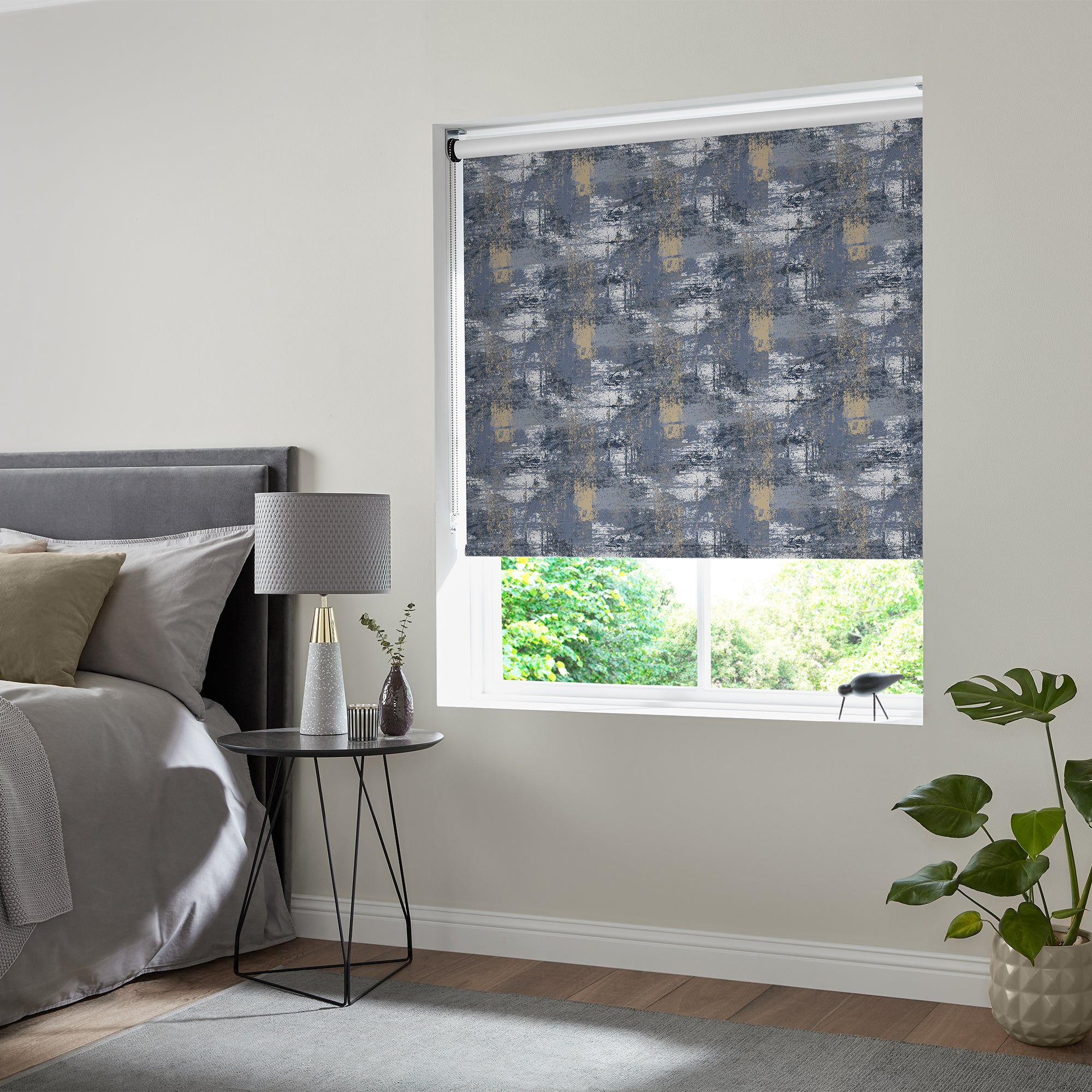 No Drill Rollers
 Perfect Fit Wooden
 Perfect Fit Metal
 Thermal Blinds
 Better Sleep Blinds
 Cordless Blinds
 No Drill Blinds
 Blackout Blinds
 Waterproof Blinds
 Easy Wipe Blinds
 Taped Blinds
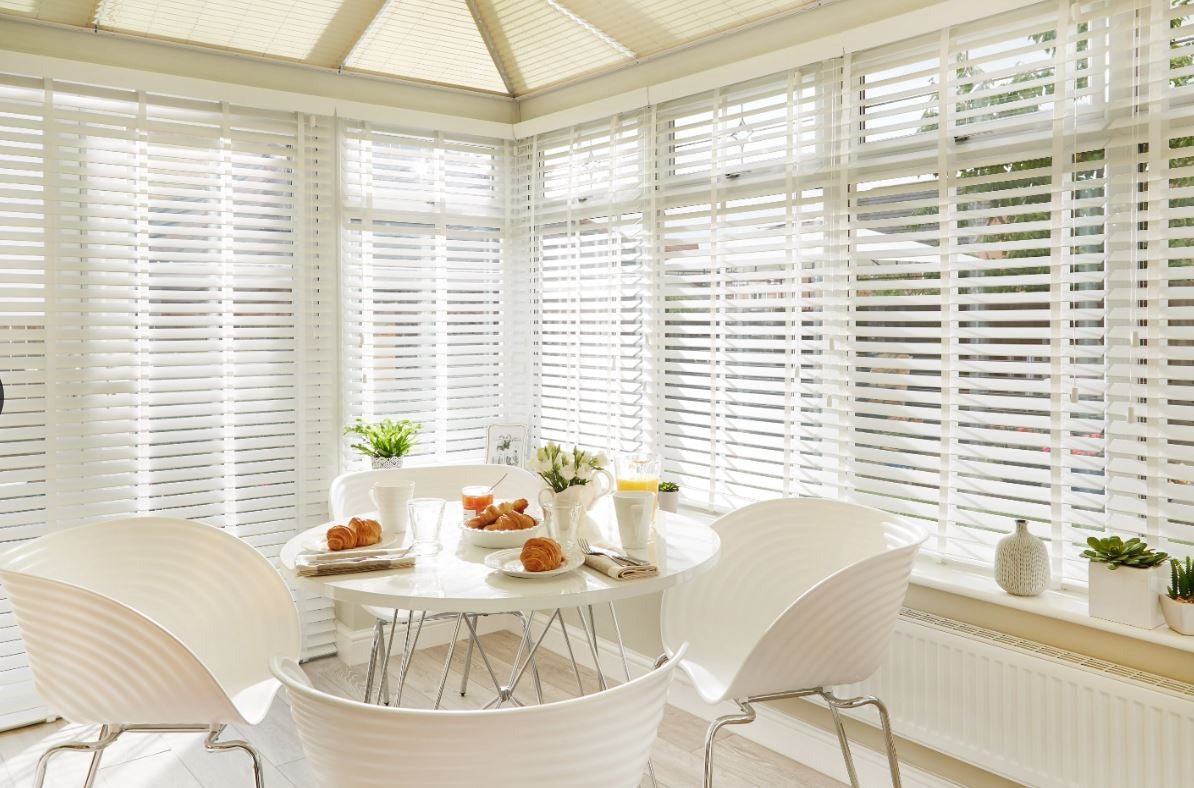 Conservatory
 Office
 Kitchen
 Bathroom
 Dining Room
 Kids Room
 Living Room
 Bedroom
 Bay Window
 Conservatory Window
 Tild and Turn Window
 Bi Fold Window
 Roof of Skylight
 French Door
 Sliding Door
Best Blinds for South-Facing Windows: Sun, Glare and Heat Guide
- by Mariam Labadze
 South-facing windows are the most light-intensive windows in any UK home. Receiving direct sunlight for the majority of the day, particularly during spring and summer, they are responsible for a significant proportion of heat gain in a room — welcome in winter, but potentially overwhelming in July and August. Choosing the right blind for a south-facing window requires balancing solar control with the desire to preserve natural light, views, and room temperature without creating a dark, enclosed space.
The South-Facing Window Challenge
A south-facing window in the UK receives direct sunlight from mid-morning until late afternoon during summer. This means that by 11 am on a clear day, a south-facing living room may already be uncomfortably warm and glare-ridden. By 2 pm, the temperature near the glass can feel significantly higher than the rest of the room, and any screen — whether a television or a computer monitor — may be effectively unusable due to glare.
The challenge is that south-facing rooms are also the most pleasant rooms in the house for the rest of the year — bright, warm in winter, and full of the kind of natural light that lifts mood and makes living spaces feel generous. The ideal blind solution for a south-facing window should manage summer sun without eliminating winter light entirely.
Solar Control Roller Blinds: The Most Effective Solution
Solar control roller blinds — sometimes called screen blinds — are made from a woven mesh fabric that includes metallic fibres designed to reflect solar energy before it passes through the window. Unlike a standard fabric blind that absorbs solar radiation and re-radiates it as heat, a solar control blind reflects a significant proportion of incoming solar energy outward, reducing both the glare and the heat entering the room.
The degree of solar control is expressed as the openness factor of the fabric — typically between 1 per cent and 10 per cent. A lower openness factor means less light and better solar control but a more restricted view through the blind. A higher openness factor provides better view-through but less glare and heat management. For a south-facing window in a living room, an openness factor of 3 to 5 per cent is usually a good balance.
Solar control fabrics are available as roller blinds at 1ClickBlinds and work best in conjunction with a well-fitting installation that minimises light seeping around the edges of the blind.
Day and Night Blinds for South-Facing Rooms
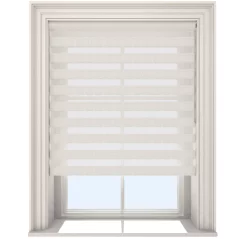
Day and night blinds offer a flexible approach to south-facing windows. By adjusting the position of the blind so that the opaque bands are aligned to block direct glare while the sheer bands still allow ambient light through, you can reduce the discomfort of direct sun without darkening the room significantly. In the morning and evening, when the sun is at a lower angle, you can fully open the blind. At peak sun, adjust to the partly-closed position for glare control. Browse the day and night blind collection for colours and widths suitable for south-facing rooms.
Venetian Blinds for Directing Light
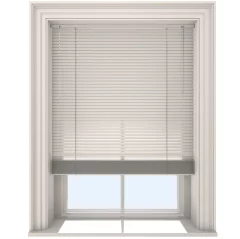
Venetian blinds offer a unique advantage on south-facing windows that is not available with roller or Roman blinds: you can tilt the slats to direct sunlight toward the ceiling rather than into the room at eye level. This 'bounced light' technique softens the quality of the incoming daylight significantly, reducing glare while still allowing plenty of natural light into the room. Aluminium venetians are particularly effective for this purpose, as the slat surface can be a slightly reflective finish that helps direct the light. View the venetian blinds range for suitable options in reflective finishes.
Thermal and Insulating Blinds for Year-Round Comfort
On south-facing windows, the summer challenge is heat gain rather than heat loss. Insulating blinds such as honeycomb cellular blinds work differently in summer than winter: in winter, they reduce heat loss from the room through the glass; in summer, they can be used to reduce heat gain from direct sun. The insulating air pocket in the cellular structure slows the transfer of heat through the blind both inward and outward.
The effectiveness of a honeycomb blind as a solar control device depends on its opacity. A light-filtering honeycomb blind will reduce some heat gain but not dramatically. A total blackout honeycomb blind is more effective at reducing solar heat gain but will darken the room considerably when closed.
External Blinds and Shutters
The most effective solar control solution for a south-facing window is an external blind or external shutter that blocks sunlight before it reaches the glass. External venetian blinds, awnings, or louvred shutters fitted on the outside of the window prevent solar energy from heating the glass itself — which is where most of the heat gain in a room with internal blinds originates.
External solar shading is common in continental Europe but less frequently used in the UK, partly because the milder climate reduces the urgency and partly because external blinds require more robust weatherproofing. However, for particularly sun-exposed south-facing rooms, an external shading solution combined with internal blinds provides the most comprehensive solar control available.
Practical Recommendations by Room Type
For a south-facing living room where glare on a television is the primary concern: a motorised day and night blind that can be adjusted without leaving the sofa is the most convenient solution. For a south-facing bedroom where summer heat is disrupting sleep: a total blackout blind in a face-fixed installation with generous overlaps is the most effective approach. For a south-facing home office: a solar control roller blind with a 3 to 5 per cent openness factor gives the best balance of glare reduction and maintained natural light.