Skip to content


 Vertical Blinds
 Roman Blinds
 Roller Blinds
 Venetian Blinds
 Day and Night Blinds
 Skylight Blinds
 Children
 Wooden Blinds
 Curtains
 Blinds Accessories
 White
White Yellow
 Gold
Gold Green
Green Grey
Grey Pink
Pink Orange
 Animal
 Floral
 Geometric
 Striped
 Motorized Day and Night Blinds
 Motorized Roller Blinds
 No Drill Rollers
 Perfect Fit Wooden
 Perfect Fit Metal
 Thermal Blinds
 Better Sleep Blinds
 Cordless Blinds
 No Drill Blinds
 Blackout Blinds
 Waterproof Blinds
 Easy Wipe Blinds
 Taped Blinds
 Conservatory
 Office
 Kitchen
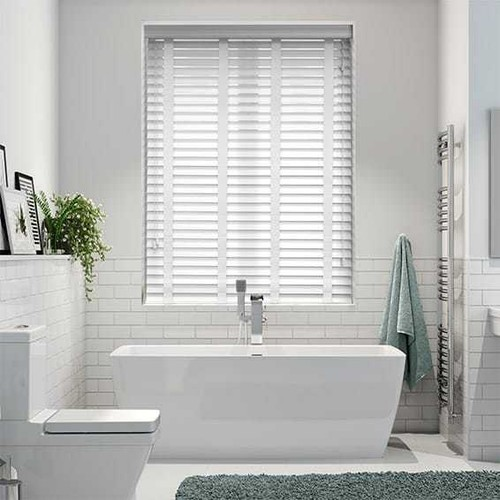 Bathroom
 Dining Room
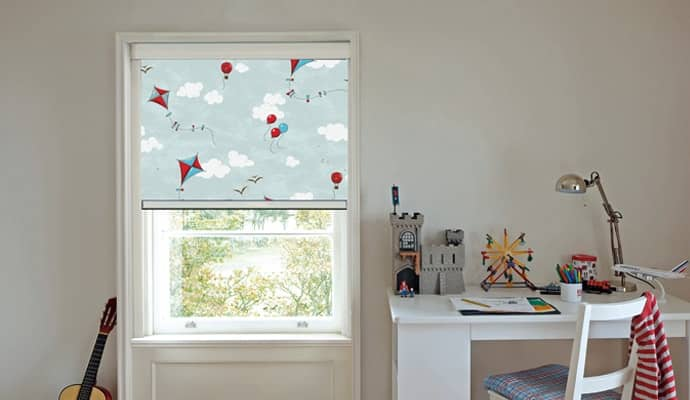 Kids Room
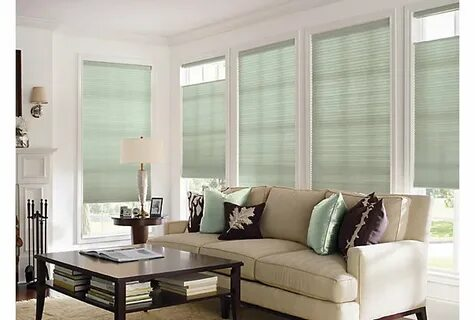 Living Room
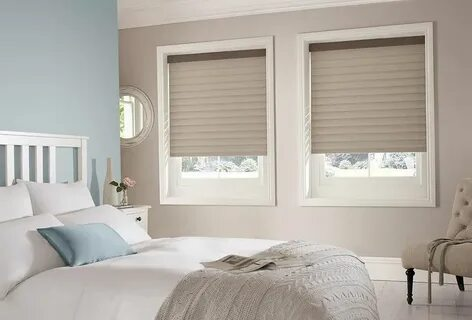 Bedroom
 Bay Window
 Conservatory Window
 Tild and Turn Window
 Bi Fold Window
 Roof of Skylight
 French Door
 Sliding Door
Blackout Roller Blinds vs Blackout Curtains: Which Is Better?
- by Mariam Labadze
 When the goal is a completely dark room, the choice between blackout roller blinds and blackout curtains is one of the most common dilemmas in UK home furnishing. Both products promise to block light, both are widely available, and both have their dedicated advocates. But they differ significantly in how they achieve darkness, what they look like, and how practical they are in everyday use. This comparison examines both options honestly to help you decide.
How Blackout Roller Blinds Work
A blackout roller blind uses a fabric panel coated or woven to be opaque — the fabric itself blocks light transmission through the blind. The roller mechanism allows the blind to be raised completely when not needed, or lowered to cover the window fully. When fitted correctly — face-fixed with overlaps on all four sides — a blackout roller blind can eliminate a very high proportion of the light entering through the window.
The key performance factor with a blackout roller blind is not just the fabric but the installation. A poorly fitted blind with large gaps around the edges will not perform significantly better than a standard dimout blind, regardless of the fabric specification. But a well-fitted blackout roller with generous face-fixed overlaps and a pelmet above can create genuinely dark conditions even in a room facing direct sunlight.
How Blackout Curtains Work
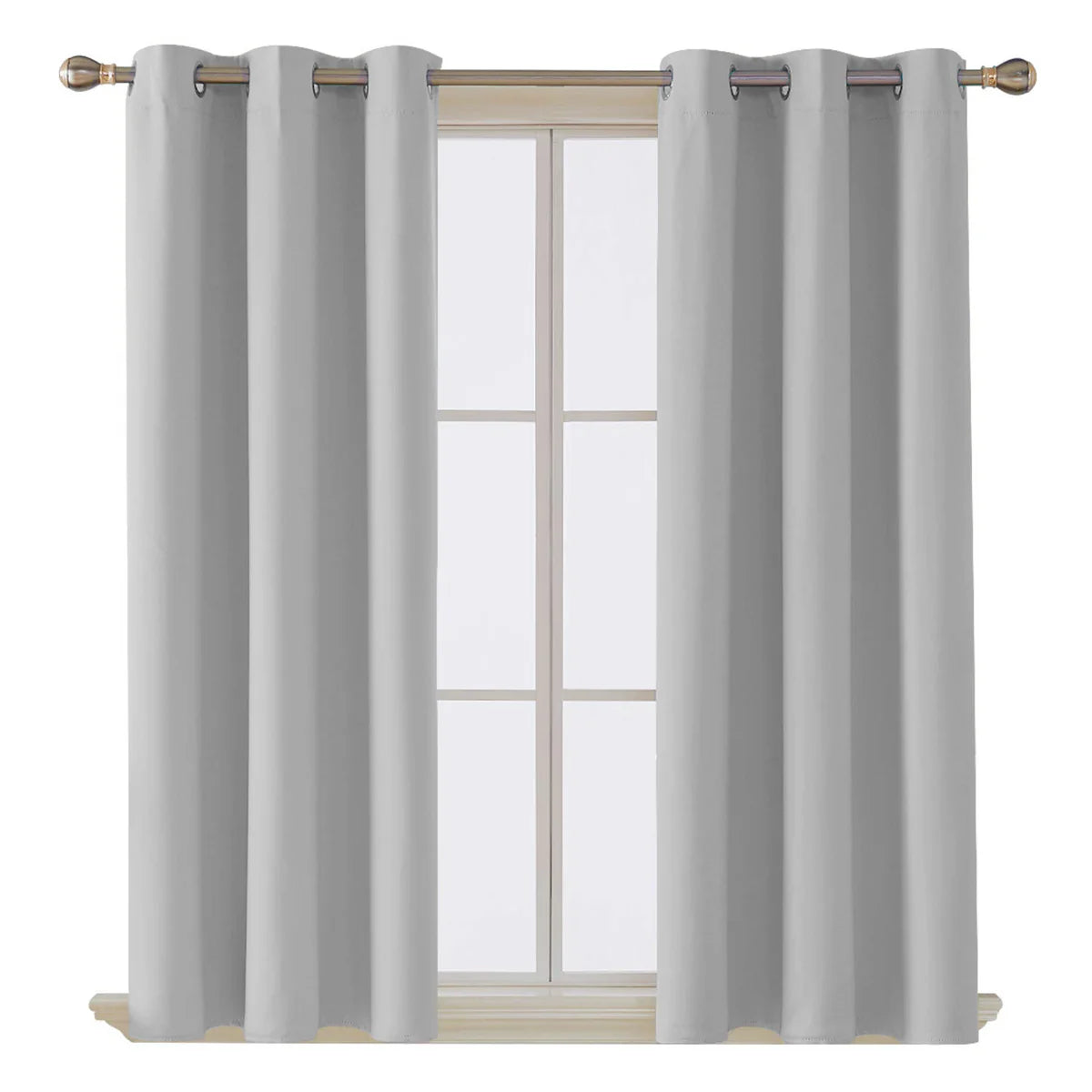
Blackout curtains use a fabric lined with a dense, opaque layer — typically a three-pass coated material — that prevents light from passing through the curtain when it is drawn. When the curtains are closed and overlap in the middle, and when the curtain pole extends far enough beyond the window that the curtains cover the wall on each side, blackout curtains can provide very effective darkening.
The performance of blackout curtains depends heavily on how they are hung. If the curtain pole is too close to the window, light enters around the sides where the curtain cannot fully wrap the window opening. If the pole does not extend far enough beyond the window, the curtains cannot be drawn wide enough when open without blocking part of the window. If the curtains do not reach the floor or the pole is too high above the window, light enters from below or above.
Light Exclusion Performance
In terms of light exclusion through the fabric itself, both high-quality blackout roller blinds and quality blackout curtains perform similarly — both can achieve near-zero light transmission through the fabric. The difference in overall room darkening performance is almost entirely determined by edge light.
Blackout roller blinds, particularly face-fixed with a pelmet, can have minimal edge light if installed correctly. Blackout curtains, however, almost always allow some light to enter at the top (above the pole), at the sides (where the curtain meets the wall), and at the bottom (if the curtain does not quite reach the floor). In a very bright room, these light gaps can be noticeable.
The verdict on darkness: In ideal conditions, both products can achieve comparable darkness through the fabric. But blackout roller blinds are generally easier to fit with minimal edge light because the fitting geometry is more contained and controllable than curtains.
Aesthetics and Interior Design
Blackout curtains have a clear aesthetic advantage over roller blinds in many interior settings. Full-length curtains add a sense of luxury, warmth, and soft furnishing richness that a roller blind — however functional — cannot replicate. In living rooms, master bedrooms, and formal dining rooms, curtains remain the more conventionally 'finished' window treatment.
Blackout roller blinds are cleaner and more minimal, and suit contemporary and Scandinavian-influenced interiors particularly well. When raised, a roller blind is almost invisible — a clean, uncluttered window that does not dominate the room. Curtains, when drawn back, create a frame around the window that is visually prominent whether that is desirable or not.
Practical Considerations
Blackout roller blinds are generally easier to maintain than curtains. They can be dusted or wiped in place, whereas curtains require periodic removal and washing or dry cleaning. Roller blinds are also significantly cheaper to purchase and install than quality blackout curtains for the same window size. A pair of made-to-measure blackout curtains with appropriate lining, heading tape, and a suitable pole can cost three to five times more than an equivalent blackout roller blind.
Curtains, on the other hand, provide an additional layer of insulation by creating a pocket of still air between the curtain and the window — a thermal advantage that roller blinds do not offer. In an older property with draughty windows, thick blackout curtains can make a perceptible difference to room temperature in winter.
The Case for Using Both
Many homeowners — particularly in bedrooms — choose to use both a blackout roller blind and curtains together. The blackout blind provides the light exclusion performance, while the curtains provide the thermal insulation, visual softness, and sense of occasion. This layered approach is the most effective and versatile window treatment for a bedroom, though it does come at a higher combined cost. For any room where both warmth and darkness are priorities, consider pairing a total blackout roller blind with lined curtains as a complementary layer.
Final Recommendation
Choose a blackout roller blind if you prioritise darkness performance, minimal visual clutter, lower cost, and ease of maintenance. Choose blackout curtains if you prioritise aesthetics, thermal insulation, and the warm, fabric-rich look that curtains provide. For the most effective overall solution, use both — the roller blind for darkness, the curtains for warmth and style.