Skip to content


 Vertical Blinds
 Roman Blinds
 Roller Blinds
 Venetian Blinds
 Day and Night Blinds
 Skylight Blinds
 Children
 Wooden Blinds
 Curtains
 Blinds Accessories
 White
 Yellow
 Gold
 Green
 Grey
 Pink
 Orange
 Animal
 Floral
 Geometric
 Striped
 Motorized Day and Night Blinds
 Motorized Roller Blinds
 No Drill Rollers
 Perfect Fit Wooden
 Perfect Fit Metal
 Thermal Blinds
 Better Sleep Blinds
 Cordless Blinds
 No Drill Blinds
 Blackout Blinds
 Waterproof Blinds
 Easy Wipe Blinds
 Taped Blinds
 Conservatory
 Office
 Kitchen
 Bathroom
 Dining Room
 Kids Room
 Living Room
 Bedroom
 Bay Window
 Conservatory Window
 Tild and Turn Window
 Bi Fold Window
 Roof of Skylight
 French Door
 Sliding Door
Kitchen Roman Blinds: Fabric Folds in a Room That Makes Grease and Steam
- by Mariam Labadze
Kitchen roman blinds belong over a sink and nowhere near a hob. The fabric is the whole appeal and the whole problem: soft folds in the one room that makes grease, steam and naked flame, hanging in a space otherwise built from wipe-clean surfaces.
The useful question is not whether you like the look. It is where the window sits. Get that right and kitchen roman blinds outlast the paint on the units.
Key Takeaways
-
The hob decides this. Fabric within arm's reach of a gas burner is a fire risk, and no lining changes that.
-
Over a sink, usually fine. Steam is manageable. A flame on the next worktop is not.
-
Mount outside the recess. An outside fit holds the stacked folds above the tiles and keeps the bottom bar clear of the counter.
-
Pick a lining you can remove. Grease settles on the lowest fold first, and a washable lining is the difference between cleaning and replacing.
-
Twice a year, down they come. Kitchen roman blinds need taking off the brackets to clean properly, which a roller never does.
Where the Window Sits Decides Everything
Stand where you cook and stretch out an arm. If the window falls inside that arc, you are choosing the wrong product, and no fabric upgrade rescues it. If it sits on another wall, across a galley or behind a sink run, the risk drops to ordinary.
Look at the worktop next. A sill at counter height puts the bottom of the blind in the path of everything that happens there: wet hands, a kettle plume, a chopping board shoved back out of the way. Across the kitchen roman blinds range the fabrics vary, but the geometry of your room does not, and geometry decides this one.
Extraction is the third factor. A working extractor moves most cooking vapour out before it crosses the room. Without one it goes everywhere, and fabric is the thing that holds it.
Over the Sink: Usually Fine
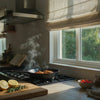
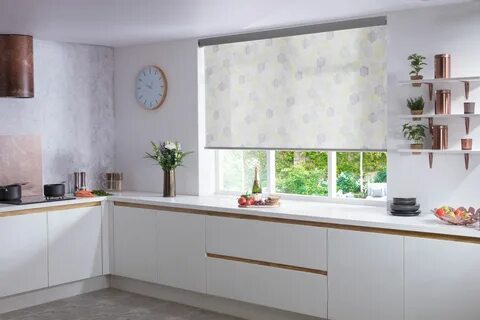
This is the window kitchen roman blinds were made for. It is wet rather than hot, the splashes are water, and water dries without leaving anything behind. Steam from a tap rises and disperses, and a lined blind handles it the way a bathroom one does.
The argument for fabric here is softness. A kitchen is tiles, laminate, steel and glass, and the window is often the only place you can put something that is not hard. Made to measure roman blinds give you a pleat line and a weight of cloth a flat roller cannot.
Two caveats. Fit the blind so the bottom bar clears the tap when fully lowered, because a bar resting on a mixer wears a mark into the fabric. And if the sink window is your main ventilation, the blind spends most of its life pushed up, so buy a fabric whose stacked folds you like.
Near the Hob: Choose Something Else
Fabric hanging within arm's reach of a gas burner is a fire risk. That is the plain version and it is enough. Loose cloth, a draught from an open window and a ring left burning are a bad combination, and the usual caution about keeping tea towels away from the hob applies to anything else made of fabric.
Grease is the slower problem, and it affects electric hobs too. Cooking vapour carries fat, fat lands on the nearest cold surface, and kitchen roman blinds present it a stack of folds that catch and hold it. Within a year the lowest folds go yellow and stay yellow. Washing helps once. It does not help the fourth time.
The alternative is a flat fabric with nothing to catch in. A kitchen roller blinds fabric rolls away to a tube, so a damp cloth reaches the whole surface in one pass.
Where the window takes splashes as well as vapour, the waterproof blinds option is the same category people buy as waterproof bathroom blinds, for the same reason. Slats are the other answer: a venetian blinds set in aluminium wipes clean and absorbs nothing, trading softness for a surface that shows fingerprints.
Mounting Clear of the Worktop
Fit outside the recess. In a kitchen this is close to a rule, for three reasons that have nothing to do with looks.
An inside fit stacks the folds within the reveal, collecting whatever rises off the counter below. Outside the recess the stack sits on the wall, out of the steam path. Second, an inside fit is cut narrower than the opening, leaving a gap at each side that usually lines up with tiling you would rather cover. Third, plenty of kitchen sills are used as shelves, and an outside fit lets kitchen roman blinds finish above whatever stands there.
Mount the bracket high, 10 to 15 cm above the reveal if the ceiling allows, and the folds clear the glass entirely when the blind is up. In a rented kitchen where you cannot drill tile, a no drill blinds fixing clips to the frame, though the clip puts the blind back inside the opening and you lose the outside-fit advantage.
Cleaning Kitchen Roman Blinds
Plan on taking them down twice a year. This is the maintenance cost nobody mentions at the point of sale, and it is the strongest argument for a roller in a kitchen that cooks hard.
A roman blind is a fabric panel, rods in pockets, cords through rings, hanging off a headrail. Dust vacuums off while it hangs. Grease does not. For that the blind comes off the brackets, the rods come out, and you are sponging a large wet panel and waiting for it to dry flat. It is an afternoon.
Buy accordingly. A removable lining turns a ruined blind into a replaced part. Bathroom roman blinds face a milder version of the same job, damp rather than fat, and people are often surprised that a kitchen is the harder room. It is the grease that does it.
Kitchen roman blinds are a fair choice for the right window. They are simply not a fit-and-forget one.
Frequently asked questions
Are roman blinds suitable for kitchens?
Over a sink or on a wall away from the hob, yes. Within arm's reach of a burner, no: fabric near a naked flame is a risk, and cooking vapour leaves grease in the folds that washing only shifts once or twice. Fit outside the recess so the stack sits clear of the worktop, and choose a lining you can remove. Kitchens that fry daily are better served by a flat roller.
How do you clean roman blinds?
Vacuum them in place with a soft brush attachment every few weeks, working down each fold. For anything greasier, take the blind off its brackets, slide the rods out of their pockets and sponge the panel, then dry it flat before rehanging so the folds set straight. Check the care label first, because some linings shrink. Twice a year is a realistic schedule in a kitchen.
How do you fit roman blinds outside recess?
Measure the width you want covered, adding an overlap of around 7 to 10 cm at each side of the opening, then measure the drop from the bracket position to where the bottom bar should finish. Mount the headrail above the reveal, high enough that the stacked folds clear the glass. Check the brackets sit level across the full width before you tighten them, since a roman blind shows any droop immediately.