Skip to content


 Vertical Blinds
 Roman Blinds
 Roller Blinds
 Venetian Blinds
 Day and Night Blinds
 Skylight Blinds
 Children
 Wooden Blinds
 Curtains
 Blinds Accessories
 White
White Yellow
 Gold
Gold Green
Green Grey
Grey Pink
Pink Orange
 Animal
 Floral
 Geometric
 Striped
 Motorized Day and Night Blinds
 Motorized Roller Blinds
 No Drill Rollers
 Perfect Fit Wooden
 Perfect Fit Metal
 Thermal Blinds
 Better Sleep Blinds
 Cordless Blinds
 No Drill Blinds
 Blackout Blinds
 Waterproof Blinds
 Easy Wipe Blinds
 Taped Blinds
 Conservatory
 Office
 Kitchen
 Bathroom
 Dining Room
 Kids Room
 Living Room
 Bedroom
 Bay Window
 Conservatory Window
 Tild and Turn Window
 Bi Fold Window
 Roof of Skylight
 French Door
 Sliding Door
Roller Blinds vs Roman Blinds: Which Suits UK Homes Better?
- by Mariam Labadze
 The previous comparison between these two formats covered the style and function differences in general terms. This article asks a more specific question: given the particular characteristics of UK homes — the window types, the property ages, the climate, the rental market, the planning constraints — which format is actually better suited to the British domestic context?
The answer isn't the same as the general comparison. UK homes have specific features that make one format more practical in situations where, in a different housing context, the other might win. Understanding those features produces more useful guidance than a generic comparison that could apply to any home anywhere.
[toc]
The UK Housing Stock: Why It Changes the Comparison
UK homes are not a uniform category. The property stock spans six centuries of construction, with each era producing a distinct set of window types, room proportions, wall thicknesses, and architectural character that affects which window treatment formats work and which don't.
A Victorian terraced house in Leeds, a 1970s semi-detached in Surrey, a 1990s new-build flat in Bristol, and a converted Victorian warehouse apartment in Manchester all have windows with fundamentally different characteristics — different frame materials, different reveal depths, different proportions, different relationships to the rooms around them. A window treatment recommendation that's correct for one is likely wrong for another.
Victorian and Edwardian Properties
The dominant housing type in most UK towns and cities. Typically characterised by timber sash windows — double-hung vertically sliding frames — with deep reveals, generous window proportions, and the architectural detail of cornices, architraves, and skirtings that defines the period interior.
Sash windows present specific challenges for both blind formats. The sliding mechanism of a sash window means that conventional bracket-mounted blinds need to be raised to clear the window before it can be opened — which is straightforward for roller blinds with a compact raised profile but can be awkward for Roman blinds where the stacked fold structure takes up more of the reveal height. In properties with shorter reveals between window head and ceiling — common in ground-floor Victorian rooms with high ceilings where the reveal above the window is generous, but less so in upper floors — the Roman blind's stacked position when raised can intrude on the reveal space and require the blind to be mounted on the wall above the reveal rather than within it.
The deep reveals of Victorian windows, however, suit Roman blinds aesthetically — a fabric panel within a deep reveal creates a recess effect that frames the fabric and gives the treatment a quality that shallow-reveal windows don't provide. The reveal creates a natural picture frame for the Roman blind fabric, which reads as an intentional design element in a way that a flat roller blind in the same reveal might not.
1930s and Post-War Semis
The Metroland and post-war semi-detached house that represents a significant proportion of UK suburban housing stock. These properties typically have casement windows — side-opening hinged frames — in timber, or in replacement UPVC in properties that have been updated since the 1980s.
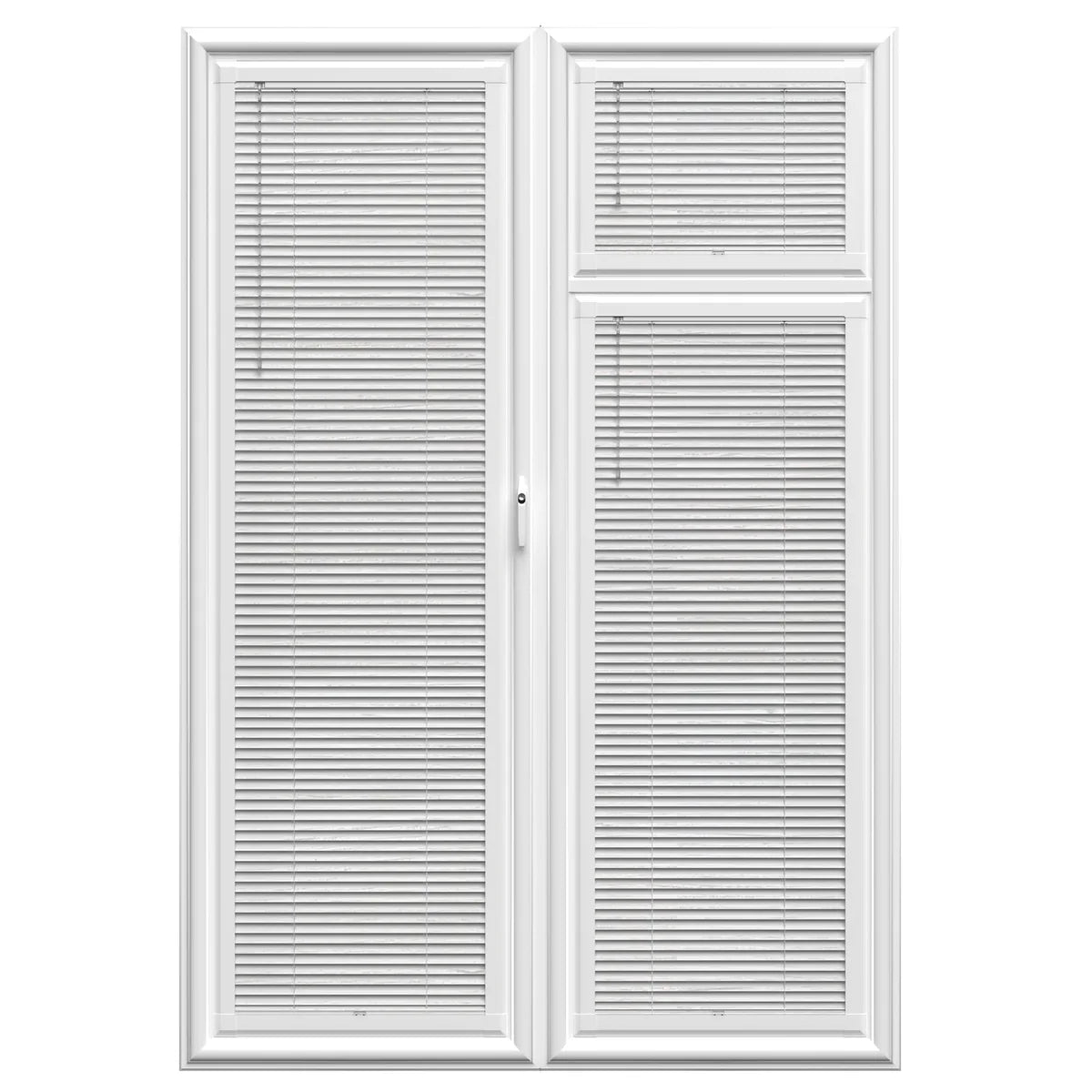
For properties with replacement UPVC casement windows, the perfect fit no-drill blind system is directly relevant — the perfect fit roller blind in a UPVC clip frame is the most appropriate treatment for these windows in functional terms, and one that Roman blinds cannot offer because the format doesn't exist in perfect fit mounting. In 1930s properties with original timber casements that haven't been replaced, the choice between formats is primarily aesthetic.
The lower ceiling heights typical of 1930s and post-war semis — often 2.3 to 2.5 metres compared to Victorian first-floor ceilings of 3 metres or more — affect how Roman blinds read when raised. In rooms with lower ceilings, the stacked Roman blind can feel like it occupies a disproportionate share of the wall height above the window when raised, particularly in combination with curtains. Roller blinds in these proportions are less intrusive in the raised position.
1960s to 1980s New-Build Housing
This era produced a range of housing types from tower block flats to low-rise estates, many with large, horizontally proportioned windows that reflect the modernist planning principles of the period. These windows — often wide casements or fixed lights with narrow opening sections — have shallow reveals, aluminium or steel frames in the original form, or UPVC in replacement form.
The wide, horizontal proportions of 1960s to 1980s windows suit roller blinds considerably better than Roman blinds. A wide roller blind on a horizontal window is proportionally appropriate and mechanically straightforward. A wide Roman blind on the same window has the dowel-sag issues at width that compromise the lowered panel's appearance, and the stacked folds of a raised Roman blind on a wide, shallow window can look disproportionately heavy relative to the window's horizontal character.
1990s and Later New-Build Properties
Contemporary new-build properties and flats — the housing type that has been delivered at scale in the UK since the 1990s — are characterised by UPVC frames, shallower reveals, standardised window proportions, and often larger glazed areas than earlier eras.
For contemporary new-build windows, the perfect fit system is the most technically appropriate mounting approach — UPVC glazing beads are designed to accept clip systems, and the perfect fit blind provides edge-to-edge coverage that bracket-mounted alternatives don't. Since Roman blinds aren't available in perfect fit format, new-build properties with a functional brief — and most new-build properties are bought or rented with a primarily functional window treatment brief — default logically to roller or honeycomb blinds in the perfect fit system.
The UK Rental Market: A Decisive Factor
Approximately 4.6 million households in the UK rent privately — around 19 percent of all households. For renters, the window treatment question has constraints that don't apply to homeowners: landlord permission for fixings, deposit liability for holes and marks, and the practical requirement that blinds can be removed and reinstalled at a new property.
Both formats have fixing requirements, but the consequences of those fixings differ significantly.
Roller Blinds in Rented Properties
Standard roller blinds require bracket fixings above the window — two to three screws into the wall or ceiling. These fixings leave holes that must be filled and decorated on exit, which creates deposit risk in properties where the landlord or letting agent inspects on checkout.
The perfect fit no-drill roller blind eliminates this entirely. In a property with UPVC windows — which covers the majority of privately rented properties in the UK, given that rental housing stock skews heavily toward post-1980s properties — a perfect fit roller blind clips into the glazing bead with no fixings to the surrounding wall or ceiling. On exit, the clips disengage, the blind comes away cleanly, and the window is in exactly the condition it was found. No holes, no filler, no repainting, no deposit deduction.
This is a decisive practical advantage of the roller format in the rental context that has no equivalent in Roman blinds.
Roman Blinds in Rented Properties
Roman blinds require headrail fixings, a cord cleat or lock fixing adjacent to the window, and typically a batten or support at the bottom of the blind if floor-length treatments are used. In a rented property, these fixings accumulate as deposit risks — each fixing point requires filling and touching up on exit.
Renters choosing Roman blinds in a rented property are accepting either the deposit risk or the limitation of using only existing fixing points — which may not be ideally positioned for the window treatment they want. Neither constraint applies in the same way to perfect fit roller blinds in UPVC properties.
For UK renters specifically, the roller blind — particularly in the perfect fit no-drill format — is the more appropriate format for the majority of rental situations. Roman blinds are a format for homeowners who can fix freely, or for renters with landlord permission and acceptance of the fixing implications.
The UK Climate: Light, Seasons, and Energy
The UK climate creates specific window treatment challenges that differ from those of sunnier European climates or colder continental climates.
Summer Light Without Summer Heat
The UK summer — particularly from May to August in the south of England — produces long days with early sunrises and late sunsets but relatively modest peak temperatures compared to continental Europe. The window treatment challenge is managing the extended daylight hours, particularly the early morning light that begins before 4am at midsummer in northern regions, without the need for the heavy solar heat management that southern European climates require.
For this challenge — long light days, modest heat, early sunrise — blackout roller blinds in perfect fit frames or honeycomb blackout blinds are the functionally appropriate response. The edge-to-edge coverage of the perfect fit system eliminates the early morning light paths at the sides that defeat any bracket-mounted blind when the sun is at a low angle. Roman blinds, which cannot achieve this edge-to-edge coverage in any mounting format, are at a disadvantage in the bedroom blackout application that the UK summer makes critical.
Winter Darkness and Thermal Performance
The UK winter produces the opposite challenge — short days, persistent cloud, and the desire to maximise natural light during the limited daylight hours while managing heat loss through the glass at night.
Roman blinds in heavy fabrics — particularly interlined or thermally-backed treatments — add meaningful thermal mass to the window. A heavily interlined Roman blind raised during daylight hours to admit maximum winter light and lowered at dusk to provide a fabric barrier against cold glass is a thermally rational approach in a living room or dining room.
Honeycomb blinds in perfect fit format provide better insulation than Roman blinds at the glass itself — the sealed cellular structure traps air in a way that no flat fabric achieves — but they don't provide the additional thermal mass of a heavy Roman blind treatment combined with curtains. In rooms where layered thermal treatments are wanted for winter comfort, a Roman blind or heavy curtain combination delivers more than any single blind format.
For the UK's cold, dark winters specifically, the choice between formats for thermal reasons depends on the room and the approach: perfect fit honeycomb for bedroom thermal management at the glass, Roman blind or heavy curtain layering for living room warmth and atmosphere.
Condensation
UK homes suffer from condensation more acutely than many European equivalents, partly because of the housing stock's age and varying levels of insulation, partly because of the climate's damp character, and partly because of heating patterns that create significant temperature differentials between room air and window surfaces.
Condensation forms where warm humid air meets a cold surface — most commonly on the glass itself and on any blind surface that sits between the warm room air and the cold glass. Blinds mounted in front of the glass — whether roller or Roman — create a pocket of cool air between themselves and the glass where condensation readily forms. Blinds mounted close to or within the frame reduce this pocket.
For condensation management, the perfect fit system sits within the frame and eliminates the cool air pocket by placing the blind at the glass. Conventional bracket-mounted roller blinds and Roman blinds both create the air pocket to varying degrees — the Roman blind's greater projection from the wall (because the multiple fabric layers are thicker than a rolled fabric) can create a slightly deeper pocket in some installations.
In UK homes with persistent condensation issues — north-facing rooms, properties without double glazing, rooms with inadequate ventilation — the perfect fit format addresses the condensation problem more completely than any bracket-mounted alternative, regardless of the fabric.
UK Window Proportions: Vertical vs Horizontal
British residential architecture has generally favoured vertically proportioned windows — windows that are taller than they are wide — in contrast to the more horizontally proportioned fenestration of some Continental European building traditions. This preference is evident from the tall sash windows of Victorian terrace housing through to the vertically proportioned casements of 1930s and post-war semis.
Vertically proportioned windows suit both blind formats, but they suit Roman blinds particularly well. The folded stack of a raised Roman blind on a tall, narrow window occupies a proportionally appropriate share of the overall window height — perhaps 15 to 20 percent when fully raised — in a way that reads as balanced rather than heavy. On a wide, shallow horizontal window, the same raised stack can feel disproportionate.
The vertical emphasis of most UK residential windows is therefore a mild advantage for Roman blinds in terms of the raised position's aesthetic. Roller blinds suit both proportions equally because the raised position is minimal in either case.
Planning Constraints and Listed Buildings
A specific feature of the UK context with no direct equivalent in most other countries: the planning permission system and listed building consent requirements.
Properties in conservation areas and listed buildings — a significant portion of the UK's period housing stock — are subject to planning restrictions on alterations to their external appearance. Window treatments visible from the street can fall within these restrictions, particularly where significant external alterations are involved.
Most standard blind installations — roller or Roman — are interior fittings that don't require planning consent. However, installations that are visible from outside and that change the property's external appearance — particularly in listed buildings or conservation areas — may require listed building consent or conservation area approval depending on the specific local planning authority's interpretation.
The practical implication for this comparison is minor — neither format requires planning permission under normal circumstances — but for properties in conservation areas, the external appearance of window treatments visible from the street is worth considering. A Roman blind in a period-appropriate fabric visible through a sash window is typically more sympathetic to period architecture than a bright white roller blind. Local planning officers in conservation areas rarely object to either, but the Roman blind's association with period property aesthetics gives it a marginal contextual advantage in these settings.
The UK's Dominant Room Types: How They Map to Each Format
The British Front Room
The formal or semi-formal sitting room — distinct from the casual family room or kitchen-diner — remains a feature of many UK homes despite the open-plan trend of the past two decades. This room, used for receiving guests and for special occasions, has a design brief that favours quality materials and considered window treatments.
Roman blinds in quality fabrics — particularly in combination with curtain panels — suit the British front room better than any other blind format. The textile richness, the decorative raised position, and the ability to use furnishing fabrics that connect the window treatment to the room's upholstery and soft furnishings are all aligned with the front room's design ambitions.
A roller blind in a front room is not wrong — but it positions the room's window treatment as a functional element rather than a designed one, which may not match the room's intent.
The Open-Plan Kitchen-Diner
The predominant room type added to UK homes since the 1990s through extensions and internal reconfigurations. The open-plan kitchen-diner creates a single large space with different functional zones — the cooking area, the dining area, and often a casual seating or family room zone — all visible simultaneously.
Window treatments in an open-plan kitchen-diner need to work across this full range of activities: practical and cleanable near the kitchen, more considered and domestic in the dining zone, appropriately relaxed in the family seating area. In a single open space, this creates a tension that neither format resolves perfectly on its own.
The most common and most successful approach in UK open-plan kitchen-diners is roller blinds throughout — consistent across all windows, easy to clean near the kitchen, and a neutral background that doesn't compete with the room's activity. Where a more considered treatment is wanted in the dining zone specifically, a Roman blind on the dining area window — away from the kitchen — can add fabric quality in the zone that benefits most from it, without creating a maintenance problem in the cooking zone.
The Conservatory
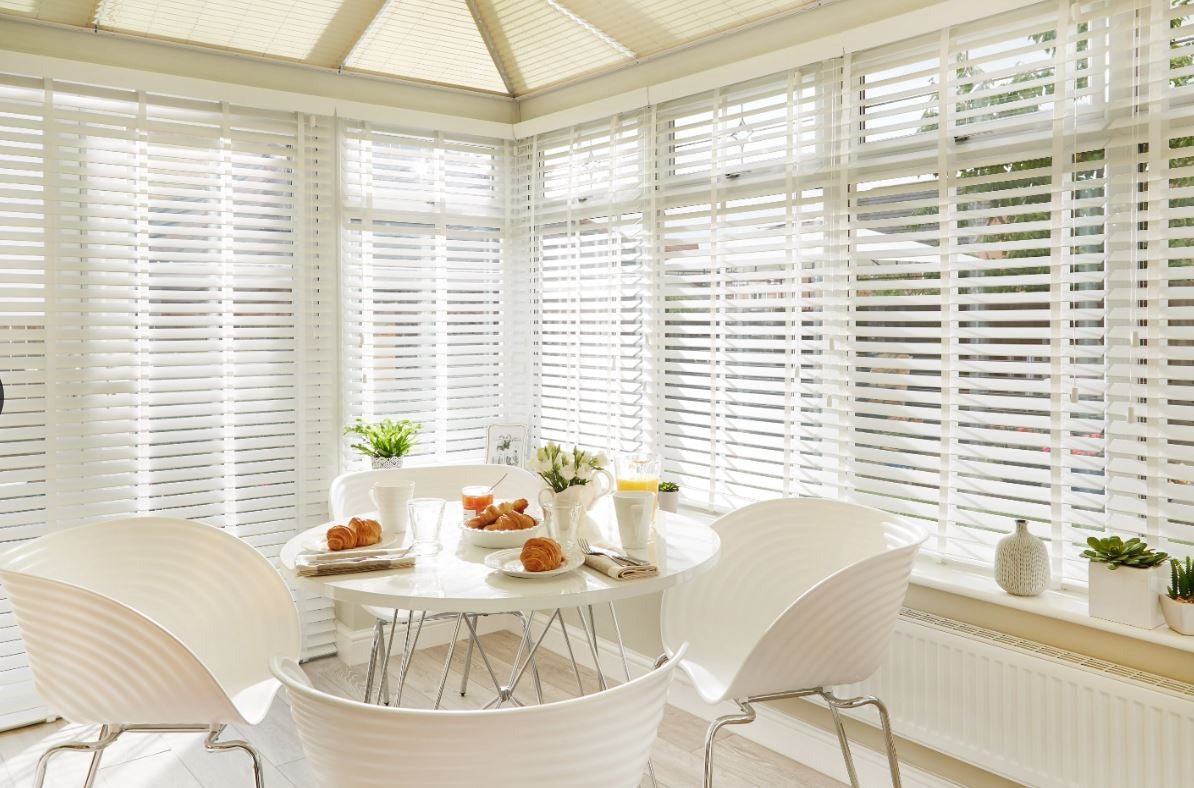
Conservatories are a distinctly British domestic addition — the UK has more of them per capita than any other country. The specific challenges of conservatory blinds — sloped glazing, roof panels, temperature extremes, humidity variation — suit perfect fit roller or pleated blinds far better than Roman blinds. The multiple glazed surfaces of a typical conservatory don't suit Roman blind hanging geometry, and the humidity levels in an unheated conservatory create a maintenance challenge that the Roman blind's multi-layer fabric construction handles poorly.
For UK homes with conservatories — which is a significant proportion of detached and semi-detached properties — the window treatment decision for that specific room consistently favours the roller or perfect fit format over Roman.
The Terraced House Bay Window
Bay windows in Victorian and Edwardian terraced houses are one of the most challenging window configurations in UK domestic architecture. The three-section geometry of a typical bay — wide centre panel and two angled return panels — creates three separate window openings that need to be treated consistently while accommodating the angled junctions between sections.
Both blind formats handle bay windows by treating each section independently — a separate blind per pane — with the junctions between sections typically covered by the blind overlap or left as narrow gap lines. Roman blinds in a bay work well when the three sections are treated identically in the same fabric, creating a unified treatment across the bay that reads as a single considered element from inside and outside. The angled side panels in a bay window often have narrower reveals than the centre panel, which affects the Roman blind's proportions differently per section.
Roller blinds in a bay are more mechanically straightforward — the compact headrail and minimal raised profile suit the varied reveal depths and proportions of bay window sections more adaptably than Roman blinds. For perfect fit roller blinds in a UPVC bay window, each section clips into its own frame independently and the treatment is both functionally complete and visually consistent.
Which Format Suits UK Homes Better: The Specific Answer
The question in the title has a different answer depending on which aspect of UK housing is foregrounded.
For the rental market — roller blinds decisively. The perfect fit no-drill roller blind is the format most directly suited to the UK's private rental market. No fixings, no deposit risk, complete light management, available in every opacity from sheer to blackout. Roman blinds require fixings that create deposit liability and cannot be installed without them.
For period properties in dry rooms — Roman blinds modestly. The tall, vertically proportioned windows of Victorian and Edwardian housing, combined with the deep reveals and architectural detail of period interiors, give Roman blinds the setting they need to perform at their best. The textile quality and decorative presence of the format suit period architecture more comfortably than a flat functional roller. For the front rooms, dining rooms, and bedrooms of period terraced and semi-detached housing, Roman blinds in quality fabrics are the more sympathetic and considered choice.
For new-build properties with UPVC windows — roller blinds. The perfect fit system is specific to UPVC glazing beads and delivers complete edge-to-edge coverage that no other format provides. The blackout and thermal performance of honeycomb blinds in this format addresses the UK's summer light challenge more effectively than any Roman blind installation. New-build properties, which make up a growing proportion of the UK stock, are better served by the perfect fit roller or honeycomb blind than by Roman blinds in any mounting format.
For conservatories — roller or perfect fit, always. The specific geometry and humidity challenges of UK conservatories exclude Roman blinds as a practical choice for the majority of conservatory glazing configurations.
For UK bedrooms specifically — roller blinds. The blackout performance priority created by the UK's long summer days, combined with the perfect fit system's structural edge-to-edge coverage advantage, makes roller or honeycomb blinds the more appropriate bedroom format for UK homes. Roman blinds in bedrooms are a valid aesthetic choice, but they require a supplementary blackout solution for summer performance.
The most honest answer for UK homes overall is that the two formats serve different rooms and different property types within the same housing stock, and the correct approach is to match each format to the specific room rather than applying one format throughout. Roller blinds — particularly in perfect fit format on UPVC windows — suit the functional rooms, the rental market, and the new-build stock. Roman blinds suit the principal rooms in period properties where fabric quality and decorative presence matter alongside light management.
Applied in the right rooms, both formats perform exactly as they should in the UK domestic context. Applied in the wrong rooms, neither format performs as well as the alternative would — and the UK's specific combination of property types, climate, rental culture, and architectural heritage makes those room assignments clearer than they might be in a less varied housing market.