Skip to content


 Vertical Blinds
 Roman Blinds
 Roller Blinds
 Venetian Blinds
 Day and Night Blinds
 Skylight Blinds
 Children
 Wooden Blinds
 Curtains
 Blinds Accessories
 White
White Yellow
 Gold
Gold Green
Green Grey
Grey Pink
Pink Orange
 Animal
 Floral
 Geometric
 Striped
 Motorized Day and Night Blinds
 Motorized Roller Blinds
 No Drill Rollers
 Perfect Fit Wooden
 Perfect Fit Metal
 Thermal Blinds
 Better Sleep Blinds
 Cordless Blinds
 No Drill Blinds
 Blackout Blinds
 Waterproof Blinds
 Easy Wipe Blinds
 Taped Blinds
 Conservatory
 Office
 Kitchen
 Bathroom
 Dining Room
 Kids Room
 Living Room
 Bedroom
 Bay Window
 Conservatory Window
 Tild and Turn Window
 Bi Fold Window
 Roof of Skylight
 French Door
 Sliding Door
Roman Blinds vs Roller Blinds: A Style and Function Comparison
- by Mariam Labadze
 Two of the most widely bought blind formats in the UK share almost nothing in common except that they both roll or fold away from a window when raised. Roman blinds and roller blinds operate differently, look different, suit different rooms, and appeal to different buying instincts. The overlap in the market exists because both are fabric-based, both mount above a window on a headrail, and both are available across a very wide range of price points — but the similarities end there.
The comparison matters because the two formats are genuinely not interchangeable. Choosing the wrong one for a room produces a window treatment that either underperforms functionally or looks out of place aesthetically, and in many cases both simultaneously. Understanding what each format actually is — not just what it looks like in a styling photograph — makes the choice straightforward rather than a matter of subjective preference between similar options.
[toc]
What Each Format Actually Is
Roller Blinds
A roller blind is a single piece of fabric wound onto a horizontal tube — the roller — mounted at the top of the window. The fabric unrolls from the tube as the blind is lowered and rerolls onto it as the blind is raised. The mechanism is either a spring rewind — where pulling the blind down and releasing engages a spring that retracts the fabric — or a chain-operated clutch, where pulling one side of a continuous chain lowers the blind and the other side raises it.
The fabric, when lowered, presents as a flat, uniform panel across the window. When raised, the fabric disappears onto the roller tube, which sits above the window as a cylinder of wound fabric. The blind occupies minimal space when raised — the tube diameter depends on fabric weight and window drop, but even a large roller blind raised fully is a compact, unobtrusive presence above the window.
The operating principle is as simple as any blind mechanism gets, which is partly why roller blinds are so widely used — the mechanism is reliable, the manufacturing is straightforward, and the format adapts to virtually any window size or shape through customisation.
Roman Blinds
A Roman blind is a fabric panel that folds into horizontal pleats as it's raised rather than rolling onto a tube. A series of horizontal dowel rods stitched into channels across the fabric width, combined with cords running vertically through cord rings sewn behind each dowel, create the folding structure. As the blind is raised — by pulling the operating cord — the dowels stack progressively upward, creating a series of neat horizontal fabric folds that gather at the top of the window. When lowered, the folds cascade open and the fabric hangs as a flat panel, like a roller blind, but with the weight and drape of a folded fabric rather than a tensioned flat sheet.
The result when raised is the defining characteristic of the format — a structured stack of horizontal fabric folds above the window that presents as an architectural element rather than a simple rolled mechanism. The raised Roman blind is visible and decorative. The raised roller blind is minimal and recessive. This is the core aesthetic difference, and it drives the majority of the buying decision between the two formats.
Appearance: The Most Decisive Difference
The Raised Position
The raised roller blind disappears. The tube is visible above the window, but the fabric is wound tightly around it and presents as a cylinder that most people stop noticing within days of installation. For rooms where the window should be fully open visually when the blind is raised — where the brief is maximum light and minimum intervention in the window's appearance — the roller blind's recessive raised position is a genuine advantage.
The raised Roman blind makes a statement. The stacked horizontal folds occupy the upper portion of the window reveal and are clearly present as a fabric element even when the blind is fully raised. In a dining room with floor-to-ceiling curtains, a Roman blind stacked at the top of a window adds to the layered textile quality of the treatment rather than competing with it. In a minimalist kitchen where the brief is clean surfaces and unobstructed views, the stacked Roman blind at the top of the window reads as visual clutter rather than designed richness.
The Lowered Position
Both formats present as a flat fabric panel when fully lowered. The difference is in the quality of the hang. A roller blind hangs under the tension of the weighted bottom rail and the flatness of the wound fabric — it is a precise, taut surface. A Roman blind hangs under the weight of the fabric and the dowel rods, with the inherent drape of a multiple-layer fabric construction. The Roman blind panel is softer, less taut, and has a different relationship with gravity than a tensioned roller.
In rooms where the fabric panel is the primary visual element — a bedroom, a study, a sitting room where the blind is lowered for much of the day — the quality of the lowered panel matters considerably. A quality Roman blind fabric hangs with a fullness and depth that a roller blind fabric, under tension on a tube, doesn't replicate. The Roman blind surface has the character of a fabric panel in a room; the roller blind surface has the character of a functional screen.
Fabric Selection and Pattern
This is where the two formats diverge most significantly in practice. Roller blinds use fabric that must roll cleanly onto a tube without creasing. This structural requirement excludes heavy furnishing fabrics, fabrics with significant texture or pile, loosely woven materials, and most patterned fabrics where the pattern repeat would be distorted or damaged by rolling. The roller blind fabric range, while genuinely wide, is effectively limited to flat-woven, dimensionally stable materials.
Roman blinds can be made in virtually any fabric available in the soft furnishing market. The folding rather than rolling mechanism places no restriction on fabric weight, texture, or construction — fabrics that would be completely unsuitable for a roller blind work perfectly as Roman blinds. Heavily woven textiles, velvets, linens, embroidered fabrics, fabrics with significant pattern repeats — all are available in the Roman blind format.
This fabric freedom is the reason Roman blinds are so strongly associated with designed interiors. The format can use the same fabric language as the room's upholstery, cushions, and curtains — creating a cohesive textile treatment across all surfaces simultaneously. A roller blind in the same room is necessarily in a different fabric category from the soft furnishings, which creates a visual separation between the window treatment and the rest of the room's fabric palette.
Light Control: Where Roller Wins
Opacity Range
Roller blinds cover a wider opacity range than Roman blinds at equivalent quality levels, for the same reason that the fabric range is more restricted — the materials appropriate for rolling include the densest blackout fabrics and the most transparent voile sheers, both of which hold up to rolling. The opacity spectrum from 0% to 100% light transmission is genuinely available within the roller format.
Roman blind fabric includes many materials at the light-filtering middle of the spectrum, but genuinely blackout fabrics are less common in Roman format because the additional stiffness that blackout coatings and laminates add to a fabric creates a resistance to folding that can cause the fold lines to crack over time. Blackout Roman blinds exist and work, but they require specific blackout fabrics designed for folding rather than the wider blackout fabric range available for roller blinds.
Edge Coverage
Neither format in conventional bracket mounting provides complete edge-to-edge coverage. Both hang in front of the window with unavoidable side gaps between the blind's edges and the surrounding wall. For rooms where these gaps matter — blackout bedrooms, east-facing rooms with early morning sun — a perfect fit no-drill blind in roller or honeycomb format addresses the gap problem structurally. Roman blinds are not available in perfect fit format because the folding mechanism and dowel structure are not compatible with the clip-frame system.
This is a meaningful practical limitation of the Roman blind format for blackout applications. A Roman blind, however quality its fabric and however carefully its installation, will admit light at the sides because it cannot achieve the edge-to-edge coverage of a perfect fit system. For rooms where blackout performance is the priority, the roller blind in a perfect fit frame is the appropriate format.
The Partial Position
Both formats can be set at any position between fully raised and fully lowered. The roller blind holds its partial position through the chain clutch mechanism or through spring-assisted braking. The Roman blind holds its partial position through the cord lock mechanism — a self-locking cleat or cam lock that holds the operating cord at the chosen position.
In practice, Roman blinds in partial positions display a characteristic that roller blinds don't — the lower folds of the raised fabric are visible below the stack as the blind is partially lowered. This creates a tiered effect rather than the uniform flat panel of a partially lowered roller. In rooms where the partial position is a regular daily setting — used for half the day in a set position — the Roman blind's partial-lowered appearance is worth examining in person before committing, as the tiered fold character suits some rooms and looks untidy in others.
Rooms: Where Each Format Works Best
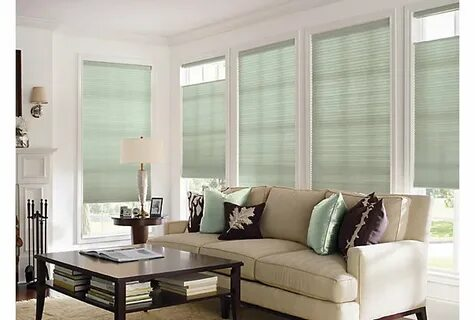
Living Rooms
Roman blinds are the most natural choice for living rooms where the window treatment is a considered part of the room's design. The fabric freedom of the format means the blind can be made in the same material language as the room — a linen Roman blind in a linen-heavy room, a heavier woven fabric in a warmer material scheme, a patterned fabric that references the room's colour palette.
For living rooms with a cleaner, more contemporary brief — minimal surfaces, neutral palette, architecture-led rather than textile-led design — a roller blind in a carefully chosen fabric sits within that language better than a Roman blind. The taut, flat surface and recessive raised position suit rooms where the window should be a light source rather than a design feature.
For south and west-facing living rooms where glare management is a daily need, the roller blind's wider opacity range is a practical advantage — the spectrum from sheer to blackout provides more precise light management than most Roman blind fabrics offer.
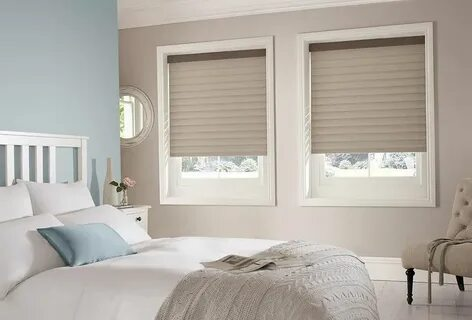
Bedrooms
Both formats work in bedrooms, with the choice driven by the aesthetic brief and the blackout requirement.
For bedrooms where the blind is a designed element — where the window treatment contributes to the room's textile character rather than performing a purely functional role — a Roman blind in a fabric that relates to the bedding, curtains, or upholstery creates a cohesive softness that a roller blind, even a beautifully made one, doesn't replicate.
For bedrooms where blackout is the primary requirement, a perfect fit roller blind or a honeycomb blackout blind delivers more complete darkness than a Roman blind — both because of the edge coverage advantage of the perfect fit system and because of the wider blackout fabric availability in roller format. If the brief is sleep quality above all else, the roller format addresses it more completely.
For bedrooms where both aesthetics and a degree of darkness matter — a main bedroom used as a retreat as well as for sleep — combining a Roman blind for daytime fabric quality with a perfect fit blackout blind within the frame is an approach that gives both simultaneously. The Roman blind provides the aesthetic; the perfect fit blind within the frame handles the darkness.
Kitchens
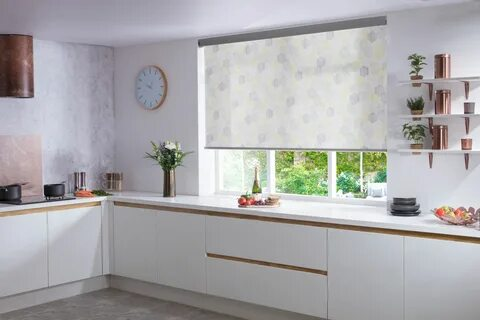
Roller blinds suit kitchens better than Roman blinds in the vast majority of cases, for reasons that are primarily practical rather than aesthetic.
The fabric folds of a Roman blind — both the fold channels that contain the dowel rods and the fabric itself — accumulate airborne grease and kitchen odours. The multiple layers of a Roman blind fold are considerably more difficult to clean than the flat surface of a roller blind, and the dowel rods create cleaning obstacles that make thorough maintenance impractical without removing the blind from its fixings.
A roller blind wipes clean from a single flat fabric surface. In a kitchen above a hob where cleaning is regular, the roller blind's flat cleanable surface is a meaningful practical advantage. For kitchen windows well away from the cooking zone — a wide rear window in a kitchen-diner — a Roman blind is more practical than it would be directly above a hob, but the cleaning advantage of the roller remains.
For kitchen windows in the perfect fit format on UPVC frames, the roller blind is the appropriate specification — Roman blinds are not available in perfect fit format, and the kitchen environment's cleaning requirements favour the simpler flat fabric surface.
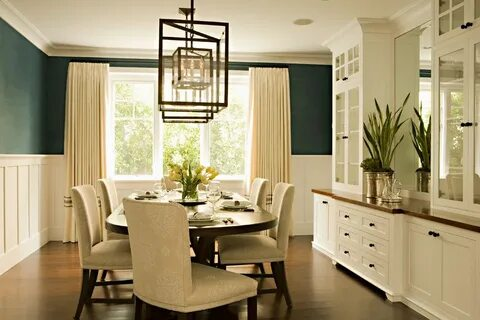
Dining Rooms
Roman blinds are the natural choice for dining rooms, where the format's decorative presence in the raised position contributes to the room's occasion rather than detracting from it. A quality fabric Roman blind above a dining room window, raised during a dinner, creates a designed architectural element at the top of the window that adds to the room's sense of care and detail.
The raised Roman blind stacked above a dining room window often reads as part of a layered window treatment — particularly when combined with curtains — in a way that suits the formal or semi-formal character of dining rooms better than any other blind format. A raised roller blind in the same room disappears, which is appropriate for rooms where disappearance is the brief. In a dining room where the window treatment should have presence even when raised, the Roman blind earns its place.
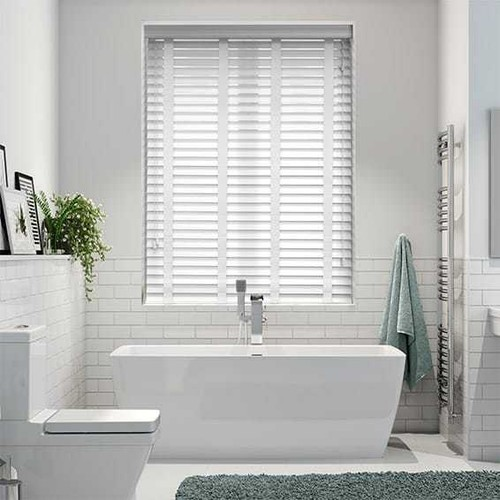
Bathrooms
Roller blinds in waterproof or moisture-resistant fabrics are the practical bathroom choice. Roman blinds with their multiple fabric layers, dowel channels, and cord system are not practical in a high-humidity bathroom environment — moisture accumulates in the fold structures, the inner fabric layers stay damp long after the surface appears dry, and the dowel channels can develop mildew in sustained steam conditions.
A waterproof roller blind in a perfect fit frame on a UPVC bathroom window is the most appropriate specification — simple, clean, moisture-resistant, and without the multi-layer construction that makes Roman blinds maintenance-intensive in wet environments.
Home Offices and Studies
Both formats suit home offices, with the choice depending on the character of the space.
A contemporary home office — designed for focused work, with a clean aesthetic — suits a roller blind. The precise flat surface, the wide opacity range for screen glare management, and the recessive raised position when natural light is wanted all suit a room used primarily for concentrated work.
A study or home library with a domestic, reading-room character — bookshelves, warmer materials, a more domestic brief than a corporate home office — suits a Roman blind. The fabric richness and the designed raised position contribute to the room's atmosphere in a way that the functional simplicity of a roller blind doesn't.
Conservatories
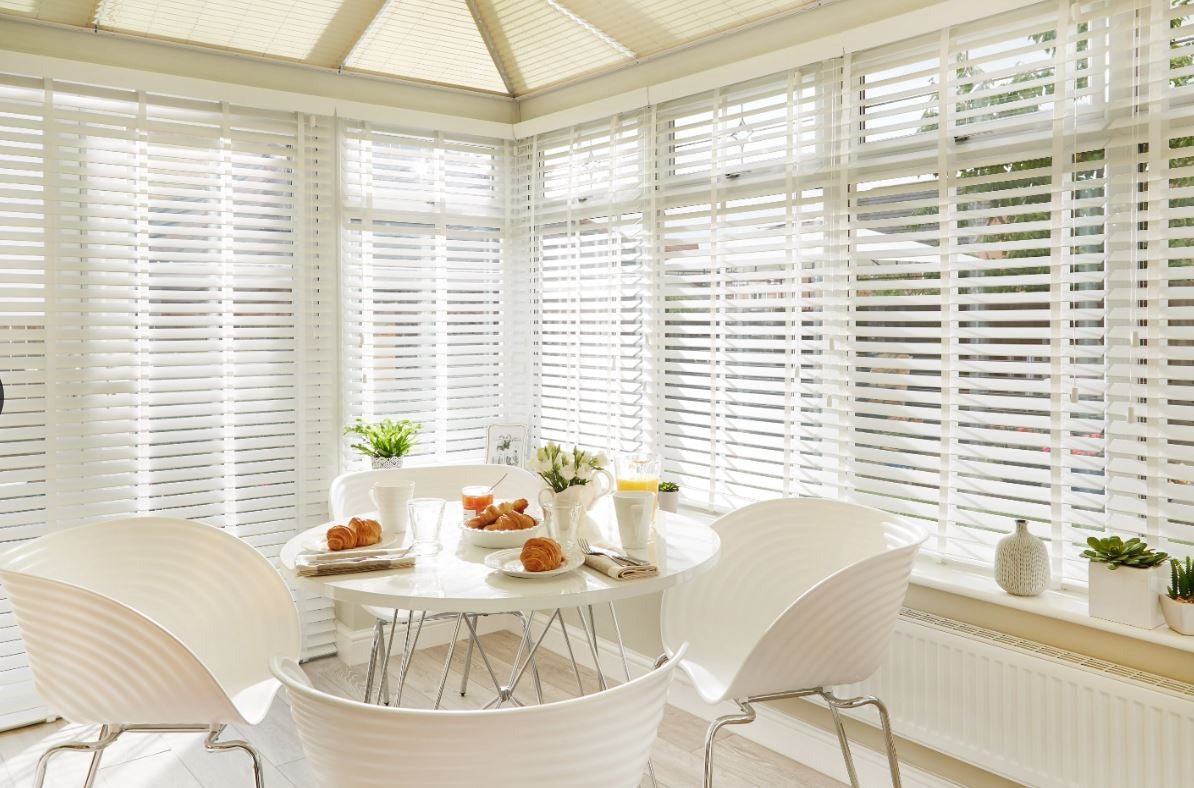
Roller blinds in the perfect fit format suit conservatory glazing better than Roman blinds. The roof panels, sloped glazing, and multiple-pane configurations of a conservatory favour blinds that sit within the frame and handle the specific geometry of conservatory glazing — which the perfect fit system addresses and Roman blinds cannot, because their folding mechanism and dowel structure require a conventional vertical window orientation to function correctly.
For vertical conservatory side windows where Roman blinds are geometrically feasible, the question becomes one of moisture and cleaning — conservatories experience humidity levels approaching a bathroom in winter, and the Roman blind's multi-layer fold structure is a maintenance challenge in these conditions. A roller or pleated blind in a moisture-appropriate fabric is the more practical choice.
Installation: Practical Differences
Fitting
Both formats use a headrail that fixes to the wall or ceiling above the window — the fixing approach is the same. The difference is in what hangs below the headrail.
A roller blind headrail is compact — the tube diameter is the limiting dimension, typically 30 to 50mm — and the bracket fixing is straightforward. The weight is modest for most standard window sizes, and the installation is achievable by one person on most windows.
A Roman blind headrail carries more components — the fabric panel, the dowel rods across its width, and the cord system with its routing guides — and is accordingly heavier and more complex to fit. Wider Roman blinds in heavier fabrics require two people at installation — holding the headrail in position for marking and fixing is difficult with one person when the blind has significant weight and width.
The cord system of a Roman blind also requires routing and tidying after installation — the operating cord drops from one side of the headrail and the cord lock or cleat needs to be positioned and fixed to the wall adjacent to the window. This is a step that roller blind installation doesn't require and that adds time and a wall fixing point.
Size Limitations
Roller blinds are practical across a very wide range of widths — from narrow 30cm kitchen windows to wide patio-adjacent windows of 2.5m or more. At very wide widths, chain-operated mechanisms are preferable to spring rewind because the spring tension required to retract heavy or wide roller fabrics becomes impractical at full blind weight.
Roman blinds have more meaningful width limitations. The dowel rod structure requires that all dowels span the full width of the blind, and at very wide widths — typically over 160 to 180cm — the dowels bow under the weight of the fabric between their cord support points, causing the fabric to sag between cords in the lowered position. Roman blinds over 140cm wide are generally specified with three cord points rather than two, which addresses the sag issue but adds mechanism complexity and cost.
For wide windows — patio doors, wide picture windows, bay window centre panels — a roller blind handles the width more naturally and at lower cost than a Roman blind of equivalent quality.
Maintenance Access
Roller blinds can usually be cleaned in place — wiping the flat fabric surface with a cloth is practical without removing the blind. For more thorough cleaning, the fabric can be unrolled fully and cleaned along its length, or removed from the tube depending on the mechanism type.
Roman blinds typically require removal from the headrail for thorough cleaning. The dowel rods must be removed from their channels before the fabric can be laundered — the rods are not machine washable — and reinsertion after washing requires patience and care to ensure all dowels are correctly positioned and the cord guides are correctly aligned before rehanging. This cleaning process is a meaningful maintenance commitment. For rooms where the blind is cleaned frequently — kitchens, children's rooms — the roller's simpler maintenance is a practical advantage.
Cost: The Genuine Price Difference
At Entry Level
Entry-level roller blinds are among the most affordable window coverings in the UK market — a simple spring-rewind roller blind for a standard casement window starts at £10 to £25. The manufacturing simplicity of the format is reflected directly in the entry-level price.
Entry-level Roman blinds start considerably higher — typically £40 to £80 for a standard window — because the fabric construction, dowel insertion, cord routing, and more complex headrail assembly are all more labour-intensive than roller blind manufacturing.
At Mid and Premium Levels
Mid-range roller blinds in quality fabrics with chain mechanisms and aluminium bottom rails range from £40 to £100 for standard window sizes. Perfect fit roller blinds sit at the upper end of this range, reflecting the clip-frame system.
Mid-range Roman blinds in quality furnishing fabrics range from £80 to £180 — the fabric is a larger proportion of the total cost than in roller blinds, and quality fabric in the weights appropriate for Roman blinds is more expensive than roller blind fabric.
At the premium level, bespoke Roman blinds in high-quality furnishing fabrics — made-to-measure from chosen fabric, hand-finished, with quality mechanisms — represent a meaningful investment, typically from £150 to £350 for a standard window. Premium roller blinds in distinctive fabrics or motorised formats are also expensive, but the format's simpler construction means the premium is lower at equivalent window sizes.
The cost difference at every level reflects the format's complexity. Roman blinds cost more to make, more to buy, more to maintain, and more to replace. The question is whether the aesthetic and material advantages justify the additional cost in the specific room and with the specific brief.
The Combination Approach
The most considered window treatments in well-designed UK interiors often use both formats within the same property — roller blinds in functional rooms where the practical advantages are decisive, Roman blinds in rooms where the fabric quality and decorative presence are worth the additional investment and maintenance.
In a single room, the formats are rarely combined — the stacked Roman blind and the recessive roller occupy different visual positions and serve different design roles that don't typically complement each other in the same window opening. The combination approach operates at the property level rather than the window level: rollers throughout the functional rooms and wherever perfect fit mounting on UPVC windows is the brief, Romans in the living spaces and dining rooms where the format's decorative quality earns its cost premium.
For rooms with large UPVC casement windows where the blackout performance of a perfect fit honeycomb blind is wanted within the frame alongside a fabric treatment outside it, a Roman blind on a pole or batten above the window — outside the frame, independent of the perfect fit system within it — is an approach that gives the blackout performance where it matters and the fabric quality where it's visible. The perfect fit blind handles the function; the Roman blind handles the aesthetic.
The Direct Verdict
Choose a roller blind when:
The priority is function — blackout, moisture resistance, cleanability, wide window coverage, or perfect fit no-drill mounting on UPVC frames. When the window should disappear when the blind is raised. When the budget favours function over decoration. When the room is a kitchen, bathroom, conservatory, or any space where practical performance outweighs aesthetic contribution.
Choose a Roman blind when:
The priority is the fabric — the ability to use a furnishing-quality material, a pattern, a texture, or a weight that isn't available in roller format. When the raised blind should have decorative presence rather than disappearing. When the room is a dining room, living room, or bedroom where the window treatment is part of a coherent textile scheme. When the window size is standard and the budget accommodates the format's higher cost.
The two formats are not competitors in the sense that one is better than the other — they are solutions to different requirements that happen to cover the same category of window opening. Identifying which set of requirements your room presents produces a clear answer in most cases. The difficulty only arises when both aesthetic quality and functional performance are equally important, and in those rooms the answer is usually to layer both — a perfect fit blind within the frame for function, and a Roman blind outside the frame for character. That combination gives neither a compromise between form and function nor a choice between them — it gives both, simultaneously and completely.