Skip to content


 Vertical Blinds
 Roman Blinds
 Roller Blinds
 Venetian Blinds
 Day and Night Blinds
 Skylight Blinds
 Children
 Wooden Blinds
 Curtains
 Blinds Accessories
 White
White Yellow
 Gold
Gold Green
Green Grey
Grey Pink
Pink Orange
 Animal
 Floral
 Geometric
 Striped
 Motorized Day and Night Blinds
 Motorized Roller Blinds
 No Drill Rollers
 Perfect Fit Wooden
 Perfect Fit Metal
 Thermal Blinds
 Better Sleep Blinds
 Cordless Blinds
 No Drill Blinds
 Blackout Blinds
 Waterproof Blinds
 Easy Wipe Blinds
 Taped Blinds
 Conservatory
 Office
 Kitchen
 Bathroom
 Dining Room
 Kids Room
 Living Room
 Bedroom
 Bay Window
 Conservatory Window
 Tild and Turn Window
 Bi Fold Window
 Roof of Skylight
 French Door
 Sliding Door
Pleated Blinds: Complete Buyer's Guide for UK Windows
- by Mariam Labadze
 Pleated blinds occupy a distinctive position in the UK window covering market. They are not the most common choice — roller blinds and Venetian blinds claim that ground — but among the people who discover them, loyalty is high. The reason is the combination of qualities they offer: a neat, structured appearance when raised or lowered, a concertina fold that compresses almost invisibly at the top of the window, and an ability to function effectively in window shapes and orientations where other blind types simply do not work.
This guide covers everything you need to know before buying pleated blinds — from how they work and what they are best suited to, through to fabric choice, measuring, and the difference between standard and top-down bottom-up configurations.
[toc]
How Pleated Blinds Work
A pleated blind is made from a single piece of fabric that is factory-folded into a series of uniform pleats — typically between 20mm and 25mm deep — and strung on a cord system that allows the fabric to compress into a stack at the top of the window or expand to cover the full drop. The result when raised is a compact, tidy bundle of folded fabric that takes up considerably less space than a Roman blind and has no visible roller mechanism.
The fabric is held in shape by the tension of the cords running through it, which means pleated blinds maintain their crisp fold lines throughout their life provided the fabric is handled with reasonable care. Unlike Roman blinds, which require stitched horizontal rods to hold their shape, pleated blinds are self-supporting — the pleat structure is built into the fabric itself.
Where Pleated Blinds Excel
Roof Windows and Skylights
This is the application where pleated blinds genuinely have no competition. Velux windows and similar roof lights present a challenge that most blind types cannot meet: the blind must function at an angle, often close to horizontal, without the fabric sagging away from the glass or the mechanism failing under the weight of the material. Pleated blinds designed for roof windows use a top and bottom rail system with cords tensioned against both ends of the window frame, which holds the fabric flat against the glass regardless of the angle. Pleated blinds for skylights are the closest thing to a universal solution for this notoriously difficult window type.
Conservatories and Sloped Glazing
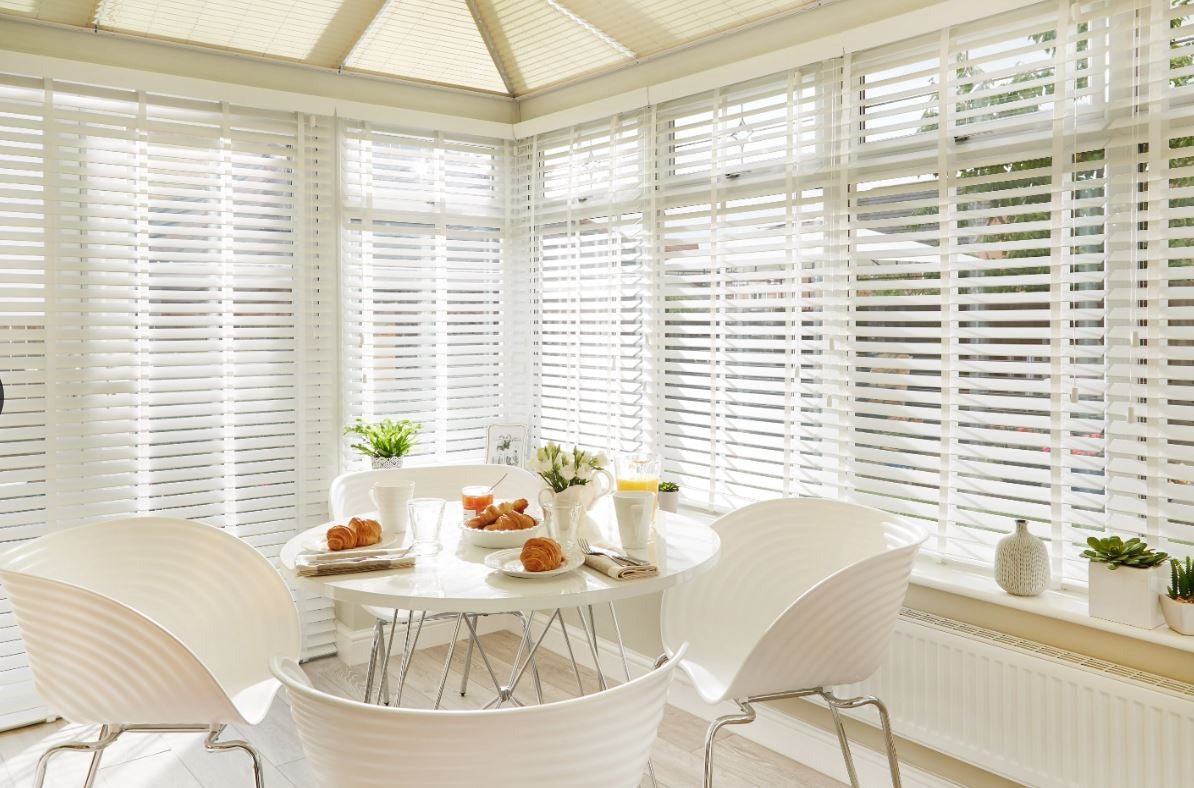
The same tensioned-cord system that makes pleated blinds effective in roof windows also makes them the standard recommendation for conservatory roofs and sloped glazing sections. The fabric follows the pitch of the glass and can be positioned at any point along the slope, which gives genuine control over light and heat — particularly valuable in south-facing conservatories where solar gain can make the space uncomfortable in summer.
Standard Vertical Windows
For conventional upright windows, pleated blinds work well and look elegant. The compact stack when raised — often just 5 to 8cm deep depending on the drop of the blind — preserves more of the view and the light when the blind is up than a Roman blind of equivalent size. For windows in rooms with low sills or where maximum glazed area when the blind is raised is a priority, this is a practical advantage.
Fabric Options: Light-Filtering vs Blackout
Pleated blind fabrics fall broadly into two categories. Light-filtering fabrics diffuse daylight without blocking it — the room remains bright and the fabric glows pleasantly when backlit by sunlight, but the view through the fabric is obscured and privacy is maintained. These are the most popular choice for living areas, kitchens and offices where natural light is wanted but direct glare is not.
Blackout pleated fabrics use a coated or foam-backed construction that blocks light transmission through the material. For bedrooms and nurseries, a blackout pleated blind in a perfect fit format — which eliminates the side gaps that undermine standard blackout roller blind installations — delivers reliable darkness. The pleated format in blackout fabric is slightly less common than a roller, but the result is a softer, more textile appearance that suits rooms where the aesthetic of a roller blind feels too functional.
Top-Down Bottom-Up: What It Is and When to Use It
Standard pleated blinds operate from the top of the window downward — the fabric lowers from the headrail to cover the glass. A top-down bottom-up (TDBU) configuration adds a second rail at the bottom, allowing the blind to be opened from either end. The fabric can be lowered from the top while remaining closed at the bottom, which gives privacy at eye level while admitting light from above. Alternatively, the blind can be raised from the bottom while the top section remains covered — useful for rooms where privacy at the lower portion of the window is the main concern.
TDBU pleated blinds are particularly effective in ground-floor rooms where privacy from the street is needed but natural light is also important. The ability to admit light through the upper portion of the window while keeping the lower section covered removes the need to choose between light and privacy — both are available simultaneously.
Measuring for Pleated Blinds
For a recess fit, measure the width of the recess at the top, middle and bottom, and the height on both sides. Use the smallest width measurement and deduct 10mm to allow the blind to operate without catching on the sides. For the drop, use the full height of the recess.
For face fixing — used when the window has no suitable recess, or for skylight and conservatory applications — measure the area you want to cover and add an overlap on each side to prevent light bleed. For roof window pleated blinds, the measurement process differs from vertical windows; the blind is measured to the inner dimensions of the window frame, and the manufacturer supplies a frame to tension the cords against.
Pleated Blinds vs Cellular Honeycomb Blinds
The most common comparison made with pleated blinds is against honeycomb blinds, which use a similar folded fabric construction but with a cellular cross-section rather than a simple pleat. Honeycomb blinds trap air within the cells, providing insulation that pleated blinds — with their single-layer construction — do not offer. For rooms where thermal performance matters alongside light control, honeycomb is the better performing product. For rooms where insulation is less of a concern and a crisper, more structured appearance is preferred, pleated blinds are the more straightforward choice. Both are available in blackout and light-filtering fabrics, and both work effectively in skylights and conservatories.
What to Check Before Ordering
Confirm whether the blind is for a vertical window, a roof window or a sloped surface — the mounting system and fabric tension differ between applications, and a blind specified for one type will not function correctly in another. Check the minimum stack height: on shorter windows with a small drop, the compressed fabric stack may take up a disproportionate amount of the glazed area when raised. Most manufacturers list the stack depth in their specification; for windows with a drop under 60cm, verify this figure before ordering.
Browse the full range of made-to-measure pleated blinds for vertical windows, roof lights and conservatories.