Skip to content


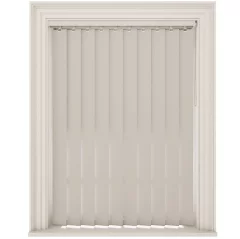 Vertical Blinds
 Roman Blinds
 Roller Blinds
 Venetian Blinds
 Day and Night Blinds
 Skylight Blinds
 Children
 Wooden Blinds
 Curtains
 Blinds Accessories
 White
White Yellow
 Gold
Gold Green
Green Grey
Grey Pink
Pink Orange
 Animal
 Floral
 Geometric
 Striped
 Motorized Day and Night Blinds
 Motorized Roller Blinds
 No Drill Rollers
 Perfect Fit Wooden
 Perfect Fit Metal
 Thermal Blinds
 Better Sleep Blinds
 Cordless Blinds
 No Drill Blinds
 Blackout Blinds
 Waterproof Blinds
 Easy Wipe Blinds
 Taped Blinds
 Conservatory
 Office
 Kitchen
 Bathroom
 Dining Room
 Kids Room
 Living Room
 Bedroom
 Bay Window
 Conservatory Window
 Tild and Turn Window
 Bi Fold Window
 Roof of Skylight
 French Door
 Sliding Door
Vertical Blinds vs Curtains for Patio Doors: Which Is Better?
- by Mariam Labadze

Patio doors are one of the more demanding window dressing challenges in a UK home. The opening is wide, often the full height of the room, and it needs to function freely as a door without the window covering becoming an obstacle. Both vertical blinds and curtains are widely used on patio doors — and both have legitimate strengths. This comparison lays out the practical differences so you can make the right choice for your room and how you use it.
[toc]
The Clearance Problem
This is where the comparison begins, because it is where most people encounter a real constraint rather than a matter of taste. Curtains, when open, stack into a bundle of fabric on either side of the door frame. For a standard 180cm wide patio door with full-length curtains in a medium-weight fabric, each side of the stack-back typically takes up 30 to 45cm of wall space. If the patio door sits close to a corner, a piece of furniture or a wall return, that clearance may simply not be available.
Vertical blinds stack to one or both sides of the track when traversed open. A full-width patio door blind with slats stacked to one side takes up approximately 15 to 20cm — less than half the space of an equivalent curtain stack. For rooms where wall space on either side of the door is limited, this difference is often decisive.
Light Control
Curtains are largely binary: open or closed, with some gradation available by drawing them partially. They offer little control over the quality or direction of light when closed — a drawn curtain blocks light, and that is about the extent of it.
Vertical blinds offer continuous light control without needing to be opened. The slats rotate through 180 degrees, allowing light to be angled into the room, directed toward the ceiling for indirect illumination, or blocked entirely while the blind remains closed. For a south or west-facing patio door where afternoon sun is a concern, the ability to rotate the slats rather than close the door to the garden is a practical advantage curtains cannot match.
Privacy
Closed curtains provide complete visual privacy. Vertical blind slats can be tilted to provide privacy from outside while still admitting diffused light — a function that depends on the viewing angle and the opacity of the fabric. For ground-floor patio doors overlooking a garden or a street, tilted slats provide useful daytime privacy without the room feeling sealed. At night, with the interior lit, tilted slats do not provide the same privacy as closed curtains; closing the slats fully is necessary for complete privacy after dark.
Aesthetics: Which Looks Better?
This is genuinely subjective, but there are patterns worth noting. Curtains are perceived as warmer and more traditional — they add softness, texture and colour to a room in a way that vertical blinds, with their harder structured lines, do not. In a room with a traditional or maximalist interior, curtains are usually the more aesthetically natural choice.
Vertical blinds are cleaner and more contemporary. In a room with a minimal or modern interior — bare walls, neutral palette, little pattern — vertical blinds integrate more naturally and avoid the visual heaviness of a large fabric stack. They also read as more intentional than the default choice in a room where the design has been thought about.
Maintenance
Curtains gather dust, require dry cleaning or careful washing, and take time to rehang. On a patio door that is used multiple times daily, curtains are pulled across and back with each use — accelerating wear on the heading tape and rings. A heavily used patio door curtain may need replacement more frequently than its quality would otherwise suggest.
Vertical blind slats can be individually wiped clean. If a slat is damaged — which happens occasionally in high-traffic door applications — it can be replaced individually rather than requiring the whole blind to be discarded. The track and carrier mechanism requires periodic lubrication but is otherwise low-maintenance.
Cost
Quality curtains for a patio door — including fabric, lining, track and making-up — can be expensive, particularly for full-length panels in a reasonable fabric weight. Vertical blinds in a standard fabric are typically more cost-effective for equivalent coverage, particularly for wider door openings where curtain fabric costs scale quickly.
The Verdict
For rooms where wall clearance is limited, light control from a seated position matters, or the interior is contemporary in character, vertical blinds are the stronger practical choice for a patio door. For rooms where warmth and softness are the priority, the clearance space is available and the aesthetic of the room is traditional or maximalist, curtains remain the more natural choice.
Neither is universally correct — the right answer depends on the room. Browse the full range of made-to-measure vertical blinds for patio and French doors.