 Skip to content


 Vertical Blinds
 Roman Blinds
 Roller Blinds
 Venetian Blinds
 Day and Night Blinds
 Skylight Blinds
 Children
 Wooden Blinds
 Curtains
 Blinds Accessories
 White
White Yellow
 Gold
Gold Green
Green Grey
Grey Pink
Pink Orange
 Animal
 Floral
 Geometric
 Striped
 Motorized Day and Night Blinds
 Motorized Roller Blinds
 No Drill Rollers
 Perfect Fit Wooden
 Perfect Fit Metal
 Thermal Blinds
 Better Sleep Blinds
 Cordless Blinds
 No Drill Blinds
 Blackout Blinds
 Waterproof Blinds
 Easy Wipe Blinds
 Taped Blinds
 Conservatory
 Office
 Kitchen
 Bathroom
 Dining Room
 Kids Room
 Living Room
 Bedroom
 Bay Window
 Conservatory Window
 Tild and Turn Window
 Bi Fold Window
 Roof of Skylight
 French Door
 Sliding Door
Blackout Roller Blinds: Best Options for Every Room (2026)
- by Mariam Labadze
 Blackout roller blinds are the most widely purchased window covering in the UK for one simple reason: they work. A quality blackout roller blind, correctly specified and properly fitted, will do more for the comfort and usability of a room than almost any other single home improvement. The challenge is that the market is wide, the quality varies considerably, and the fitting method matters as much as the fabric — a point that most product descriptions quietly skip over.
This guide covers the best blackout roller blind specifications for different rooms and requirements, with honest notes on what actually delivers a dark room and what merely approximates one.
[toc]
What Makes a Roller Blind Genuinely Blackout?
Blackout performance in a roller blind depends on two things: the opacity of the fabric and the continuity of coverage around the edges. Fabric is the easier part — a true blackout fabric uses a multi-layer construction, typically with a foam or acrylic coating on the reverse, that blocks light transmission through the material itself. Any roller blind labelled blackout should meet this standard, though the quality of the coating varies. Cheaper fabrics may develop pinholes in the backing over time; better-quality fabrics maintain their opacity throughout their working life.
The harder part is edge coverage. A standard roller blind hung on wall brackets inside a window recess will leave a gap on each side between the fabric edge and the window frame. In a well-lit room at dawn that gap — even just 5mm — is enough to project a visible stripe of light into the room. The approaches for eliminating this gap range from perfect fit mounting systems to side channels to face-fixing well beyond the window frame. More on each of these by room below.
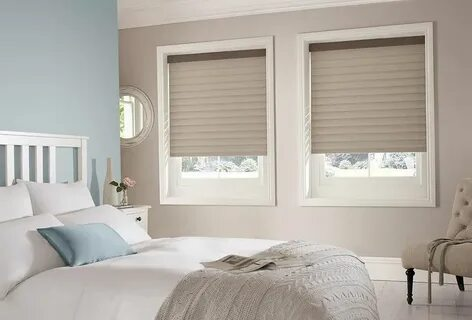
Best Blackout Roller Blind for Bedrooms
The bedroom is where blackout performance matters most for most people, and the standard for "good enough" is higher here than anywhere else in the house. A blind that produces near-darkness is not adequate for a light-sensitive sleeper or for summer mornings when sunrise comes before 5am.
For bedrooms with uPVC or aluminium windows, a perfect fit blackout roller blind is the specification to start with. The frame clips into the window bead with no gaps and no brackets, producing a sealed installation that the fabric then does not need to compensate for. The result is a genuinely dark room rather than a dimmed one. For timber-framed bedroom windows, a blackout roller blind face-fixed well above and beyond the window frame — combined with side channels to seal the fabric edges — is the most effective alternative.
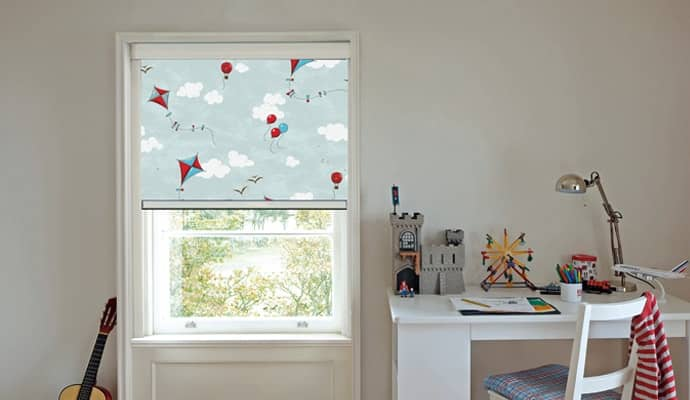
Best Blackout Roller Blind for Nurseries
Nurseries share the same requirements as bedrooms but with the addition of child safety as a non-negotiable constraint. Any blind in a nursery must be cordless or fitted with a compliant cord management system — no looped chains within reach of a child.
A cordless spring-operated blackout roller blind in a perfect fit format addresses both requirements: no accessible cord and no gaps around the edges. The spring mechanism is entirely internal to the headrail and retracts the blind smoothly when released at the hem bar. For blackout blinds in children's rooms, this is the specification that removes all the variables.
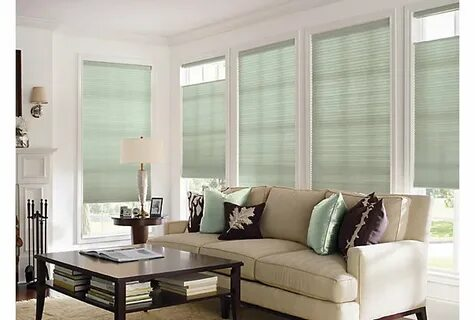
Best Blackout Roller Blind for Living Rooms
In a living room the blackout requirement is usually about managing afternoon glare on a television screen rather than achieving complete darkness, which changes the specification slightly. A standard blackout roller blind face-fixed outside the window recess — with the fabric extending beyond the frame on each side — will reduce light sufficiently for daytime viewing without needing the precision installation required for a bedroom.
For living rooms with patio or French doors, a blackout roller blind is rarely the right format. Vertical blinds in a blackout fabric offer the same light-blocking performance with the practical advantage of traversing clear of the door opening when access to the garden is needed.
Best Blackout Roller Blind for Home Offices
Screen glare is the primary concern in a home office, and a blackout roller blind offers more control over it than a dimmer fabric. The key measurement for a home office blind is the width relative to the window and the desk position — a blind that covers the glass but leaves bright reveals on either side of the frame will still produce glare at oblique angles.
Face-fixing a blackout roller beyond the frame width on both sides ensures the fabric covers the full light source from the perspective of someone sitting at a desk. Combined with a quality blackout fabric, this approach eliminates screen glare effectively without requiring complete darkness in the room.
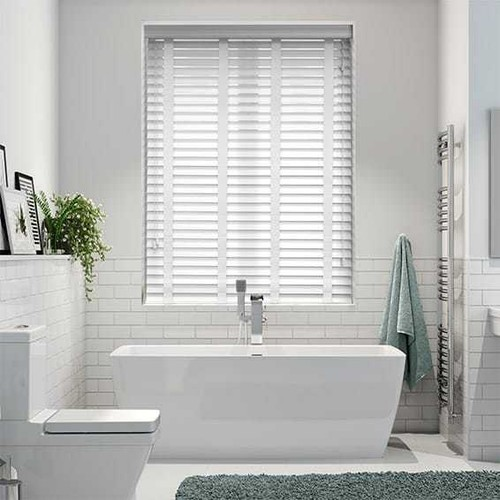
Best Blackout Roller Blind for Bathrooms
Bathrooms require a fabric that tolerates humidity without degrading. Standard blackout fabrics with a foam backing are generally moisture-resistant, but in a poorly ventilated bathroom with regular steam exposure, a cheaper fabric may delaminate — the backing separates from the face fabric and the blind loses both its appearance and its blackout properties.
For bathrooms, specify a waterproof or moisture-resistant blackout roller blind rather than a standard blackout. These use a PVC-coated or similarly treated fabric that withstands steam and damp indefinitely. The privacy requirement in bathrooms makes blackout or near-blackout fabric the natural choice regardless of whether total darkness is the goal.
Fabric Weight and Opacity: What to Check
Not all fabrics labelled blackout are equal. When comparing options, look for a fabric described as having a foam-backed or triple-weave construction, and check whether the supplier specifies a light transmission percentage — a true blackout fabric will be at or below one percent. Avoid fabrics described only as "room darkening" without a blackout classification; room-darkening is a lower standard that reduces rather than eliminates light transmission.
Fabric weight also affects how smoothly the blind operates. Heavier fabrics are more resistant to bowing across wide spans — useful for wide windows — but add weight to the roller tube, which can make retraction slightly slower on a spring-operated system. For widths over 180cm, a side-winding system or a chain-operated blind is generally preferable to a spring roller.
The Summary
For bedrooms and nurseries where darkness is the goal, perfect fit blackout roller blinds on uPVC windows are the most reliable option. For living rooms, a face-fixed blackout roller extending beyond the frame manages glare effectively. For bathrooms, specify waterproof-rated blackout fabric. In every case, the fitting method determines whether the blackout fabric can do its job — the best fabric in the world will underperform behind a poorly installed bracket system. Browse the full blackout roller blind range for all room types and window sizes.


)