Skip to content


 Vertical Blinds
 Roman Blinds
 Roller Blinds
 Venetian Blinds
 Day and Night Blinds
 Skylight Blinds
 Children
 Wooden Blinds
 Curtains
 Blinds Accessories
 White
White Yellow
 Gold
Gold Green
Green Grey
Grey Pink
Pink Orange
 Animal
 Floral
 Geometric
 Striped
 Motorized Day and Night Blinds
 Motorized Roller Blinds
 No Drill Rollers
 Perfect Fit Wooden
 Perfect Fit Metal
 Thermal Blinds
 Better Sleep Blinds
 Cordless Blinds
 No Drill Blinds
 Blackout Blinds
 Waterproof Blinds
 Easy Wipe Blinds
 Taped Blinds
 Conservatory
 Office
 Kitchen
 Bathroom
 Dining Room
 Kids Room
 Living Room
 Bedroom
 Bay Window
 Conservatory Window
 Tild and Turn Window
 Bi Fold Window
 Roof of Skylight
 French Door
 Sliding Door
Honeycomb Blinds for Winter: Do They Really Keep Heat In?
- by Mariam Labadze

The insulation claim made for honeycomb blinds is one of the most commonly repeated in the window dressing industry. Every product description mentions trapped air and thermal performance. It is also, somewhat unusually for marketing language, a claim that holds up when examined. Honeycomb blinds do genuinely insulate — the physics are straightforward and the practical effect is measurable. The more useful questions are how much insulation they provide, in which situations that insulation has a meaningful real-world impact, and what the limits of the technology are.
[toc]
The Physics: Why Honeycomb Blinds Insulate
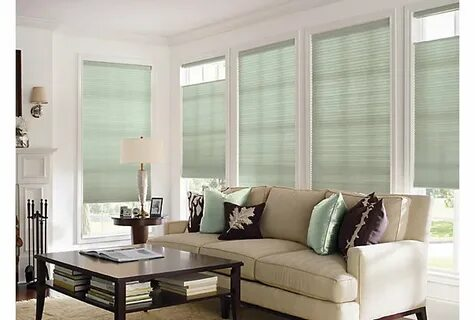
Every honeycomb blind has a cellular cross-section. Look at the edge of the blind and you see a row of enclosed cells — hexagonal or rectangular depending on the construction — running horizontally across the width of the fabric. Each cell is a sealed pocket of air, trapped within the folded fabric and not in contact with the surrounding room air.
This matters because of a fundamental property of air: still air is a good insulator, while moving air is not. The thermal conductivity of static air is low — it resists the transfer of heat from one side of the cell to the other. When air is free to move, it carries heat with it through convection. The cells of a honeycomb blind prevent their air from moving, which means the air within each cell maintains its insulating properties rather than continuously cycling warm room air toward the cold glass.
The result is a layer of thermal resistance between the room interior and the window glazing. In practical terms, the window surface behind a closed honeycomb blind is warmer than it would be without the blind — because less heat is escaping through it — and the room air near the window is warmer because less cold air is falling from the glass surface.
Single Cell vs Double Cell: Does the Extra Layer Make a Difference?
Single-cell honeycomb blinds have one layer of enclosed cells. They provide a meaningful insulating effect and are the standard choice for most residential applications. Double-cell blinds have two layers of cells constructed one behind the other, which effectively doubles the depth of trapped still air between the room and the glass. The thermal resistance of a double-cell blind is substantially higher than a single-cell blind — not quite double, because other factors contribute to window heat loss, but significantly better.
The real-world difference between single and double-cell is most apparent in rooms with large areas of glazing or with older, less efficient double-glazing. In a standard bedroom with a modest window, a single-cell blind will provide a noticeable improvement in winter comfort. In a conservatory with glazing on three sides, or in a north-facing sitting room with an older double-glazed unit that has lost its insulating gas, the step up to double-cell produces a more dramatic effect.
Single-cell honeycomb blinds for most rooms. Double-cell for conservatories, large window areas, and older or less efficient glazing.
What 'Keeping Heat In' Actually Means in Practice
The most immediate and noticeable effect of a honeycomb blind in winter is the elimination of the cold downdraft. When a room has an uncovered window in cold weather, the glass surface cools the air immediately in contact with it. That cooled air becomes denser than the surrounding room air and falls — creating a downward current of cold air at the window surface that reaches the floor and spreads into the room. This is why sitting near an uncovered window in winter feels cold even in a well-heated room.
A honeycomb blind closed against the window interrupts this process. The air between the blind and the glass cools and is trapped within the cells — it cannot fall because it cannot circulate. The room air on the warm side of the blind stays warm. The cold draught effect disappears. Many people notice this improvement in comfort before they notice any change in temperature or on their heating bill — the feeling of being cold near a window is often the first thing to go.
What the Energy Saving Numbers Actually Look Like
Studies on cellular blind performance consistently show reductions in window heat loss of between 20 and 50 percent compared to unblinded glazing, depending on the glazing specification and the cell construction. For a typical UK semi-detached house, if windows account for approximately 15 to 20 percent of total heat loss, and honeycomb blinds reduce window heat loss by 30 percent, the overall reduction in heating demand is in the range of 4 to 6 percent.
In annual bill terms, at current UK energy prices, that translates to roughly £40 to £100 per year depending on property size and the proportion of windows fitted with cellular blinds. This is a useful but not transformative saving — the primary case for honeycomb blinds in winter is comfort rather than cost.
The rooms where the saving and the comfort improvement are both greatest are those with the largest window-to-floor area ratio: conservatories, rooms with large picture windows or full-height glazing, and first-floor rooms over garages where the floor below is uninsulated. In these spaces, the impact of honeycomb blinds is substantially larger than the whole-house average.
Honeycomb Blinds in Summer: The Other Half of the Equation
The insulating effect of a honeycomb blind works in both directions. In summer, the same trapped-air cells that slow heat loss in winter also slow solar heat gain. A honeycomb blind on a south or west-facing window will reduce the rate at which solar radiation heats the room — keeping the space cooler during the warmest part of the day without blocking all natural light.
This dual-season performance is one of the genuine advantages honeycomb blinds hold over standard roller blinds. A roller blind provides shade but minimal insulation in either direction. A honeycomb blind provides both shade and a thermal buffer, which makes it useful in summer as well as winter. For a conservatory, where the problem is both summer overheating and winter cold, this year-round performance is particularly valuable.
Blackout Honeycomb Blinds: When You Need Both Darkness and Warmth
Honeycomb blinds are available in both light-filtering and blackout fabric constructions. Blackout honeycomb blinds use a foam-backed or multi-layer coated fabric that blocks light transmission through the material while retaining the cellular insulating structure. The result is a blind that provides genuine darkness — suitable for bedrooms and nurseries — alongside the thermal comfort of the cellular construction.
For a nursery or child's bedroom, a blackout honeycomb blind in a perfect fit format is the specification that addresses everything at once: no gaps at the edges (from the perfect fit frame), no light through the fabric (from the blackout coating), and improved room temperature stability throughout the year (from the cellular insulation). It is a more expensive starting point than a standard blackout roller, but it removes every variable that typically causes a blackout blind to underperform.
Does Fitting Method Affect the Insulating Performance?
Yes — significantly. A honeycomb blind fitted with gaps at the sides allows room air to circulate behind the blind and reach the cold glass, partially defeating the insulating effect. The cells trap the air within the fabric itself, but if warm room air can travel around the blind and reach the glass, the convective heat loss through the window continues regardless of the blind.
A snug recess fit — where the blind width closely matches the recess width on both sides — minimises this bypass. A perfect fit honeycomb blind that clips into the window bead seals the edges completely. For maximum thermal performance, the fitting method is as important as the blind specification. A perfectly specced double-cell honeycomb blind with 15mm of gap on each side will underperform a well-fitted single-cell blind in terms of real-world insulating effect.
The Verdict
Honeycomb blinds do genuinely keep heat in — through a combination of trapped still air within the cells, elimination of the convective downdraft at the window surface, and a physical barrier between the room and the glazing. The comfort improvement is felt immediately and the energy saving, while modest on a bill-by-bill basis, accumulates meaningfully over a heating season.
For conservatories, large-windowed rooms and any space where cold windows are a genuine comfort issue in winter, double-cell honeycomb blinds are the most effective off-the-shelf insulating solution available without replacing the glazing itself. Browse the full range of honeycomb blinds in both light-filtering and blackout fabrics.