Skip to content


 Vertical Blinds
 Roman Blinds
 Roller Blinds
 Venetian Blinds
 Day and Night Blinds
 Skylight Blinds
 Children
 Wooden Blinds
 Curtains
 Blinds Accessories
 White
White Yellow
 Gold
Gold Green
Green Grey
Grey Pink
Pink Orange
 Animal
 Floral
 Geometric
 Striped
 Motorized Day and Night Blinds
 Motorized Roller Blinds
 No Drill Rollers
 Perfect Fit Wooden
 Perfect Fit Metal
 Thermal Blinds
 Better Sleep Blinds
 Cordless Blinds
 No Drill Blinds
 Blackout Blinds
 Waterproof Blinds
 Easy Wipe Blinds
 Taped Blinds
 Conservatory
 Office
 Kitchen
 Bathroom
 Dining Room
 Kids Room
 Living Room
 Bedroom
 Bay Window
 Conservatory Window
 Tild and Turn Window
 Bi Fold Window
 Roof of Skylight
 French Door
 Sliding Door
Blackout Vertical Blinds: Light Control for Big Windows and Patio Doors
- by Mariam Labadze
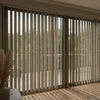
 Yes, vertical blinds are available in true blackout fabrics, and they darken a room very effectively across wide spans. The slats are made from a dense, light-blocking material that stops daylight passing through the fabric itself, so with the louvres closed and overlapped you get a deep, even dimness that suits bedrooms, media rooms and big patio doors.
That said, "blackout" describes the fabric, not the whole window. Blackout vertical blinds excel at cutting glare and creating a restful, dark room, but a small amount of light will always find the edges and the tiny gaps where slats meet. Understanding how the system works helps you set expectations and get the darkest possible result. Below I'll walk through how the fabric performs, where these blinds shine, and how to fit them for the best coverage.
How blackout vertical blinds darken a room
A standard fabric filters light. A blackout fabric is engineered with a tight weave, and often a coated backing, so daylight cannot pass through the body of each slat. When you rotate the louvres flat and draw them across the window, the overlapping slats form a near-continuous wall of dark fabric. The room drops into a soft gloom that is ideal for sleeping in on light summer mornings or watching a screen without glare.
The vertical orientation is what makes this format so useful on large openings. Because the slats hang top to bottom and stack neatly to one side, vertical blinds cover expansive windows and doors without the weight and bulk you would get from a single huge roller or Roman blind. You control light in two ways: rotate the slats to angle daylight up towards the ceiling, or draw the whole set aside to open the view completely.
Compared with other formats in the wider blackout blinds range, the vertical version trades a fraction of darkness for far better handling on width. A roller may seal tighter on a small bedroom window, but it becomes unwieldy at patio-door scale. Verticals were built for that scale.
Why they suit big windows and patio doors
Patio doors and picture windows are where vertical blinds genuinely come into their own. The tracks are made to span several metres, and the slats glide smoothly along the headrail so you can push the whole stack to one side and walk straight out. There is no fabric to lift, no cords to wrestle with across a wide run.
For sliding and French door setups, look at options designed as patio and sliding door blinds, which are configured to clear the door as it opens. A split-draw or one-way stack lets you park all the slats away from the moving panel, keeping the doorway clear while the rest of the glazing stays covered.
Privacy that works day and night
Because you can rotate the louvres independently of drawing them, blackout verticals give you fine control over privacy. During the day, angle the slats to block the direct line of sight from the street while still letting soft light spill in. At night, when interior lights make a room far more visible from outside, close the slats fully. A blackout fabric gives noticeably more concealment after dark than a light-filtering one, which matters most on ground-floor rooms and doors facing a path or garden.
Choosing fabric, colour and material
Colour changes the whole mood of a large window. Pale slats keep a room feeling airy and bounce light around when open, while deeper tones frame a view and read as smart and contemporary. Grey vertical blinds are a reliable middle ground: they sit happily with most flooring and walls, hide everyday marks better than bright white, and give a calm, modern finish on big glazing. If you are weighing up shades, our guide to choosing the right colour vertical blinds walks through room-by-room pairings.
Material matters too, especially near doors that see heavy use. PVC vertical blinds are worth considering for kitchens, bathrooms and doorways: the slats wipe clean, resist moisture and do not fray, and many carry a blackout backing so you keep the darkening benefit. Fabric slats feel softer and more traditional; PVC feels crisp and practical.
When you order made to measure vertical blinds, the slats are cut to your exact drop so they hang cleanly with no pooling on the floor and no awkward gap at the sill. A precise measurement is the single biggest factor in how dark and tidy the finished blind looks, so measure carefully or follow the site's measuring guide before you buy.
A quick word on slats
Blackout vertical blind slats are sold individually, which is genuinely handy over the life of the blind. If a slat gets damaged, marked or accidentally torn near a busy door, you replace that one piece rather than the whole blind. You can browse compatible replacement vertical blind slats and match them to your existing headrail, provided the slat width is the same.
Getting the darkest possible result
Blackout fabric does the heavy lifting, but fitting and habit decide the final darkness. A few practical points:
-
Fit the blind outside the recess, or as wide and high as the space allows, so the fabric overlaps the reveal on every side. The more the slats extend beyond the glass, the less light escapes around the edges.
-
Make sure the slats overlap when closed. Rotating them fully so each slat sits behind its neighbour removes most of the pinhole light between louvres.
Even done well, a vertical blind is not a sealed box. Light will glow faintly at the top of the headrail and down the leading edge, and a thread of daylight can appear where slats meet. For most bedrooms this is a comfortable, restful darkness rather than total cinema blackout. If you need absolute pitch black, pairing blackout verticals with a curtain or fitting them generously oversized will get you very close.
Care and everyday use
Keeping the blind looking sharp is straightforward. Dust the slats with a soft cloth or the brush head of a vacuum, and spot-clean PVC slats with a damp cloth. Rotate the louvres open when you leave the room for long spells so the fabric is not permanently pressed flat against warm glass. Handle the wand or chain gently and let the slats find their own hang rather than forcing them, and the mechanism will run smoothly for years.
For a room that needs genuine darkness across a wide window or a busy set of patio doors, blackout vertical blinds are one of the most practical choices on the market. They balance real light control, easy operation and a clean look in a way few other formats manage at that size.
Frequently asked questions
Do vertical blinds come in blackout?
Yes. Many vertical blind ranges include dedicated blackout fabrics and PVC slats with a light-blocking backing. The slats themselves stop daylight passing through, so with the louvres closed and overlapped the room darkens considerably. Check the individual fabric's description to confirm it is blackout rather than dimout or light-filtering.
Are blackout vertical blinds good for bedrooms?
They are a strong choice for bedrooms, especially larger ones or rooms with wide windows and doors. The blackout fabric cuts early-morning light and evening glare, and rotating the slats gives you privacy after dark. For the deepest darkness, fit the blind outside the recess so it overlaps the reveal on all sides.
Do blackout vertical blinds let light through the gaps?
A little, yes. The fabric blocks light, but faint daylight can appear at the top of the headrail, down the leading edge and in the narrow overlap between slats. Closing the louvres fully so they overlap, and fitting the blind oversized, reduces this to a soft glow suitable for restful sleep rather than total blackout.